


Charting the cottage-cheese comeback
America’s latest fascination with cottage cheese might seem like a fresh craze, but for anyone who remembers the 1970s, it’s more of a surprising comeback.
As The Wall Street Journal’s great analysis points out, cottage-cheese sales in the US have surged over 50% in the past five years, according to Circana, with some leading brands like Good Culture posting back-to-back years of over 70% growth. The rise is fueled by TikTok, flooded with viral #cottagecheese recipes and creative hacks.
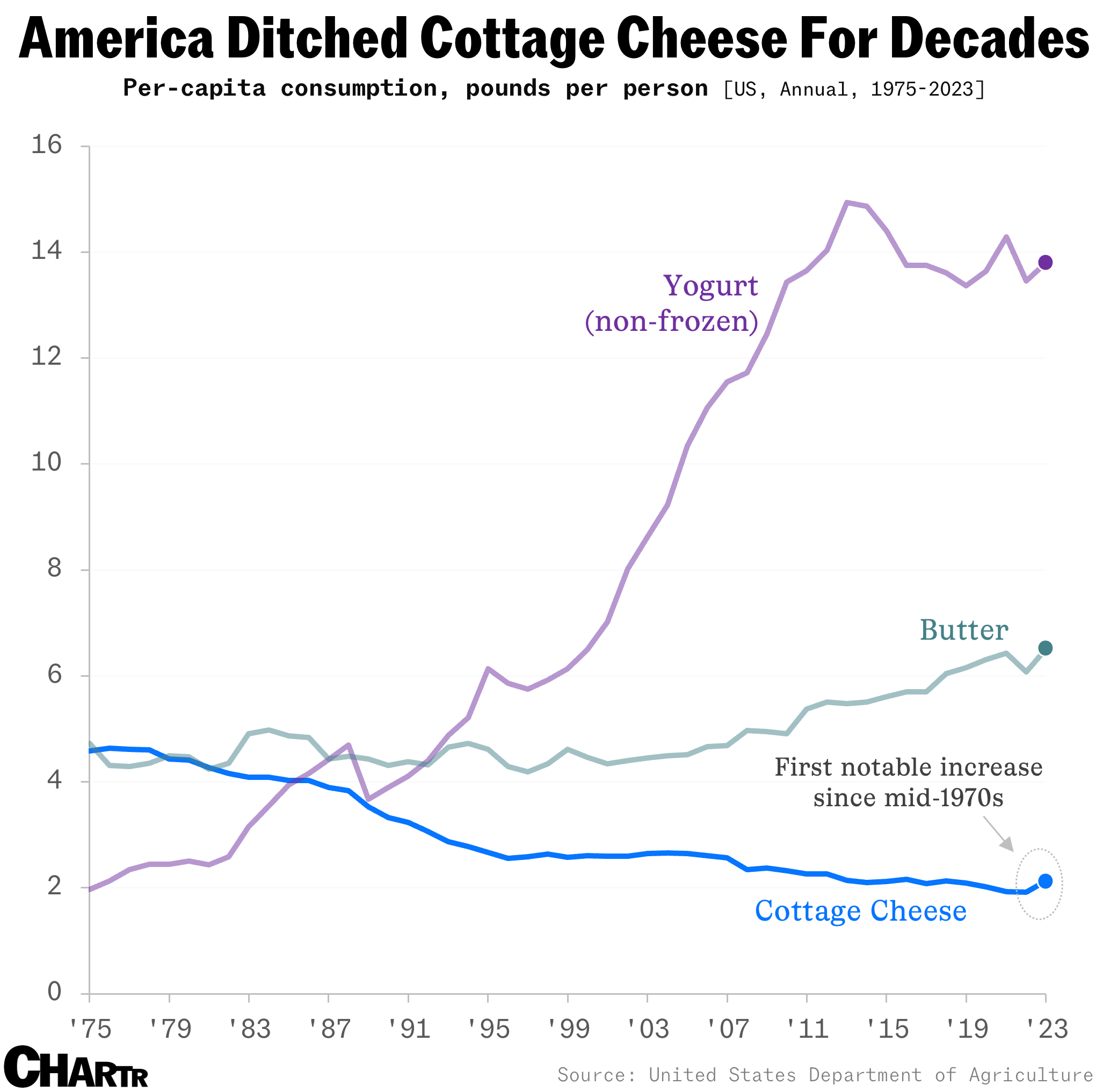
Per data from the USDA, 2023 marked the first significant uptick in per-capita cottage-cheese consumption since 1975, when data collection began.
So why is cottage cheese having a moment?
As yogurt took its place as the wobbly, white, dairy-based fridge staple, cottage cheese fell out of favor. Its recent comeback, and yogurt’s dominance, can altogether be attributed to the growing obsession with protein, the WSJ reports. Indeed, searches for terms like “high-protein foods,” “yogurt protein,” and “cottage cheese protein” have steadily climbed over the last two decades, spiking dramatically in recent years.
Interestingly, though, cottage cheese’s reputation as a protein-rich food isn’t new. A 1975 New York Times article, written when “nearly everybody eats it at one time or another,” noted its status as an affordable protein alternative to meat and fish, with Jane Fonda and Jacqueline Kennedy Onassis reluctantly including it in their diets for health reasons. While the reason behind cottage cheese’s decline remains something of a mystery — maybe manufacturing challenges, maybe some people just thought it looked gross — it may finally be reclaiming its place in the dairy aisle.


Per data from the USDA, 2023 marked the first significant uptick in per-capita cottage-cheese consumption since 1975, when data collection began.
So why is cottage cheese having a moment?
As yogurt took its place as the wobbly, white, dairy-based fridge staple, cottage cheese fell out of favor. Its recent comeback, and yogurt’s dominance, can altogether be attributed to the growing obsession with protein, the WSJ reports. Indeed, searches for terms like “high-protein foods,” “yogurt protein,” and “cottage cheese protein” have steadily climbed over the last two decades, spiking dramatically in recent years.
Interestingly, though, cottage cheese’s reputation as a protein-rich food isn’t new. A 1975 New York Times article, written when “nearly everybody eats it at one time or another,” noted its status as an affordable protein alternative to meat and fish, with Jane Fonda and Jacqueline Kennedy Onassis reluctantly including it in their diets for health reasons. While the reason behind cottage cheese’s decline remains something of a mystery — maybe manufacturing challenges, maybe some people just thought it looked gross — it may finally be reclaiming its place in the dairy aisle.


