


EA’s $55 billion megadeal will ripple across the gaming industry and cause its “black holes” to get even bigger
The gaming giant’s buyout by private equity investors and Saudi Arabian wealth may speed up a trend in the industry: people just keep playing the same old juggernaut games.
Electronic Arts, the video game giant behind mainstays like “Madden NFL” and “The Sims,” agreed to a blockbuster leveraged buyout this week — the largest in history, at $55 billion.
The group buying EA includes Saudi Arabia’s sovereign wealth fund, along with private equity firms Silver Lake and Jared Kushner’s Affinity Partners.
Being a leveraged buyout (LBO), the deal is partially funded with a $20 billion loan from JPMorgan, an amount more than 10x the size of EA’s debt load at the end of June, per its latest earnings report. To cover the interest payments, EA will likely have to find more revenue and cut costs, moves straight out of private equity’s LBO playbook.
To put it another way: we’re likely to see more ads, more layoffs, and higher prices from EA.
“We can expect EA’s portfolio to go up in price,” said Joost van Dreunen, CEO of analytics firm Aldora and a gaming strategy professor at NYU. “We’ll see what that means for players. I hope [EA] won’t charge them through the nose, but they’re going to be aggressive on monetization, absolutely.”
Some parties involved in the deal expect that to pay off its newfound debts, the company will boost its profits in the coming years by replacing the work of some voice actors, developers, and testers with AI, the Financial Times reported. It’s unclear how consumers would respond to the tech playing a bigger role in games, but if a company as large as EA were to make a concerted effort to rely more on AI, competitors would likely follow suit.
Reactions to the deal from industry insiders and gamers lean heavily critical, with many pointing to the tendency of leveraged buyouts to leave bankruptcies in their wake.
A 2019 study by researchers at California State Polytechnic University found that 20% of publicly traded companies taken private through LBOs went bankrupt within a decade, compared to the control group’s 2% bankruptcy rate. Insolvencies by consumer-facing companies like Toys R Us, Red Lobster, and Party City in recent years are all examples of the LBO-to-bankruptcy pipeline. Even the previous biggest LBO in history, TXU’s takeover by private equity in 2007, wound up in bankruptcy seven years later, waylaid by $40 billion in debt.
Of course, the deal could just as easily become a slam dunk from a business sense, given the financial strength of EA’s buyers, particularly the Saudi PIF, which controlled nearly $1 trillion in assets last year. That fortune could boost EA’s marketing budget, elevating sales. Because of investors’ deep pockets, there’s a chance that EA’s debt may not be as much of a concern.
EA’s new owners may be willing, and certainly have the ability, to treat it as a loss leader as they acquire more leverage in live sports. Still, given the company’s debt load, EA’s future seems headed in one direction:
Bigger games, fewer risks
EA’s immediate future will likely be one focused even more on big revenue-generating titles like “EA Sports FC,” “Madden NFL,” and “Apex Legends” — a move that’s been seen in PIF’s other major gaming acquisition, Scopely, which in March bought the studio behind “Pokémon Go” for $3.5 billion.
Conversely, some staffers working at EA’s smaller studios, which have already been squeezed by layoffs in recent years, expect to be let go shortly after new ownership takes over, Insider Gaming reported.
Bigger anchor games, which some in the industry refer to as “black hole games” for their ability to dwarf competition and consume millions of players’ entire gaming appetites, have become a holy grail for major publishers in recent years. They aren’t just popular in the aftermath of their release — they stay popular for years through live-service features like new seasons and gear.
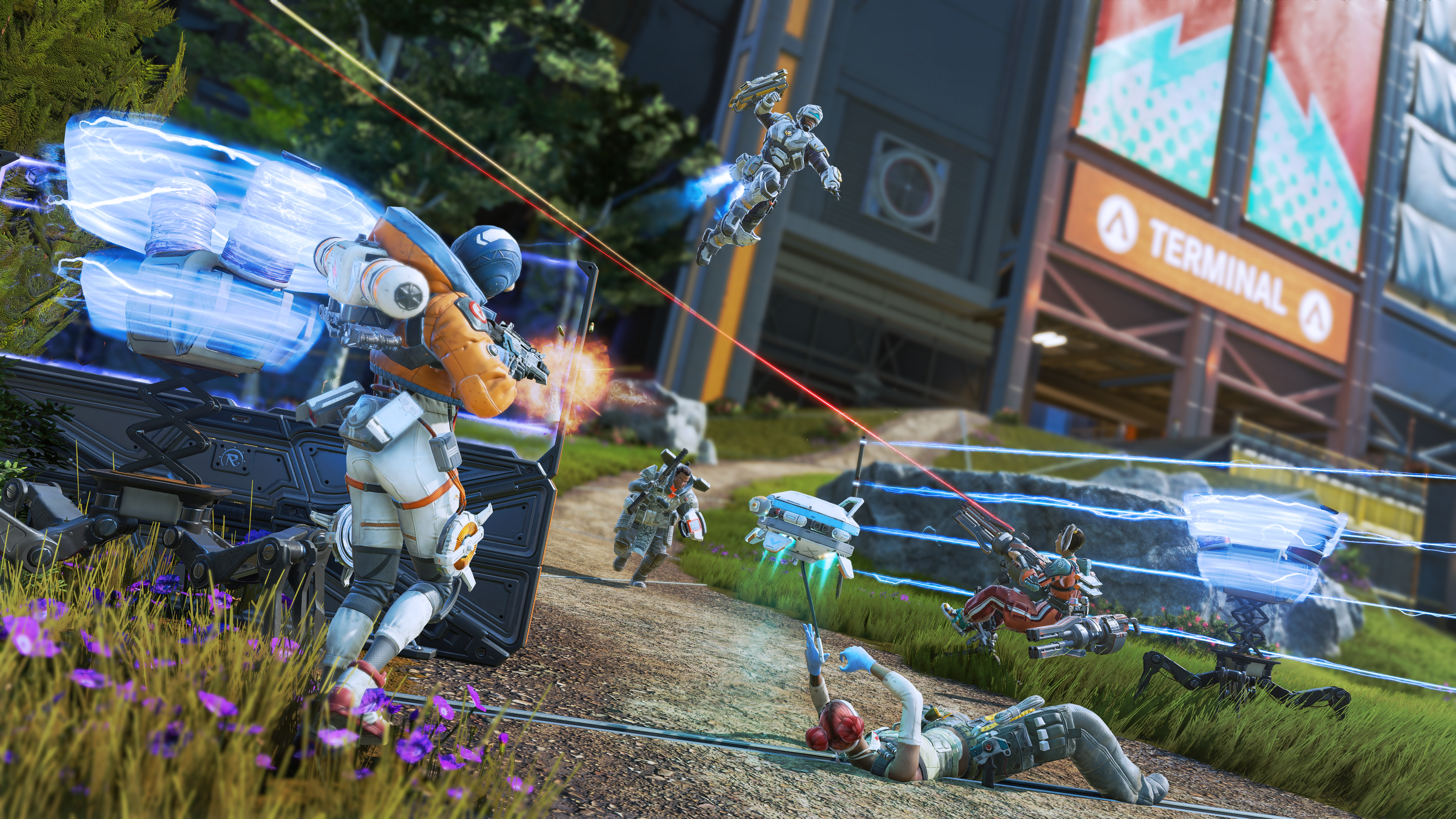
The games’ stranglehold on the industry is daunting: more than half of the most played games on PlayStation, PC, and Nintendo Switch are at least 5 years old or part of an annualized sports or shooter franchise, according to August monthly engagement metrics from research firm Newzoo. The ratio is slightly less than half for Xbox.
In his State of Video Gaming in 2025 report, Epyllion CEO Matthew Ball found that just 6.5% of playing time in 2023 was spent on games released that year. 75% was spent on live-service or annualized sports titles first released before 2019.
The biggest black holes are household names: Epic’s “Fortnite,” Microsoft’s “Minecraft” and “Call of Duty,” Take-Two’s “Grand Theft Auto,” and kids gaming platform Roblox. Most of EA’s annually recurring sports games fall into a second tier, but still dominate industry engagement metrics, even as some of them occasionally underwhelm on sales. In EA’s latest quarterly report, live-service sales accounted for 83% of the company’s net revenue.
As juggernauts battle it out for attention, smaller new games struggle to compete on the ground level. Per Ball’s report, the number of new Steam games that grossed at least $100,000 was smaller in 2024 than in 2016. Over the same stretch, the number of game releases surged 300%, and user numbers grew 250%.
In an interview with Sherwood News, Ball said the trend toward black holes isn’t showing any signs of slowing down this year.
“There actually is lots of growth; it’s just very unevenly distributed,” he said, adding that “Fortnite” is performing slightly weaker but is expected to resurge with an upcoming Disney partnership. He indicated that any weakening in some black holes seems to be countered by strength in others. “Certainly to the extent which you can find any black hole that is a little bit more frail than it was last year, Roblox is like 40% stronger than it was a year ago. So in aggregate, there’s very little change.”
Barring a handful of exceptions, the timing couldn’t be worse for studios looking to break in, as gaming costs have ballooned and the competition for attention has never been higher. (Remember: in 2007, “Halo 3” didn’t have to beat out TikTok for a 17-year-old’s time.) That has led to thousands of layoffs, studio closures, and game cancellations.
And in the meantime, the black holes get bigger.
The number of players only engaging in 1-3 games per year has grown on every platform since 2021, according to Newzoo’s 2025 “PC and Console Gaming Report.” That’s despite subscription plans like Xbox’s Game Pass that grant access to dozens of games. The trend is expected to increasingly weigh on the industry.
“In the immediate terms, we may see more smaller scale games, fewer titles from bigger publishers,” said Michael Wagner, Senior Market Analysts at Newzoo. “Game budgets and scopes are going to have to reflect their current realities going forward. Consequences of these could mean more layoffs, consolidation, and closures. We may also see more companies go private as well.”
As games and platforms grow, so do their ambitions. While Roblox is largely a game for kids, the company has a goal of capturing 10% of the world’s video game activity. In July, Roblox partnered with Netflix and Lionsgate as part of a new licensing feature, with the goal of attracting more players to its platform.
“It’s very clear that [Roblox’s] stated ambition is to be for everyone,” Ball said. Being a platform instead of just one game also allows Roblox to cater to people of different age groups with different games, he explained.
What could be one of the biggest black holes of the decade, Take Two’s “Grand Theft Auto 6,” has been pushed to at least next May, giving rivals like EA a bit more time in the sun. EA’s upcoming “Battlefield 6” has received positive attention ahead of its October 10 release, and with “GTA 6” firmly out of its release window, some analysts think it could perform significantly better than expectations.
“I think what characterizes this deal is, EA is staring down this long road ahead, with ‘Battlefield 6’ coming out and having to carry the full weight of the company,” van Dreunen said. “Its other evergreen franchises are doing fine, but they’re not growing to the extent that people find interesting.”
But even if having a black hole is required for survival in the public market, it still doesn’t guarantee enough growth to appease investors. When EA reported its fiscal first-quarter earnings in July, it beat net bookings expectations, noting better-than-anticipated performance from its sports and live-service catalog. Still, its second-quarter and full-year net bookings outlook came in below analysts’ consensus estimates, sending shares down. EA and the consortium vying to take it private did not respond to a request for comment.
After the EA deal closes, which is expected during its fiscal first quarter next year, it won’t have to worry about the prying eyes of public investors. But it will have to worry about a mountain of debt.
Back in my day, EA bought things and dismantled them, not the other way around
— Mike Bithell (@mikebithell.bsky.social) Sep 29, 2025 at 8:42 AM
Meanwhile, there’s a broader risk for gaming, too. An industry doubling down on a small number of large products leaves that industry more vulnerable to swings in trends. Ball said we’ve already seen an analog for this risk in the film industry, where many blockbuster franchises have begun to struggle for studios like Disney.
“The industry is very much concentrating toward its top titles. And when those top titles are ripping, there’s no better strategy,” Ball said. “Eventually there’s a risk that they dull or soften — and they don’t need to implode — but if you’re even seeing 10% weakness, let alone more, then the company looks very different.”