
Culture
Pokemon cards
(Daniel Perron/Getty Images)

GameStop’s collectibles business just keeps booming, as “Pokémon” cards continue to fly

Collectibles revenue grew 65% year over year in its latest quarter.

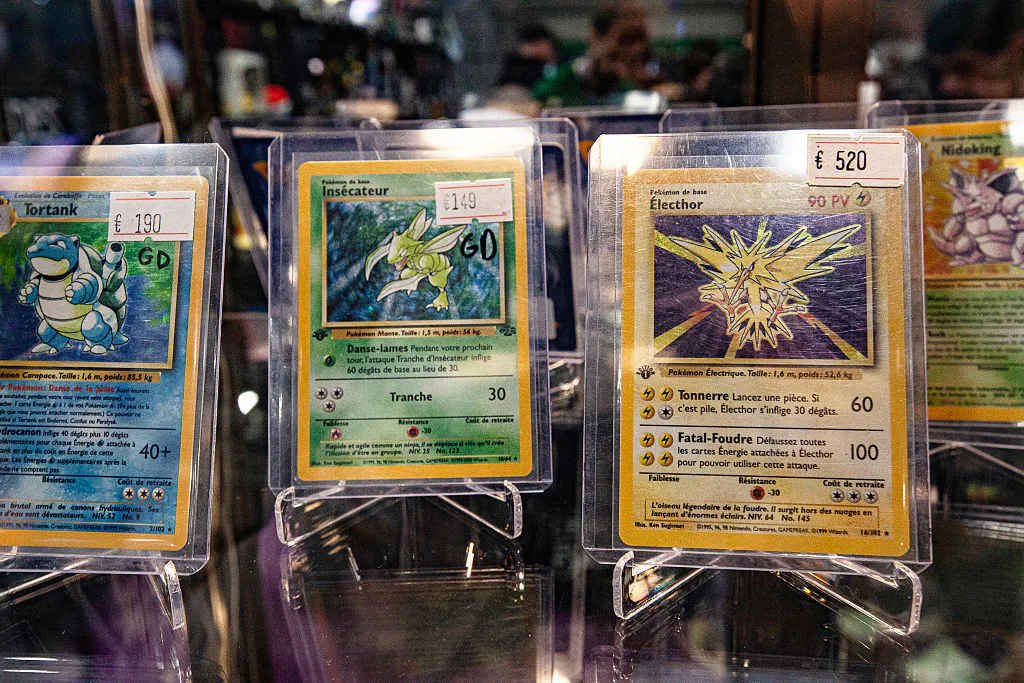
“Pokémon” cards and other memorabilia like Labubus and “Magic: The Gathering” cards propelled GameStop’s collectibles business to another huge quarter.

In its first-quarter earnings report, released Tuesday evening, GameStop reported $348.9 million in sales for its collectibles business, outearning every other category (hardware and software) and accounting for 42% of the company’s overall quarterly revenue. (A year earlier, hardware was the biggest contributor with 47% of sales and collectibles made up 29%.)

The collectibles division saw 65% year-over-year sales growth and has now posted double-digit gains for six quarters in a row.

Fueled by card sales, higher revenue and improved margins propelled GameStop to its highest Q1 operating income ever, at $143.3 million.

The retailer has leaned into “Pokémon” cards’ lasting popularity, launching “Power Packs” last year. Recently, GameStop opened up a higher-tier option for customers to spend up to $5,000 to “rip” a digital pack that contains a random PSA-graded card worth, per the company’s site, $5,000 on average. The potential value, depending on what card a customer pulls, eclipses $69,000, according to the company.

Per Kotaku, customers who receive one of those cards can choose to ship it, sell it online in GameStop’s marketplace, or store it in a climate-controlled facility in Delaware.

Professional Sports Authenticator, or PSA, grading is a form of appraisal that began with sports cards but has recently been dominated by “Pokémon.” That business has itself become overwhelmed by GameStop’s collectibles, and PSA this month paused lower-tier grading levels (including those made through its partnership with GameStop) for up to six months, The New York Times reported.

More Culture

See all Culture
Family in front of TV

Hollywood may have its best year at the box office since 2019, but streaming audiences are still obsessed with old content

Viewers are opting for catalog content over new shows and movies across (pretty much) every major streamer.

Tom Jones6/29/26
culture
Tom Jones

The BBC has become the world’s top news website... by collapsing a little less than its competition

Press Gazette just published its annual look at the biggest news sites in the world across all languages; for the most part, it doesn’t make for particularly pretty reading.

The journalism industry publication’s latest update, which is based on estimates provided by Similarweb for May, found that 37 of the world’s 50 most visited news sites saw their reach shrink. Press Gazette highlighted that American outlets have been hit particularly hard by declining Google traffic compared to European counterparts, owing to the platform’s AI features rolling out earlier in the US.

Even the BBC, having climbed the rankings from last year to top the 2026 chart — reportedly in part thanks to Similarweb’s decision to combine the “.co.uk” and “.com” versions of the URL, given that the sites redirect to each other depending on the user’s location — showed a 1.9% decline from last year.

Latest Stories

Sherwood Media, LLC and Chartr Limited produce fresh and unique perspectives on topical financial news and are fully owned subsidiaries of Robinhood Markets, Inc., and any views expressed here do not necessarily reflect the views of any other Robinhood affiliate, including Robinhood Markets, Inc., Robinhood Financial LLC, Robinhood Securities, LLC, Robinhood Crypto, LLC, Robinhood Money, LLC, Robinhood U.K. Ltd, Robinhood Derivatives, LLC, Robinhood Gold, LLC, Robinhood Asset Management, LLC, Robinhood Credit, Inc., Robinhood Ventures DE, LLC and, where applicable, its managed investment vehicles.