

Areyouthere?
Answer me! I’m calling
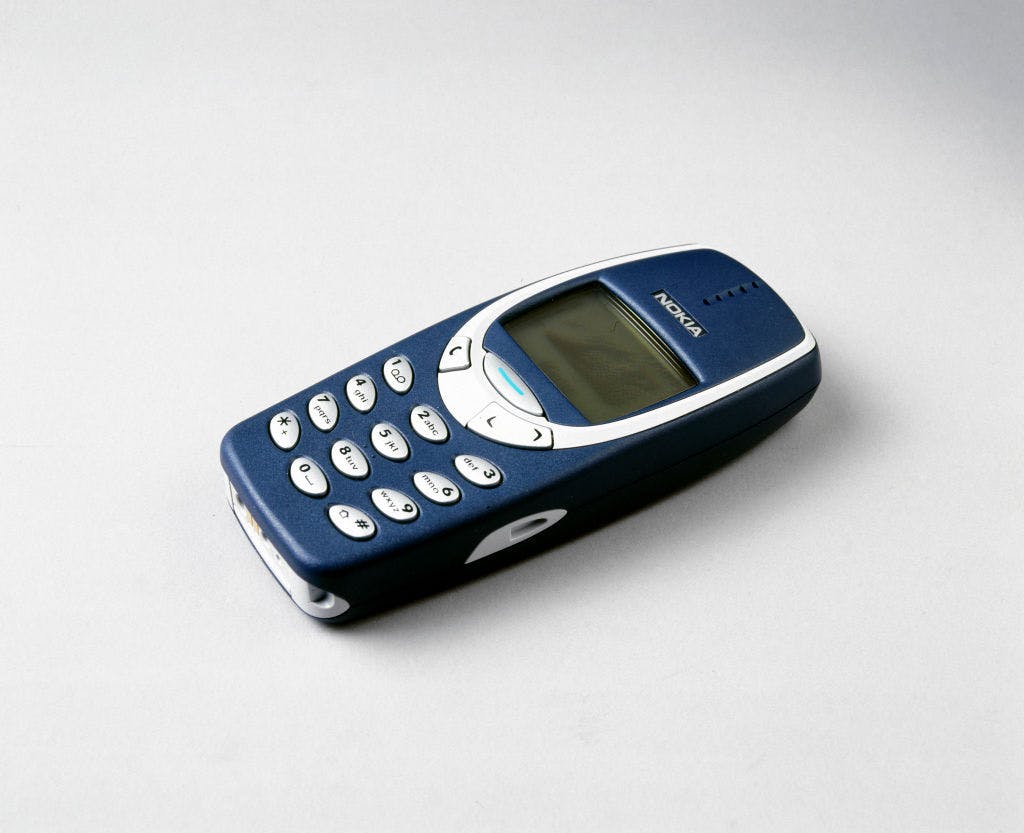
Ringtones have proved to be an immortal business. But who makes money off them is a mystery.
You might think the ringtone is dead. You’d be wrong.
It’s 2006. You’re Jessica Simpson. You’ve released two gold albums, two platinum albums, and six top 40 hits in the past seven years. Your MTV reality show, “Newlyweds,” with your then-husband, Nick Lachey, has made you a household name. And you’ve just starred in the reboot of “The Dukes of Hazzard,” a box-office smash that grossed over $100 million. What should you do next? Naturally, release over 500 versions of your new single, “A Public Affair.”
The hundreds of versions released by Simpson and her team were identical except for one small detail. The opening line of the second verse — “Hey, baby, I see you looking over here, baby” — was changed so that “baby” was substituted with scores of different names. If your name was “Tony,” for example, you could get a version of the song with the line, “Hey, Tony, I see you looking over here, Tony.” Though this was a silly marketing ploy to sell more records, there was also another angle: ringtones.
Ringtones, often sold through mobile carriers, were a vital piece of the music industry during the 2000s, peaking at $1.6 billion in inflation-adjusted US music revenues in 2007, the Recording Industry Association of America reported. That year, ringtones accounted for more revenue than both digital album and single downloads.
That success wasn’t to last, though. As the industry realized that streaming was the real cash cow, along with the fact that a glut of notifications pushed people to silence their smartphones, the ringtone died a sudden death. Kind of.
Since their 2007 peak, yearly US inflation-adjusted ringtone revenues have fallen over 99%, to $10.5 million. Nevertheless, over the past few years numerous ringtone apps have cropped up on both the Apple App Store and the Google Play Store top charts for music apps. Market-intelligence firm Sensor Tower reported that the Ringtones for Android app has been downloaded over 50 million times since its 2013 release. That’s more downloads than either the Tidal or SiriusXM apps on Android.
Similar apps are also growing more popular. Garage Ringtones, for example, has had explosive growth in the past two years. Since its 2022 release, combined yearly downloads have rocketed from under 100,000 to almost 12 million, Sensor Tower said. Combined, all the top ringtone apps account for 60 million yearly downloads and over $21 million in subscription revenue.
So who’s downloading all these ringtones?
Millennials and South Asia love ringtones
In the US the four top ringtone apps are Garage Ringtones, RingTune, Ringtones: for iPhone, and Zedge. Per Sensor Tower, the average age for users on those apps ranges from 31 to 37. That would make the average user between the ages of 14 and 20 in 2007, or when ringtone revenues peaked stateside. So, the same people who drove the first ringtone boom are likely driving the app-based revival.
Ringtones are hugely popular outside the US. Nearly 93% of Google searches for the term “ringtone download” in September came from India, Sri Lanka, Pakistan, and Bangladesh. “[T]he popularity of ringtones is directly proportional to the spread of smartphones here in India,” said Avinash Heston, an associate director at MoEngage, a customer-engagement and messaging platform with a large presence in South Asia.
This hypothesis aligns with data too. World Bank reported that there were 82 cellphone subscriptions — including smartphones, flip phones, and PDAs — per 100 Americans in 2007. At that time in India, there were only 20 subscriptions per 100 people. In 2022, the last year with data available, there were 81 per 100 people in India. In the US, there were 110 per 100, meaning people had more than one phone, on average.
Who’s making money from ringtones?
When someone downloads a ringtone, royalties are typically paid to one or two parties: the owners of the recording copyright (usually the label) and the owners of composition copyright (usually the songwriter). While the royalty rates for the former are negotiated and rarely public knowledge, the rates for the latter are set by the federal government. Those royalties, known as mechanical royalties, are $0.24 per ringtone download.
Some ringtone apps pay the relevant rightsholders. Zedge, a publicly traded company that operates mobile- and web-based platforms where users can download ringtones, wallpapers, and notification sounds, said last year that its apps leverage a “vast array of both user generated and licensed content.” The platform has also signed licensing deals with large partners, like Saregama, India’s leading record label.
The licensing situation is less clear for other popular apps in the ringtone universe. Sherwood News reached out to Garage Ringtones, RingTune, and Ringtones for Android to see if they could provide details on ringtone royalties and didn’t hear back from any of them.
Sherwood also reached out to various music-industry trade bodies and publishers — including the International Federation of the Phonographic Industry, Recording Industry Association of America, and Universal Music Publishing Group — to confirm whether they were aware of royalties being paid for ringtone downloads in these apps. The IFPI and RIAA declined to speak on the record; UPMG did not respond.
Ringtones on demand
Sherwood connected with two musicians who create ringtones for these apps. Samuel Kenny is an Indonesia-based producer, composer, and remixer who has recorded ringtones for both RingTune and Ringtones: for iPhone. Julien Safsaf bills himself with a similar skill set but is based in France. He has also worked with RingTune.
Both told a similar story about their work in the space. A representative from one of the apps reached out to them on Fiverr, a platform that connects freelancers with clients, asking if they would create a 35- to 45-second instrumental version of a popular song. Both Kenny and Safsaf were paid their listed rate on Fiverr and that was it. Part of the agreement, Kenny said, was that once he sent them the recording, the ringtones would be 100% theirs.
Though uncertainty around royalties abounds, the ringtone itself remains alive and well. While that life has not been nurtured by the world’s most prominent music companies, it’s been adopted by a slew of app developers and freelance producers.
Garage Ringtones, built by a Romanian mobile-development startup called Must Have Apps, is a prime example. Its other apps include a white-noise machine, a ring sizer, and a GIF maker, among many others. Ringtones: for iPhone represents a similar dynamic. Its parent company builds everything from a retro camera app to fighter games to a dog-owner simulator.
Given the trajectory of this market over the past 20 years in the US, it’s possible that the global ringtone market will stagnate in the near future and leave these companies to turn to other unexpected ventures. For now, they represent a small, strange corner of the music business, where the dream of the early aughts remains alive.
Chris Dalla Riva is a writer and musician. He is the author of the Substack “Can't Get Much Higher.”