


How America became meat stick nation
An unlikely confederation of alt-dieters and artisans redeemed the lowly meat stick and fueled a golden age of nitrate-infused, mechanically separated protein.
On the off chance you haven’t been inside a grocery store, gas station, drugstore, airport newsstand, convenience store, big-box wholesaler, hardware store, or coffee shop in the past few years, you might not be aware that the US is in the beefy throes of a serious protein renaissance. Like Post Malone or laments about “GTA 6” delays, protein is everywhere: unremorselessly packed into pints of ice cream, weirdly infused in bottled water and coffee, baked into breakfast cereal and knockoff Cheez-Its. The gospel of protein caroms across fitness influencer feeds like microplastics channeling through our collective bloodstream.
In spite of its sudden ubiquity across the American snackscape, contemporary US protein obsession does have a face — specifically, it’s the face of someone wrapping their open maw around a cured meat stick. Even in the golden era of American snacking, the emergence of the meat stick, well, sticks out.
In recent years, the meat stick has become the fastest-growing product of a protein-fueled snack boom that’s growing at 3x the rate of an already ascendent snacking category. Last year, US consumers spent $3 billion on meat sticks, roughly the same amount as they did on roses and legal March Madness bets. In fact, Americans are now consuming so many meat sticks and protein snacks in general, it’s set off alarm bells from the plant-loving buzzkills at the Mayo Clinic, the Centers for Disease Control, and the Harvard School of Public Health. All beef scolding aside, how the meat stick was redeemed from its lowly status as lowbrow macho fuel crowding impulse buy bins reveals a lot about how shopper habits and preferences have evolved in the past decade.
Leaning in to “better for you” snacking
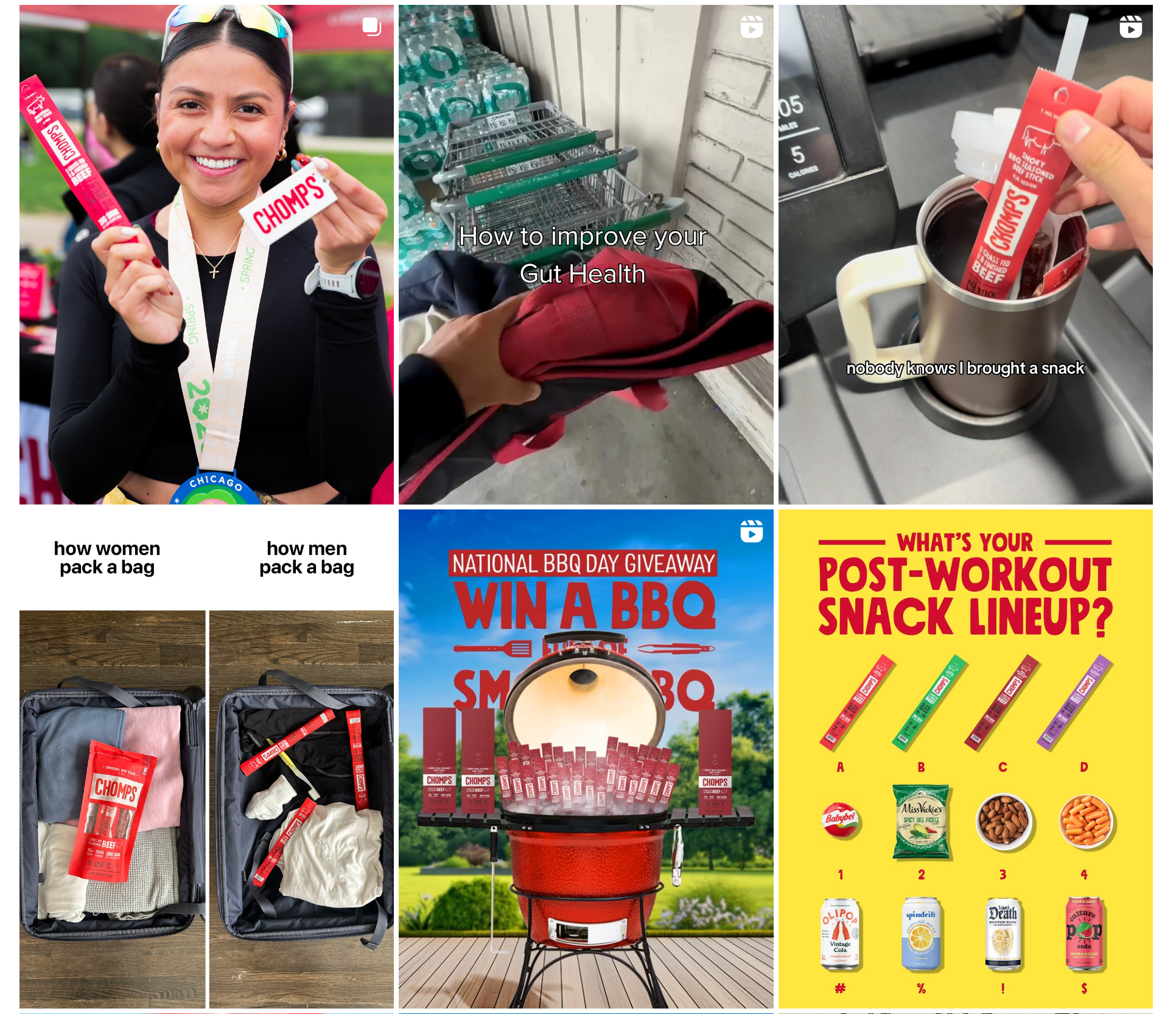
There’s no simple way to explain how America became a meat stick nation. In the case of Chomps, one of the category’s biggest brands, growth began with inroads in the fitness and alt-diet community. “Chomps was a niche offering for the CrossFit community and paleo dieters, and our initial branding was more masculine to appeal to those segments,” Matt Landen, the senior vice president of business development, told Sherwood News. “Our packaging had a cowhide background and the logo looked like a rustic cow brand. For four years, we mainly sold on direct-to-consumer, Amazon, and had a smaller wholesale business within trending diet and fitness communities like Whole30. That gave us exposure to buyers at Trader Joe’s, which gave us millions of new customers overnight.”
Of course, suddenly appearing in the cramped aisles of Trader Joe’s meant interacting not just with fitness bros and ketosis-minded snackers, but also all-category shoppers like stoners on the hunt for cookie butter and harried yet discerning parents seeking out carpool-circuit-approved snacks.
“When we got into Trader Joe’s, we started investing in panel data and learning more about our end consumer,” Landen added. “We learned that our product was organically appealing to women, and as we kept growing, we decided to do a brand refresh in 2018 that emphasized the product on the shelf through bright colors and was overall more inclusive, without alienating any audiences.” Many Chomps products now come with the tagline, “All stick without the ick.”
The fitness and wellness communities weren’t the only conduits for meat sticks to go mainstream. Righteous Felons, a craft jerky brand that now sells its beefy wares in over 10,000 locations including Costco, Wegmans, Tractor Supply Company, and Black Rifle Coffee Company, took a different route by building off the cachet of the artisan economy. “Our brand was really an attempt to apply the craft beer playbook, which we were all very passionate about 12 years ago, and to ask, ‘Could we apply that to a snack category that was in need of an overhaul?’” CEO Brendan Cawley told Sherwood. “We tried to really create the craft beer of jerky with unique packaging and funny, innuendo-type names.”
Along the way, Righteous Felons found that meat sticks were both easier to produce and package than jerky in a way that effectively appealed to a time-strapped, snack-seeking buyer on a budget. It has also helped that next-gen snack brands can market themselves with virtues generally not associated with consumer packaged meat products. Chomps, for example, promotes its sticks as sugar-free and offers a recipe page for its products that includes charcuterie boards reminiscent of the viral TikTok “girl dinner” trend. Meanwhile, Archer, another meat stick behemoth, promises grass-fed beef and has flavors like prime rib in its arsenal. Righteous Felons boasts that its products not only avoid the use of antibiotics, hormones, and corn syrup, but are also made with pasture-raised proteins sourced from American farms.
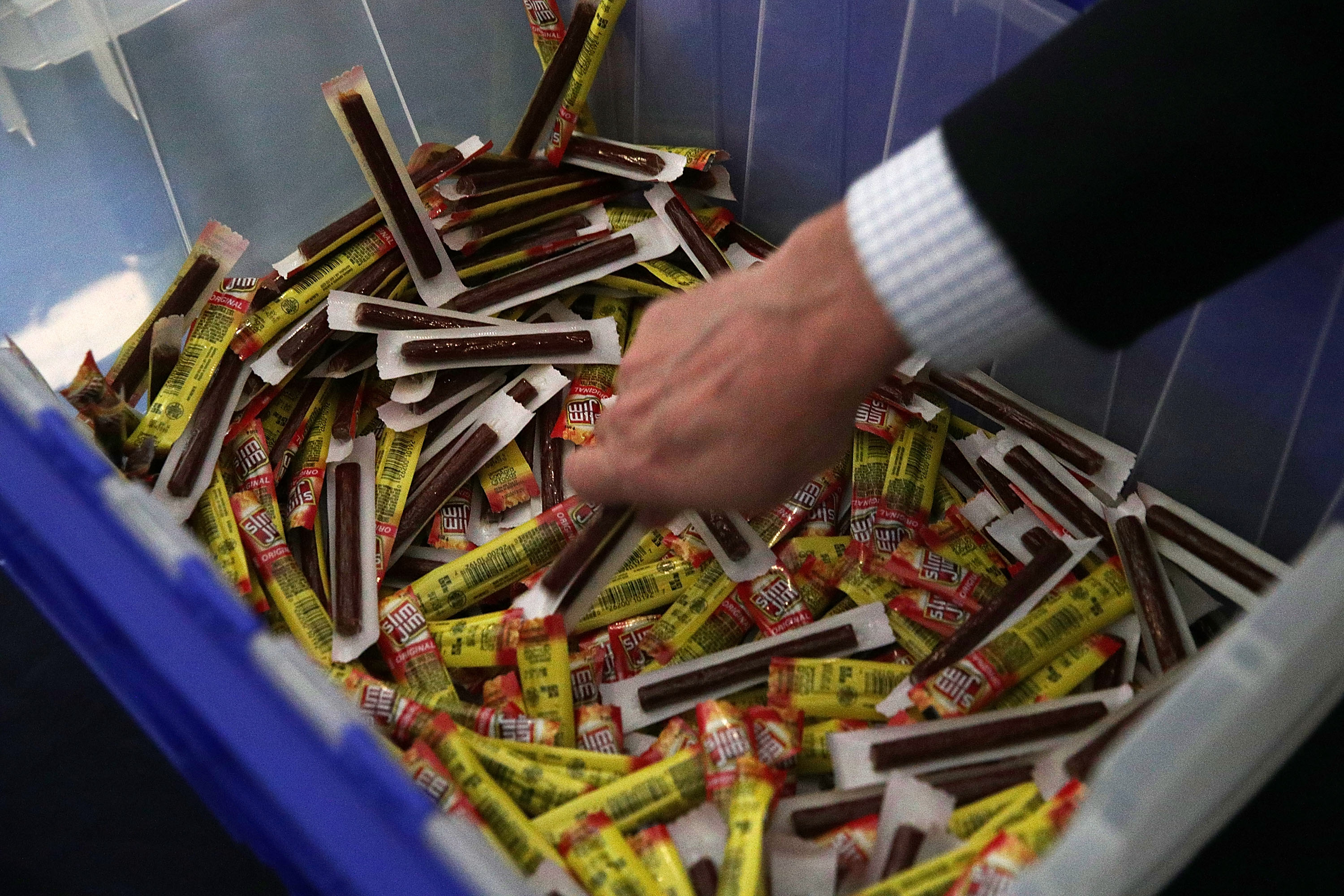
All of this constitutes a significant departure from Slim Jim, the category’s mass market godfather brand, which maintains an association with World Wrestling Entertainment that is both commercial and psychological. Even in this era of enlightened snacking, Slim Jim still relies more on shock-and-awe marketing than promises of responsible ingredients, sourcing, or nutrition. The brand’s lineup of meat sticks are offered in three gauntlet-throwing sizes: Giant, Monster, and Savage, the last of which contains roughly the same amount of meat and calories as a McDonald’s double hamburger, along with about twice the sodium.
Even as protein-packed snacks dominate the moment in food retail, their growth is attached to a wellness trend known in many sales decks as “better-for-you” snacking, which highlights the modern appeal of food that is either branded or categorized as “functional” or “efficient.” This demographic has expanded from parents, specialty dieters, and fitness obsessives to include GLP-1 users, Gen Z grazers, and on-the-go eaters who view snacks as a means to an end rather than a stopgap between meals. By one recent account, 48.8% of Americans snack three or more times a day, with millennials and Gen Z consumers in particular leading the charge.
This is a market where a wholesome meat stick thrives. “From 2023 to 2024, all categories of meat snacks — jerky, sticks — in general were flat in year-over-year growth, except for better-for-you meat sticks,” Cawley explained. “Conventional meat sticks were down 2% and better-for-you meat sticks were up 54% year over year, according to track sales from Nielsen IRI.”
Beyond these numbers, perhaps the most telling shift is how Americans are purchasing meat sticks — far away from the tabloids and holiday-themed Reese’s cups of the checkout lane. Cawley said that about 80% of the recent growth for the better-for-you meat stick brands came from multipack sales. In other words, shoppers are now not only investing more in having piles of meat sticks around the house and office; they’re also planning ahead for their purchases by adding them to grocery lists and making special trips to seek them out on shelves at stores.
As Cawley put it, “People aren’t looking at meat sticks as something they’re trying to have once in a while when they bump it into it at a gas station. It’s something they want to make part of their daily snacking.”
Meanwhile, for snack producers, the surge is doing more than enough to make ends meat.
Adam Chandler is a journalist based in New York and the author of “Drive-Thru Dreams” and “99% Perspiration.”