Tech
tech
Rani Molla

Pichai: Google wants to put its AI on Apple iPhones this year

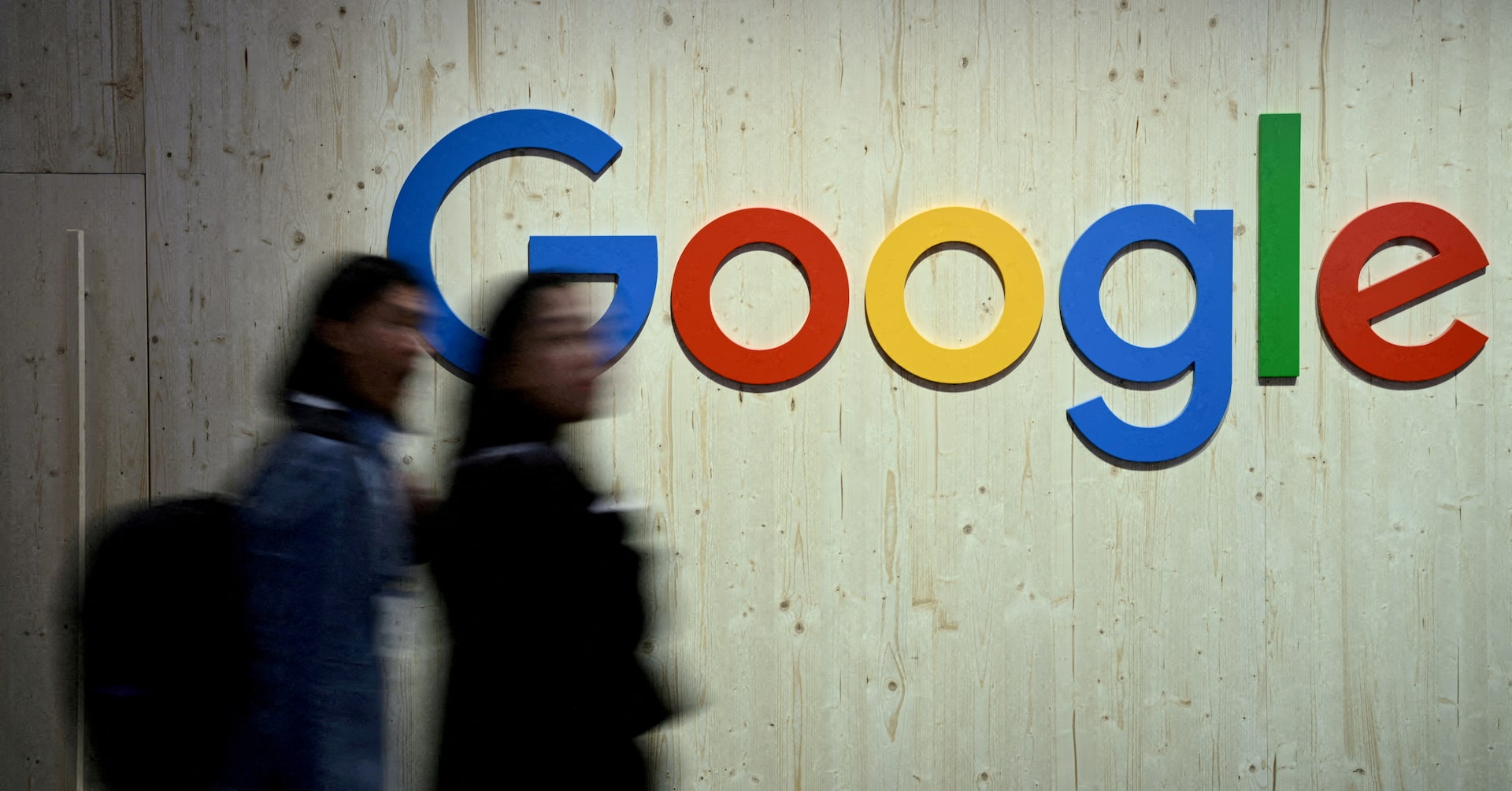
Google hopes to reach a deal to get its Gemini AI onto iPhones this year, according to a Reuters report of CEO Sundar Pichai’s testimony during Google’s antitrust case today, where the court is trying to decide how best to fix Google’s search monopoly. The Information reported that Pichai had at least a “couple” of discussions about doing so last year. Apple SVP Craig Federighi hinted at last year’s developer conference that Gemini might eventually be added to the iPhone as an AI option.

Apple is considered far behind its peers in the AI space and has had to delay a number of features, including an updated Siri on its latest AI phones. To help make up for lost time (and to bypass regulation in China), the company has partnered with a number of AI companies, including OpenAI, Alibaba, and Baidu.

How it currently works is if you ask Siri a question and Apple’s own AI models can’t answer, it offers users the ability to ask ChatGPT instead. It’s a clunky, bifurcated system that leaves much to be desired. We’ll see if a partnership with Google can help that.

Of course, one way the Department of Justice hopes to fix Google’s monopoly is by prohibiting it from paying companies like Apple to be the default search engine on its phones, a deal that snagged Apple $20 billion in 2022. If this is a situation where Google pays to be the default AI, would it be any different?

Apple is considered far behind its peers in the AI space and has had to delay a number of features, including an updated Siri on its latest AI phones. To help make up for lost time (and to bypass regulation in China), the company has partnered with a number of AI companies, including OpenAI, Alibaba, and Baidu.

How it currently works is if you ask Siri a question and Apple’s own AI models can’t answer, it offers users the ability to ask ChatGPT instead. It’s a clunky, bifurcated system that leaves much to be desired. We’ll see if a partnership with Google can help that.

Of course, one way the Department of Justice hopes to fix Google’s monopoly is by prohibiting it from paying companies like Apple to be the default search engine on its phones, a deal that snagged Apple $20 billion in 2022. If this is a situation where Google pays to be the default AI, would it be any different?

More Tech

See all Tech
ChatGPT Is Down

Is OpenAI on its way to becoming Lyft?

Once nearly synonymous with AI, it just got surpassed in valuation by Anthropic. Now it looks like it’s also going to get beaten to the IPO starting line.

tech

Palo Alto Networks surges after it beats revenue and earnings estimates

Cybersecurity firm Palo Alto Networks jumped more than 10% in postmarket trading after reporting fiscal third-quarter results that beat analyst revenue and earnings expectations.

The company posted adjusted earnings per share of $0.85, versus the FactSet analyst consensus estimate of $0.79 on $3 billion in revenue. (Wall Street had expected $2.94 billion.)

The company also boosted its guidance for the full fiscal year. The company now expects non-GAAP EPS in the range of $3.77 to $3.79, compared to its previous projection of $3.65 to $3.70 (and analysts’ expectations of $3.68). It also forecast revenue of $11.415 billion to $11.425 billion, representing year-over-year growth of 24%, compared to previous growth expectations of 22% to 23%.

Through Tuesday’s close, the stock had risen more than 60% in the past month.

tech

Microsoft releases 7 new models, next-gen quantum chip at Build conference

Microsoft is making it clear it can stand on its own as a competitor in the AI arena.

Today at its annual Microsoft Build developer conference, the company made a flurry of announcements that move it further away from the shadow of its complicated relationship with partner OpenAI.

Among the products announced:

  • New Nvidia-powered Windows PCs: the Surface Laptop Ultra and Surface RTX Spark Dev Box.

  • Seven new homegrown AI models: MAI Image-2.5, MAI Image-2.5-Flash, MAIN Transcribe-1.5, MAI Thinking-1, MAI Voice-2, MAIN Voice-2-Flash, and MAI Code-1-Flash.

  • Majorana 2, the company’s next-gen quantum chip.

  • Microsoft Scout, an integrated always-on agent built on OpenClaw.

  • Project Solara, an AI gadget operating system.

Investors were unimpressed, however, as shares were down over 4% after the announcements.

  • New Nvidia-powered Windows PCs: the Surface Laptop Ultra and Surface RTX Spark Dev Box.

  • Seven new homegrown AI models: MAI Image-2.5, MAI Image-2.5-Flash, MAIN Transcribe-1.5, MAI Thinking-1, MAI Voice-2, MAIN Voice-2-Flash, and MAI Code-1-Flash.

  • Majorana 2, the company’s next-gen quantum chip.

  • Microsoft Scout, an integrated always-on agent built on OpenClaw.

  • Project Solara, an AI gadget operating system.

Investors were unimpressed, however, as shares were down over 4% after the announcements.

Latest Stories

Sherwood Media, LLC and Chartr Limited produce fresh and unique perspectives on topical financial news and are fully owned subsidiaries of Robinhood Markets, Inc., and any views expressed here do not necessarily reflect the views of any other Robinhood affiliate, including Robinhood Markets, Inc., Robinhood Financial LLC, Robinhood Securities, LLC, Robinhood Crypto, LLC, Robinhood Money, LLC, Robinhood U.K. Ltd, Robinhood Derivatives, LLC, Robinhood Gold, LLC, Robinhood Asset Management, LLC, Robinhood Credit, Inc., Robinhood Ventures DE, LLC and, where applicable, its managed investment vehicles.