

Tech
tech

Trump administration warned that it can’t win the AI race without renewables: FT

President Trump hates renewable power.

He’s been slagging wind and solar for years, and has canceled several large projects.

Trump told Fox News:

“We don’t want windmills in this country. The wind blows and then it doesn’t blow; the things cost a fortune; they are made in China; they kill the birds; they’re horrible.”

He also made his feelings clear about solar power:

“You know what people also don’t like? Those massive solar fields built over land that cover 10 miles by 10 miles. I mean they are ridiculous, the whole thing.”

But Trump has also been vocal about the urgency of getting more energy online to power AI data centers as the US seeks to dominate the industry.

“You know, we need to do the AI, all of this new technology that’s coming online,” Trump said at an April event promoting the struggling US coal industry. “We need more than double the energy, the electricity, that we currently have.”

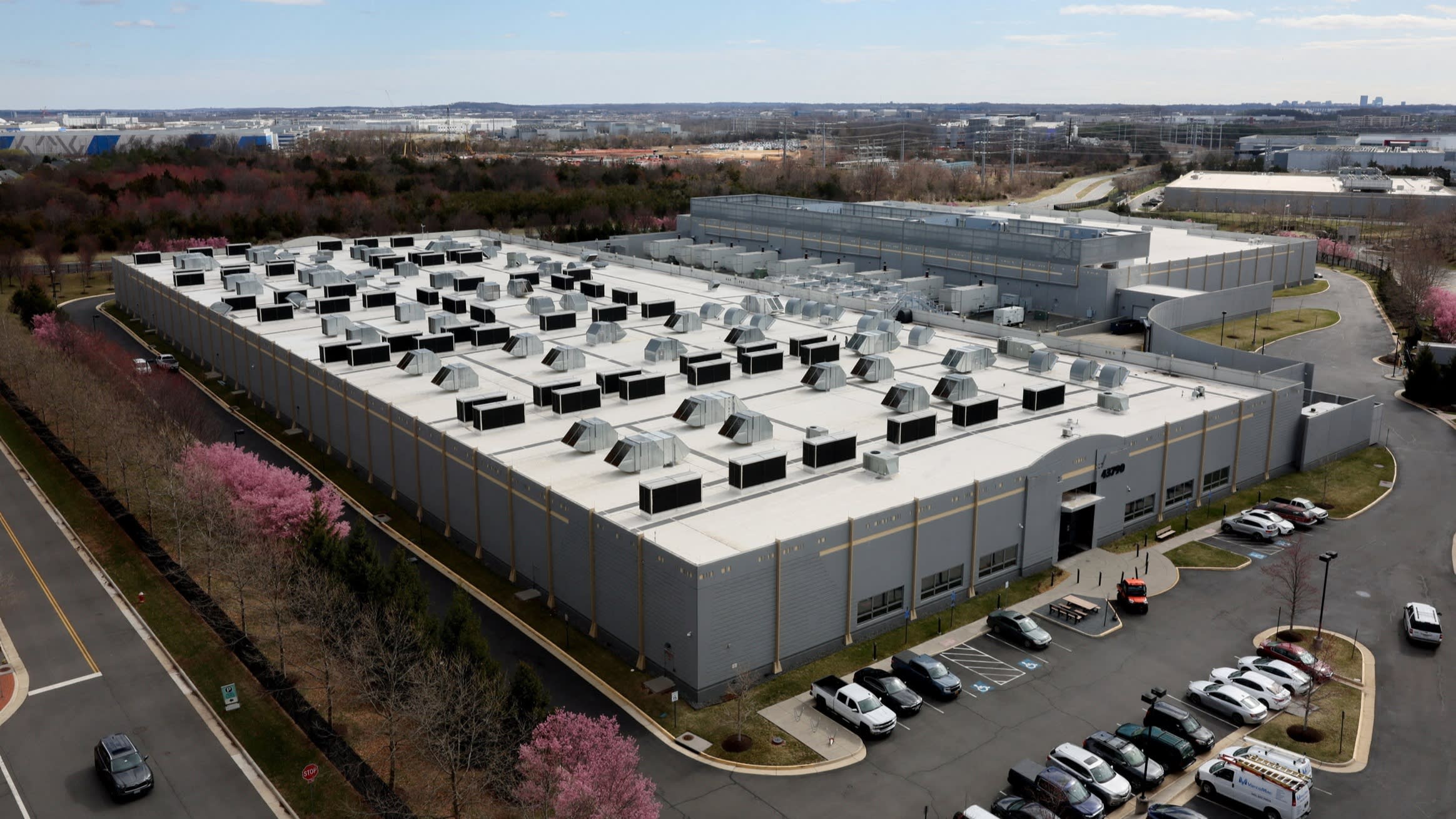
The Financial Times reports that data center owners are warning the Trump administration that the quickest, cheapest, and easiest way to spin up huge amounts of power is to back renewables. And, if they spurn renewables, it could put America behind in the AI race.

“We don’t want windmills in this country. The wind blows and then it doesn’t blow; the things cost a fortune; they are made in China; they kill the birds; they’re horrible.”

He also made his feelings clear about solar power:

“You know what people also don’t like? Those massive solar fields built over land that cover 10 miles by 10 miles. I mean they are ridiculous, the whole thing.”

But Trump has also been vocal about the urgency of getting more energy online to power AI data centers as the US seeks to dominate the industry.

“You know, we need to do the AI, all of this new technology that’s coming online,” Trump said at an April event promoting the struggling US coal industry. “We need more than double the energy, the electricity, that we currently have.”

The Financial Times reports that data center owners are warning the Trump administration that the quickest, cheapest, and easiest way to spin up huge amounts of power is to back renewables. And, if they spurn renewables, it could put America behind in the AI race.

More Tech

See all Tech
🚀 $100B

Alphabet’s 2015 investment in SpaceX is about to pay off handsomely with the company’s hotly anticipated IPO later this year, which is expected to be the largest in history.

Bloomberg reports that according to new financial filings, Alphabet’s investment could be worth up to $100 billion.

Google invested in SpaceX in 2015 when it, along with Fidelity, invested $1 billion in a round that valued SpaceX at $10 billion. At the end of 2025, Google owned just over 6% of SpaceX, per Bloomberg’s reporting on the more recent filings. That stake has likely been diluted due to SpaceX’s merger with xAI.

$1

Barclays says autonomous couriers — think sidewalk robots and drones — could push delivery costs down to as little as $1 per order, from between $5 and $7 today and closer to $9 for traditional deliveries in high-labor-cost markets. If robots save $4 on every delivery, and enough companies start using them, the food delivery industry, including companies like DoorDash and Uber, could end up with $16 billion in extra profit every year, according to Barclays.

The catch: we’re nowhere near that world yet. Robots and drones handle less than 1% of deliveries today. Even by 2035, Barclays only sees penetration hitting around 10%.

Google’s Wing and Amazon have also been trying to crack last-mile product delivery — a reminder that this is part of a broader race to automate the most expensive leg of e-commerce.

$10B

Uber has long had an asset-light business model: it provided the ride-hailing platform, and its contract workers brought their own vehicles. That’s changing as Uber positions itself at the center of the robotaxi era.

The Financial Times estimates that Uber has committed more than $10 billion to buying robotaxi fleets ($7.5 billion) and investing in the companies that make them ($2.5 billion). That includes yesterday’s announcement that its expanding its investment in Lucid, a deal worth about $2 billion, with plans to buy 35,000 vehicles.

This shift pits Uber against industry leaders like Google’s Waymo and Tesla, whose models involve company-owned vehicles running on proprietary platforms. While these autonomous fleets eliminate the need for drivers, they introduce new capital-intensive requirements for charging, cleaning, storage, and repair.

Latest Stories

Sherwood Media, LLC produces fresh and unique perspectives on topical financial news and is a fully owned subsidiary of Robinhood Markets, Inc., and any views expressed here do not necessarily reflect the views of any other Robinhood affiliate, including Robinhood Markets, Inc., Robinhood Financial LLC, Robinhood Securities, LLC, Robinhood Crypto, LLC, Robinhood Derivatives, LLC, or Robinhood Money, LLC. Futures and event contracts are offered through Robinhood Derivatives, LLC.
