
World
SWITZERLAND-DIPLOMACY-ECONOMY-SUMMIT-DAVOS
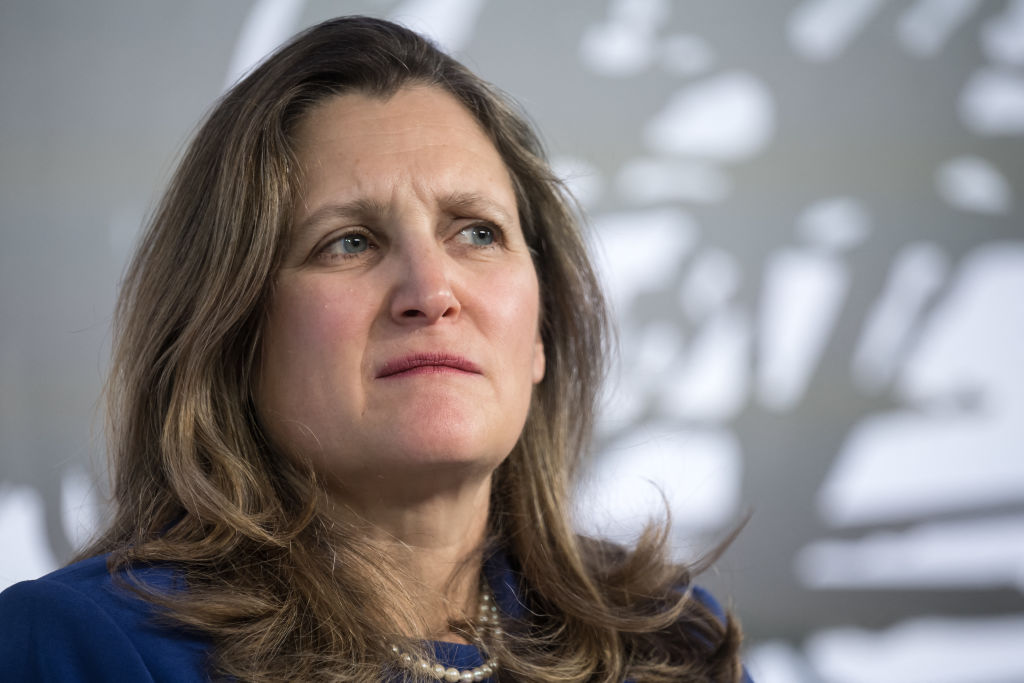
Canada's Minister of Finance Chrystia Freeland. Photo by Fabrice Coffrini/Getty Images
More taxes, eh?

Capital gains taxes won’t fix Canada’s terrible housing market

Canada's proposed solution to its housing crisis may exacerbate the problem instead.

Jack Raines

Canada’s Finance Minister, Chrystia Freeland, made waves yesterday when she announced that Canada would be increasing capital gains taxes, beginning in June 2024, as part of a broader initiative to “build more homes, faster, help make life cost less, and grow the economy in a way that helps every generation get ahead,” as well as to limit the size of the government’s annual budget deficit.

I struggle to see how raising capital gains will fix Canada’s woes.

As Canadian capital gains tax policy currently stands, only 50% of one’s capital gains are eligible to be taxed, and the taxable amount is taxed at one’s marginal tax rate. This new policy, which is Canada’s first change in capital gains levy in more than two decades, will raise the threshold to include 67% of all capital gains over C$250,000 (US$181,000).

Canada has one of the worst housing markets in the world right now, with Toronto leading UBS’s global real estate bubble index in 2022. Canada needs more homes, and increasing capital gains could exacerbate this problem by disincentivizing further real estate development.

According to Bloomberg, Alberta Central’s chief economist, Charles St. Arnaud, also warned that this move could deter business investment in Canada, saying, “While the tax changes are marginal, they have the potential to impact the perception of Canada’s business environment.”

Implementing a policy change that increases short-term government funding at the expense of longer term business investment and real estate development feels risky, and it also fails to address Canada’s real problem: an explosion in government spending.

Ignoring pandemic-era stimulus packages, Canada’s federal government spending has climbed 40% from prepandemic levels, and Freeland expects a C$40 billion deficit again this year. But this issue isn’t just financial: it’s political.

Prime Minister Trudeau’s approval rating has plummeted in polls, and with an election just 18 months away, he is hoping to use expanded government programs to improve his standing with disenchanted younger Canadians.

More World

See all World
world

US and Iran trade strikes overnight amid peace talks

Hours after President Donald Trump dismissed a report regarding a deal to restore traffic through the Strait of Hormuz, the US and Iran exchanged fresh strikes early on Thursday.

Despite an ongoing ceasefire as the countries hold talks to end the conflict, the US carried out new strikes inside Iran, The Guardian reports, prompting a retaliatory attack from Iran on a US airbase in Kuwait.

world
Tom Jones

The UAE’s OPEC exit will hit the group in the barrels

After just shy of 60 years in OPEC, its membership even predating its status as a nation-state, the United Arab Emirates yesterday announced its shocking departure from the oil production group, effective May 1, as the knock-on effects of the Iran war continue to play out across the Middle East and the energy landscape.

For context, the UAE produces the third-highest amount of oil in the group, per April data and OPEC’s latest set of annual statistics.

According to the cartel’s 2025 Annual Statistical Bulletin, the OPEC group was collectively exporting some 19 million barrels of crude oil a day last year, with the United Arab Emirates accounting for some 14% of that daily output.

UAExit means UAExit

The nation, whose energy minister told Reuters yesterday that the decision was taken “after a careful look at current and future policies related to level of production” and wasn’t made following discussions with any other country, made up a healthy share of the group’s total confirmed crude oil reserves, as well.

OPEC exports chart
Sherwood News

Of the 12 nations in the core group, which was founded by just five oil superpowers back in September 1960, only two (Iraq and Saudi Arabia) exported more barrels of crude oil daily, pumping out 3.36 million and 6.05 million barrels, respectively, each day to nations around the world.

For its part, the UAE said it will “continue its responsible role by gradually and thoughtfully increasing production, in line with demand and market conditions,” per the official state news agency. Clearly, the nation now wants a little more control of just how much oil it can pump around the world, with the UAE having to eat a large proportion of lost revenues due to its healthy abundance and OPEC restrictions.

According to the cartel’s 2025 Annual Statistical Bulletin, the OPEC group was collectively exporting some 19 million barrels of crude oil a day last year, with the United Arab Emirates accounting for some 14% of that daily output.

UAExit means UAExit

The nation, whose energy minister told Reuters yesterday that the decision was taken “after a careful look at current and future policies related to level of production” and wasn’t made following discussions with any other country, made up a healthy share of the group’s total confirmed crude oil reserves, as well.

OPEC exports chart
Sherwood News

Of the 12 nations in the core group, which was founded by just five oil superpowers back in September 1960, only two (Iraq and Saudi Arabia) exported more barrels of crude oil daily, pumping out 3.36 million and 6.05 million barrels, respectively, each day to nations around the world.

For its part, the UAE said it will “continue its responsible role by gradually and thoughtfully increasing production, in line with demand and market conditions,” per the official state news agency. Clearly, the nation now wants a little more control of just how much oil it can pump around the world, with the UAE having to eat a large proportion of lost revenues due to its healthy abundance and OPEC restrictions.

Latest Stories

Sherwood Media, LLC and Chartr Limited produce fresh and unique perspectives on topical financial news and are fully owned subsidiaries of Robinhood Markets, Inc., and any views expressed here do not necessarily reflect the views of any other Robinhood affiliate, including Robinhood Markets, Inc., Robinhood Financial LLC, Robinhood Securities, LLC, Robinhood Crypto, LLC, Robinhood Money, LLC, Robinhood U.K. Ltd, Robinhood Derivatives, LLC, Robinhood Gold, LLC, Robinhood Asset Management, LLC, Robinhood Credit, Inc., Robinhood Ventures DE, LLC and, where applicable, its managed investment vehicles.