
World
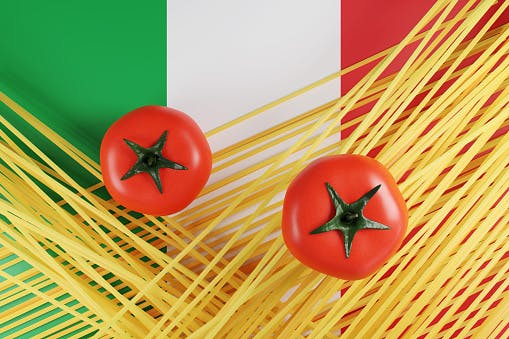
Uncooked (raw) spaghetti and tomatoes on the national flag of Italy. Illustration of the concept of Italian cuisine and pasta
Getty Images
TAXLIATELLE

Italian pasta could cost twice as much in the US under new tariffs

New tariffs could take import duties to 107% on Italian noodles.

Hyunsoo Rim

Americans may soon have to say arrivederci to their favorite Italian penne, fusilli, and more, as new US tariffs threaten to price them out of reach — or push them off American shelves altogether.

In early September, the US Commerce Department proposed a 91.74% “antidumping” duty on 13 Italian pasta makers after a yearlong probe into their pricing practices. While Italys pasta producers have often been accused of “dumping” — selling goods below domestic market prices — this marks an unprecedented escalation, possibly bringing total tariffs on Italian pasta imports to around 107% when combined with the existing 15% EU import duty.

Commerce officials said the steep penalties reflected the companies “uncooperative” responses during the investigation, while Italian officials condemned the decision as disproportionate” and “hyper-protectionist.” Pasta lovers are equally inconsolable.

Indeed, such a levy would be a major blow to the world’s pasta capital: Italy consumes more pasta per person than any other nation on Earth, averaging over 23 kilograms each year, per the International Pasta Organization. Its also the worlds top pasta exporter, and about half of its pasta exports to the US (and 90% of its premium lines) could be hit if the new duties stick, according to Italian industry group Filiera Italia.
2025-11-12-pasta
Sherwood News

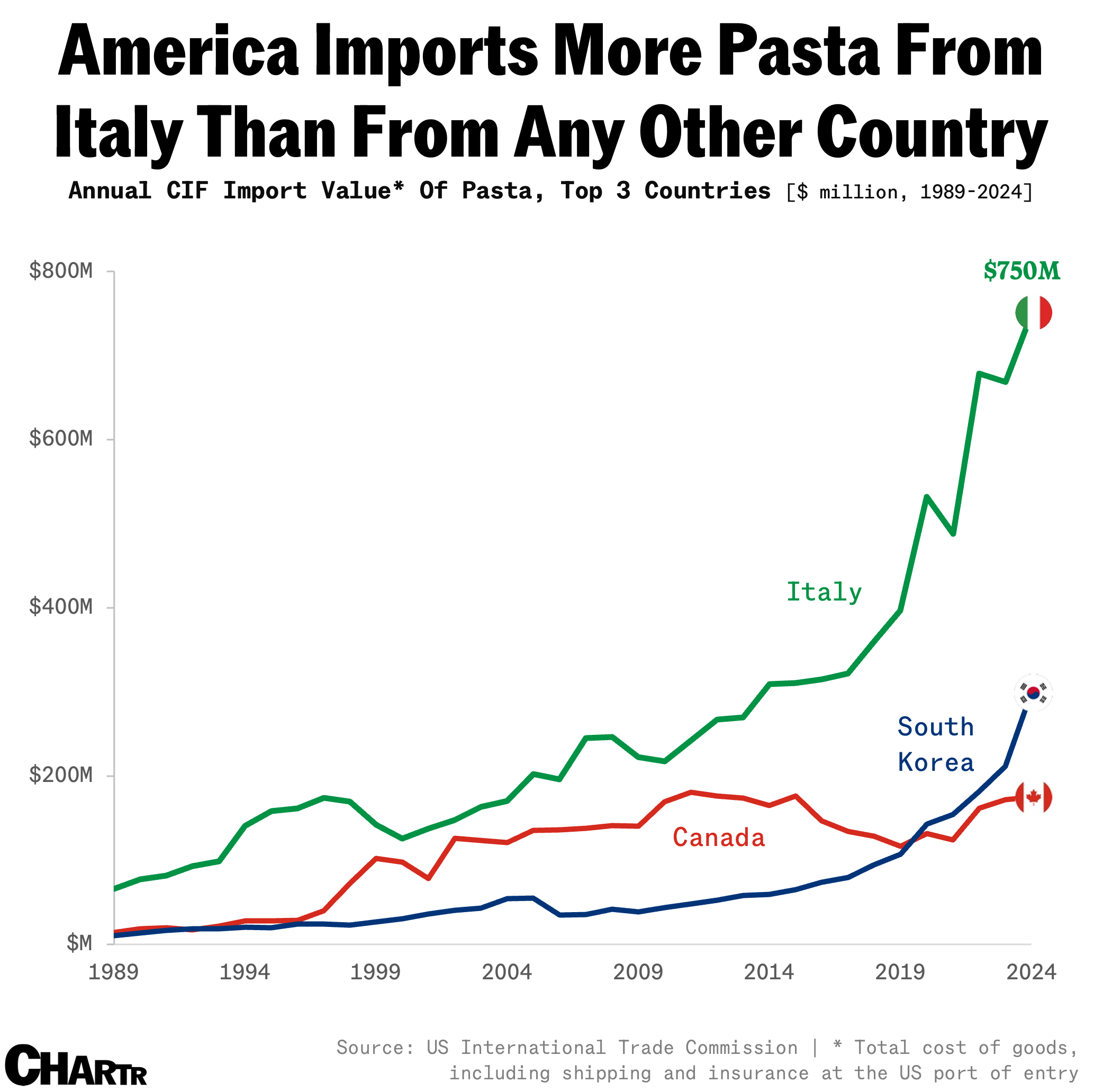
For decades, American kitchens have had a soft spot for Italian noodles. Per data from the US International Trade Commission, the US imported nearly $750 million worth of pasta from Italy last year, up more than 4x since 1994 — and well above the combined imports from the next four-largest suppliers, including South Korea and Canada.

Despite the best efforts of marketing departments to associate their products with the boot-shaped nation, most pasta on American shelves is actually homegrown: The Washington Post reported that Italian-made pasta represented only ~12% of the $6.2 billion US market. For those who insist on the authentic stuff, though, brace for sticker shock: Italy’s biggest agricultural organization warns the new tariffs could double the cost of that plate of spaghetti — and some brands are preparing to exit the US market in January, per the WSJ.

The new ~92% tariffs are still preliminary, with Italian companies given up to 120 days from the September ruling to respond. The Commerce Department is expected to issue its final decision in January 2026, unless the deadline is extended.

More World

See all World
world

US and Iran trade strikes overnight amid peace talks

Hours after President Donald Trump dismissed a report regarding a deal to restore traffic through the Strait of Hormuz, the US and Iran exchanged fresh strikes early on Thursday.

Despite an ongoing ceasefire as the countries hold talks to end the conflict, the US carried out new strikes inside Iran, The Guardian reports, prompting a retaliatory attack from Iran on a US airbase in Kuwait.

world
Tom Jones

The UAE’s OPEC exit will hit the group in the barrels

After just shy of 60 years in OPEC, its membership even predating its status as a nation-state, the United Arab Emirates yesterday announced its shocking departure from the oil production group, effective May 1, as the knock-on effects of the Iran war continue to play out across the Middle East and the energy landscape.

For context, the UAE produces the third-highest amount of oil in the group, per April data and OPEC’s latest set of annual statistics.

According to the cartel’s 2025 Annual Statistical Bulletin, the OPEC group was collectively exporting some 19 million barrels of crude oil a day last year, with the United Arab Emirates accounting for some 14% of that daily output.

UAExit means UAExit

The nation, whose energy minister told Reuters yesterday that the decision was taken “after a careful look at current and future policies related to level of production” and wasn’t made following discussions with any other country, made up a healthy share of the group’s total confirmed crude oil reserves, as well.

OPEC exports chart
Sherwood News

Of the 12 nations in the core group, which was founded by just five oil superpowers back in September 1960, only two (Iraq and Saudi Arabia) exported more barrels of crude oil daily, pumping out 3.36 million and 6.05 million barrels, respectively, each day to nations around the world.

For its part, the UAE said it will “continue its responsible role by gradually and thoughtfully increasing production, in line with demand and market conditions,” per the official state news agency. Clearly, the nation now wants a little more control of just how much oil it can pump around the world, with the UAE having to eat a large proportion of lost revenues due to its healthy abundance and OPEC restrictions.

According to the cartel’s 2025 Annual Statistical Bulletin, the OPEC group was collectively exporting some 19 million barrels of crude oil a day last year, with the United Arab Emirates accounting for some 14% of that daily output.

UAExit means UAExit

The nation, whose energy minister told Reuters yesterday that the decision was taken “after a careful look at current and future policies related to level of production” and wasn’t made following discussions with any other country, made up a healthy share of the group’s total confirmed crude oil reserves, as well.

OPEC exports chart
Sherwood News

Of the 12 nations in the core group, which was founded by just five oil superpowers back in September 1960, only two (Iraq and Saudi Arabia) exported more barrels of crude oil daily, pumping out 3.36 million and 6.05 million barrels, respectively, each day to nations around the world.

For its part, the UAE said it will “continue its responsible role by gradually and thoughtfully increasing production, in line with demand and market conditions,” per the official state news agency. Clearly, the nation now wants a little more control of just how much oil it can pump around the world, with the UAE having to eat a large proportion of lost revenues due to its healthy abundance and OPEC restrictions.

Latest Stories

Sherwood Media, LLC and Chartr Limited produce fresh and unique perspectives on topical financial news and are fully owned subsidiaries of Robinhood Markets, Inc., and any views expressed here do not necessarily reflect the views of any other Robinhood affiliate, including Robinhood Markets, Inc., Robinhood Financial LLC, Robinhood Securities, LLC, Robinhood Crypto, LLC, Robinhood Money, LLC, Robinhood U.K. Ltd, Robinhood Derivatives, LLC, Robinhood Gold, LLC, Robinhood Asset Management, LLC, Robinhood Credit, Inc., Robinhood Ventures DE, LLC and, where applicable, its managed investment vehicles.