Business
US-SPACE-BOEING-STARLINER-AEROSPACE
The United Launch Alliance Atlas V rocket with Boeing's CST-100 Starliner spacecraft (Miguel J. Rodriguez Carrillo/Getty Images)

Boeing is really bad at lots of very complicated things

That means it’s really good at losing money. Now it’s raising tens of billions of dollars and trying to sell its space operations.

A couple weeks ago on the Snacks Mix podcast, we contrasted Boeing’s recent miscues with SpaceX’s recent successes.

Boeing just posted a $6 billion quarterly loss (its second-largest quarterly loss on record), it is losing $50 million per day while its factory workers are still on strike, it made plans to lay off 10% of its workforce, it has $60 billion in debt, it had to raise $21 billion in a stock issuance to stave off a credit downgrade, and after years of PR crises thanks to its Boeing 737 MAX issues, Boeing left two astronauts stranded at the International Space Station after NASA deemed thruster failure and helium leaks on Boeing’s Starliner too risky to make the return trip with astronauts onboard.

Now, SpaceX, which just caught a 232-foot rocket booster with a set of “chopsticks” built into its launch facility, is handling the astronauts’ rescue mission in February.

As if things couldn’t get any worse, The Wall Street Journal reported Friday that Boeing is exploring a sale of its space business, which includes its Starliner spacecraft, as part of new CEO Kelly Ortberg’s plan to cut back the company’s financial losses. As noted above, Boeing lost $6 billion last quarter, and it’s currently losing $50 million a day as this strike drags on.

A big portion of that loss stems from the company’s Defense, Space & Security segment. This segment, which includes Boeing’s space program, lost $2.4 billion on $5.5 billion in revenue in Q3 this year, including a $250 million charge reflecting “schedule delays and higher testing and certification costs.”

News of this potential sale comes two months after Reuters reported that Boeing and Lockheed Martin want to sell the United Launch Alliance, their joint-venture launch provider that launched Boeing’s Starliner mission to the ISS in June. Given Boeing’s precarious financial situation (high debt load, mounting losses, etc.) and uncertainty surrounding its space business following the recent issues with its Starliner spacecraft, it makes sense for the company to focus on its core business of plane manufacturing, which has been dealing with its own problems. With Boeing’s former CEO stating in 2022 that Boeing had no plans for a new plane until the mid-2030s, and the company’s factory workers still costing it $50 million per day while they strike, one has to wonder when the bad news for Boeing will finally end.

More Business

See all Business
The entrance of Allbirds seen from Hayes St. in San Francisco, Calif.

Allbirds, the once buzzy multibillion-dollar sneaker startup, is selling up for $39 million

That’s less than 1% of its peak market cap about four years ago.

Tom Jones3/31/26
business

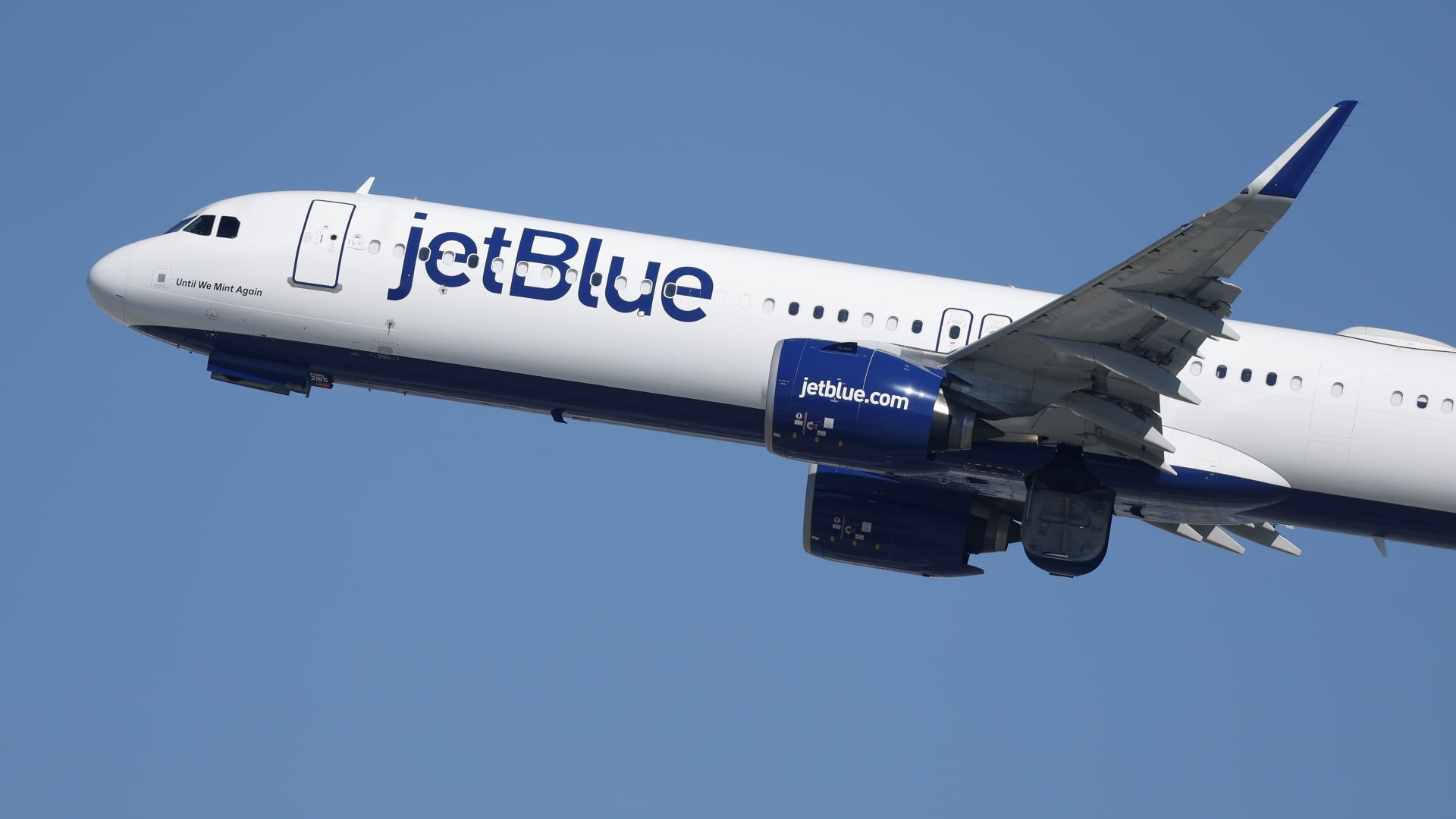
JetBlue is raising its bag fees as fuel costs squeeze airlines

JetBlue will reportedly hike its bag fees, as the cost of jet fuel continues to climb amid the war in Iran. It’s the latest example of carriers finding ways to push rising costs onto travelers.

Last week, United Airlines CEO Scott Kirby said that if fuel prices remain elevated, fares would need to rise another 20% for his airline to break even this year.

As CNBC reported, when one airline raises fees, others tend to follow.

Earlier this month, JetBlue hiked its first-quarter outlook for operating revenue per seat mile to between 5% and 7%, saying that strong Q1 demand helped “partially offset additional expenses realized from operational disruptions and rising fuel costs.” Now, the carrier appears to be making moves to further boost revenue to offset those costs.

Earlier on Monday, JetBlue rival Alaska Air lowered its Q1 profit forecast. The refining margins for the carrier’s cheapest fuel option — sourced from Singapore and representing about 20% of Alaska’s overall supply — have spiked 400% since February.

JetBlue did not immediately respond to a request for comment.

As CNBC reported, when one airline raises fees, others tend to follow.

Earlier this month, JetBlue hiked its first-quarter outlook for operating revenue per seat mile to between 5% and 7%, saying that strong Q1 demand helped “partially offset additional expenses realized from operational disruptions and rising fuel costs.” Now, the carrier appears to be making moves to further boost revenue to offset those costs.

Earlier on Monday, JetBlue rival Alaska Air lowered its Q1 profit forecast. The refining margins for the carrier’s cheapest fuel option — sourced from Singapore and representing about 20% of Alaska’s overall supply — have spiked 400% since February.

JetBlue did not immediately respond to a request for comment.

Latest Stories

Sherwood Media, LLC produces fresh and unique perspectives on topical financial news and is a fully owned subsidiary of Robinhood Markets, Inc., and any views expressed here do not necessarily reflect the views of any other Robinhood affiliate, including Robinhood Markets, Inc., Robinhood Financial LLC, Robinhood Securities, LLC, Robinhood Crypto, LLC, Robinhood Derivatives, LLC, or Robinhood Money, LLC. Futures and event contracts are offered through Robinhood Derivatives, LLC.