
Business
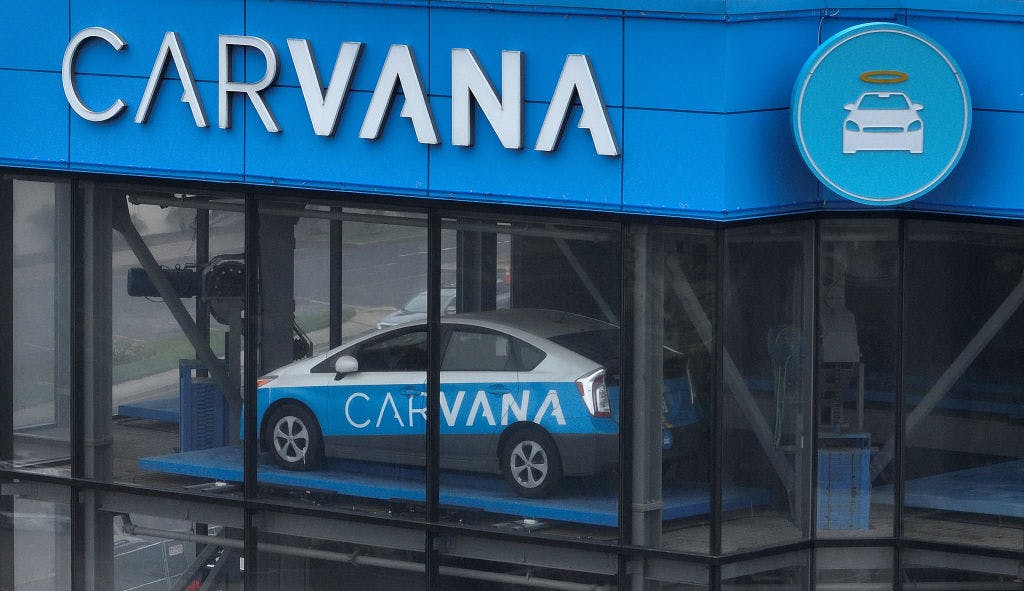
Carvana's Stock Price Jumps On The Company's Debt Restructuring Plan
(Justin Sullivan/Getty Images)
Cruisin’

Carvana, still eyeing massive growth, climbs on earnings beat

The used car retailer announced its second-quarter earnings after the market close on Wednesday.

Max Knoblauch

Used car retailer Carvana reported its second-quarter earnings after the bell on Wednesday, and the company’s ambitious growth plan is still hitting the gas.

Carvana reported earnings per share of $1.28 on revenue of $4.84 billion and profit of $308 million, beating expectations on every metric. Analysts polled by FactSet expected earnings of $1.17 per share on revenue of $4.58 billion and profit of $267 million.

Carvana shares climbed over 11% in after-hours trading.

The second quarter was the first to feel the effect of tariffs, which experts have expected to ultimately boost used car sales, due to the new vehicle price hike. Carvana sold 143,280 retail units on the quarter, up 41% from last year’s 101,440 units. Wall Street expected more than 142,300 used retail sales.

Rapid expansion is Carvana’s goal: last quarter, the retailer said it’s aiming to sell 3 million retail units annually within 5 to 10 years. That’s more than 5x the figure Wall Street expects Carvana to reach this year (about 566,000 units). To achieve its lofty target, Carvana will need to maintain annual sales growth of between 18% and 43%, implying significant expansion of its market share.

Carvana’s retail success gets it closer to its rival CarMax, which sells significantly more used vehicles to customers despite having a market share of more than $60 billion less than Carvana’s. CarMax sold more than 230,000 retail units in its first quarter, which ended in May.

More Business

See all Business
Stacked Cars in Parking Lot

With gas prices soaring, the humble sedan is making a comeback

Recent US sales data reveals a “sedanaissance” among major automakers like Honda, Hyundai, and Toyota.

business

The Trump administration is reportedly planning a 50% made-in-America requirement for USMCA tariff relief

Qualifying for USMCA-related lower tariffs may soon require more US-made vehicle components, according to reporting by The Wall Street Journal.

The Trump administration is reportedly planning to introduce a 50% US content requirement for vehicles covered by the trade pact to receive lower tariffs. The content would be measured by cost, according to the WSJ.

There currently isn’t any US-specific requirement for those lower tariff rates, but in order to receive preferential tariffs, vehicles are must contain at least 75% regional content (components made in North America). Per Reuters reporting, the Trump admin is seeking to raise the regional requirement to 82%.

These reported plans are subject to change as the US negotiates USMCA terms with Mexico over the next few months.

Overall, Tesla will likely have the easiest time qualifying for any stricter requirements. The automaker’s vehicles contained the highest amount of US/Canadian content in 2025, according to American University research. Ford, GM, and Stellantis all scored lower.

Notably: the underlying government data that many domestic content measurements rely on intentionally combines US and Canadian components, so it’s difficult to know exactly how much of any given vehicle is specifically US-made.

There currently isn’t any US-specific requirement for those lower tariff rates, but in order to receive preferential tariffs, vehicles are must contain at least 75% regional content (components made in North America). Per Reuters reporting, the Trump admin is seeking to raise the regional requirement to 82%.

These reported plans are subject to change as the US negotiates USMCA terms with Mexico over the next few months.

Overall, Tesla will likely have the easiest time qualifying for any stricter requirements. The automaker’s vehicles contained the highest amount of US/Canadian content in 2025, according to American University research. Ford, GM, and Stellantis all scored lower.

Notably: the underlying government data that many domestic content measurements rely on intentionally combines US and Canadian components, so it’s difficult to know exactly how much of any given vehicle is specifically US-made.

Latest Stories

Sherwood Media, LLC and Chartr Limited produce fresh and unique perspectives on topical financial news and are fully owned subsidiaries of Robinhood Markets, Inc., and any views expressed here do not necessarily reflect the views of any other Robinhood affiliate, including Robinhood Markets, Inc., Robinhood Financial LLC, Robinhood Securities, LLC, Robinhood Crypto, LLC, Robinhood Money, LLC, Robinhood U.K. Ltd, Robinhood Derivatives, LLC, Robinhood Gold, LLC, Robinhood Asset Management, LLC, Robinhood Credit, Inc., Robinhood Ventures DE, LLC and, where applicable, its managed investment vehicles.
