
Business
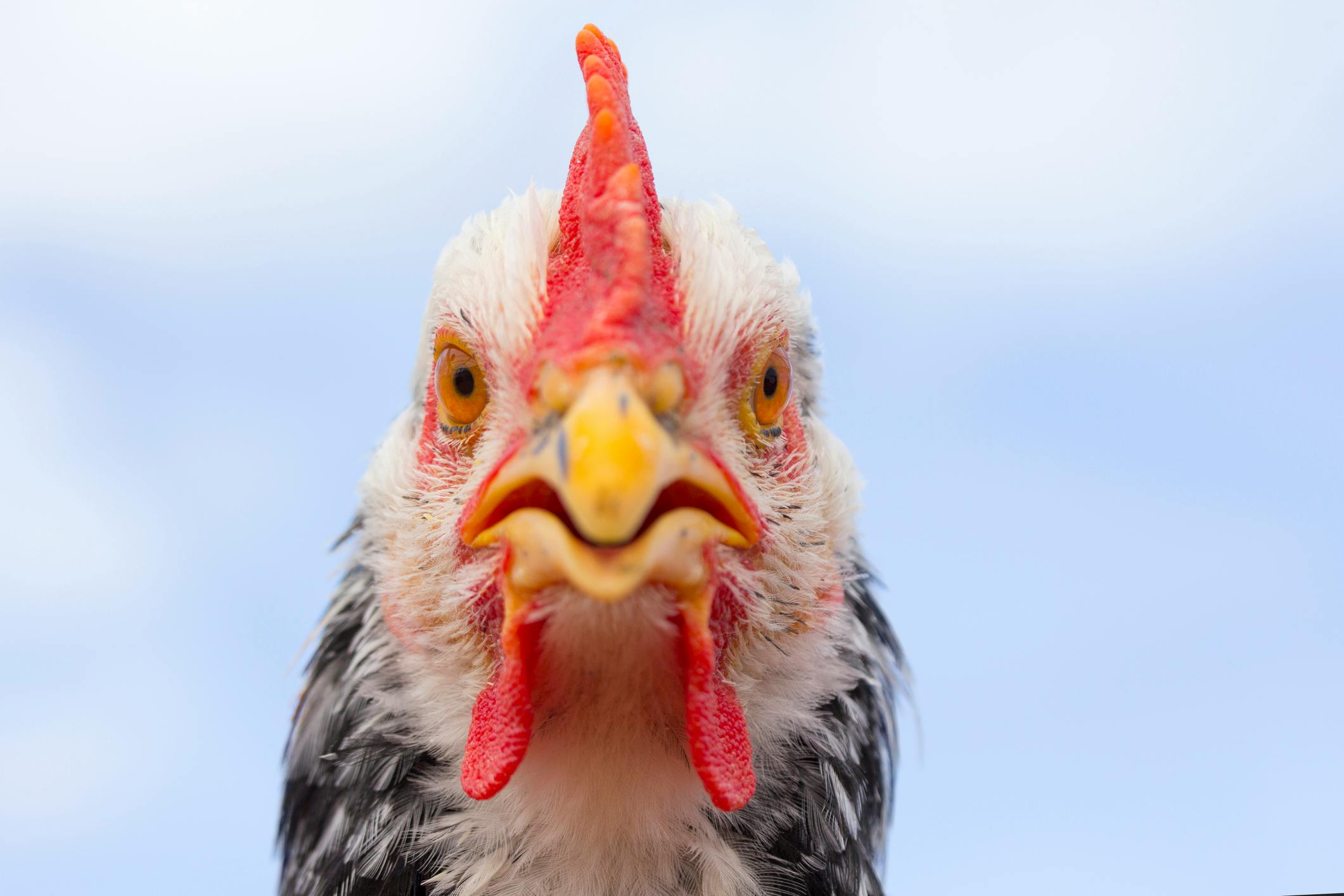
Hen portrait
Animal close-up
Beef is Clucked

Beef prices got ridiculous, and the winner winner is chicken dinner

Beef has gotten significantly more expensive than chicken and pork. Consumers are responding accordingly.

J. Edward Moreno

Companies that sell food are growing bullish on chicken and bearish on beef as consumers continue to search for cheap meals.

Drought and high interest rates have contributed to a dwindling supply of cattle in the US, shooting up the price of beef. Meanwhile, grain prices have dropped this year, which boosted the supply of chicken.

This has propped up consumers' taste for chicken, and food companies have risen to the occasion.

Taco Bell's parent company, Yum! Brands, reported greater interest in the chain's Cantina Chicken menu drove sales growth. McDonald’s, long known for its burgers, reported that its chicken sales are now on par with its beef sales.

Gunther Plosch, chief financial officer at Wendy's, put it simply: "Beef and fries are inflationary for us. Chicken is deflationary."

A pound of sirloin steak has gone from about $6 in 2006 to $11.50 as of this summer, according to data from the Bureau of Labor Statistics. That means a steak is more than twice as expensive as a pork chop ($4.40) or chicken breast ($4.05) per pound.

The cost of a steak has always come at a premium, and ground beef was the more affordable option.

Until 2012, a pound of ground beef was cheaper than a pound of boneless chicken breast or pork chop.

Now, ground beef is almost a $1.50 more per pound.

The chicken gold rush has led share prices for meatpackers like Tyson and JBS to rise during an otherwise gloomy moment in the stock market.

Dwindling US cattle supplies are squeezing Tyson's beef business, its largest unit. Chicken has made up for that lag: Tyson’s poultry business made $307 million in profits in the quarter, the highest since 2016.

“Chicken had one of its best quarters in some time,” Donnie King, CEO of Tysons, told analysts.

Fabio Sandri, CEO of Pilgrim's Pride, noted that unlike other moments when beef was significantly pricier, now consumers are particularly value-conscious. Pilgrim's Pride, which is controlled by the Brazilian food giant JBS, also reported increased demand for chicken.

"The difference or the gap between ground beef and boneless skinless breasts for the end user has reached record highs in terms of gap," he said. "I think what's different is that the consumer today, different than in the past, it is looking for deals."

More Business

See all Business
Family Watching Baseball On Tv

Netflix and Disney+ probably only added ad-tier subscribers this year, says Morgan Stanley

As streaming prices climb, ad-free subscribers are becoming a rarity.

Aldi Grand Opening

Discount stores are having a moment in America, drawing high- and low-income consumers alike

Everyone loves a deal in 2025 — and Aldi, Walmart, and Dollar Tree are all cashing in.

Millie Giles12/17/25
business

Report: OpenAI won’t pay a dime in cash for its 3-year licensing deal for Disney IP

More financial details behind the landmark deal that will grant OpenAI three years of access to Disney intellectual property are coming out, and they’re pretty surprising.

The deal will reportedly see OpenAI pay zero dollars in licensing fees, instead compensating Disney in stock warrants. It was previously reported that Disney would invest $1 billion into OpenAI as part of the agreement.

It’s very abnormal for Disney to grant anyone access to its massive IP library without a cash payment, and the entertainment juggernaut has been known to strike down even crocheted Etsy Yodas for infringing on its turf. In its fiscal year 2025, Disney booked more than $10 billion in revenue from licensing fees across merchandising, television, and theatrical distribution.

It’s very abnormal for Disney to grant anyone access to its massive IP library without a cash payment, and the entertainment juggernaut has been known to strike down even crocheted Etsy Yodas for infringing on its turf. In its fiscal year 2025, Disney booked more than $10 billion in revenue from licensing fees across merchandising, television, and theatrical distribution.

business

Ford says it will take $19.5 billion in charges in a massive EV write-down

The EV business has marked a long stretch of losing for Ford, and today the automaker announced it will take $19.5 billion in charges tied, for the most part, to its EV division.

Ford said it’s launching a battery energy storage business, leveraging battery plants in Kentucky and Michigan to “provide solutions for energy infrastructure and growing data center demand.”

According to Ford, the changes will drive Ford’s electrified division to profitability by 2029. The company will stop making its electric F-150, the Lightning, and instead shift to an “extended-range electric vehicle” that includes a gas-powered generator.

The Detroit automaker also raised its adjusted earnings before interest and taxes outlook to “about $7 billion” from a range of $6 billion to $6.5 billion.

Ford’s write-down is one of the largest taken by a company as legacy automakers scale back on EVs, giving EV-only automakers a market share boost.

Latest Stories

Sherwood Media, LLC produces fresh and unique perspectives on topical financial news and is a fully owned subsidiary of Robinhood Markets, Inc., and any views expressed here do not necessarily reflect the views of any other Robinhood affiliate, including Robinhood Markets, Inc., Robinhood Financial LLC, Robinhood Securities, LLC, Robinhood Crypto, LLC, or Robinhood Money, LLC.