Business
Space tourism: The commercial space race blasts off

Space tourism: The commercial space race blasts off

Space tourism... and beyond

Indeed, SpaceX, which has a wide-ranging set of commercial interests beyond taking tourists to the edge of space, continues to move forward — with a tender offer reported last week that could value it at $175bn. Plans for thousands of internet satellites, commercial travel to the moon, a base on the lunar surface and even loftier goals to turn the human race into an interplanetary species by colonizing other planets, are all ambitions of the California-based company.

SpaceX has catalyzed much of the excitement about space tourism. The company’s two-stage Falcon 9 rocket is able to launch a kilogram into low-Earth orbit for just ~$1,500, a 10-20x decrease in cost in roughly as many years. That's due to its (partial) reusability — a breakthrough that’s helped SpaceX dominate commercial launchpads in the US. Indeed, FAA data reveals that SpaceX has completed 281 licensed launches since 2000 — 9x as many as Blue Origin and Virgin Galactic have managed between them.

Up

Of course, even if you re-use some of the rocket, burning hundreds of tonnes of CO2 in the pursuit of tourism for rich people is always going to be controversial. But, not all space tourism ventures see themselves blasting into the final frontier. A French startup, Zephalto, is looking to make its first ascent in late 2024, carrying 6 passengers in a pressurized cabin with comfy couches attached to a giant eco-friendly balloon, offering passengers Michelin-starred catering while they look at the Earth’s curves. Needless to say, Zephalto’s vision remains more of a concept for tourists, than a reality, for now.

These ventures all beg perhaps the most important question of all: does anyone want to go to space anyway?


More Business

See all Business
The entrance of Allbirds seen from Hayes St. in San Francisco, Calif.

Allbirds, the once buzzy multibillion-dollar sneaker startup, is selling up for $39 million

That’s less than 1% of its peak market cap about four years ago.

business

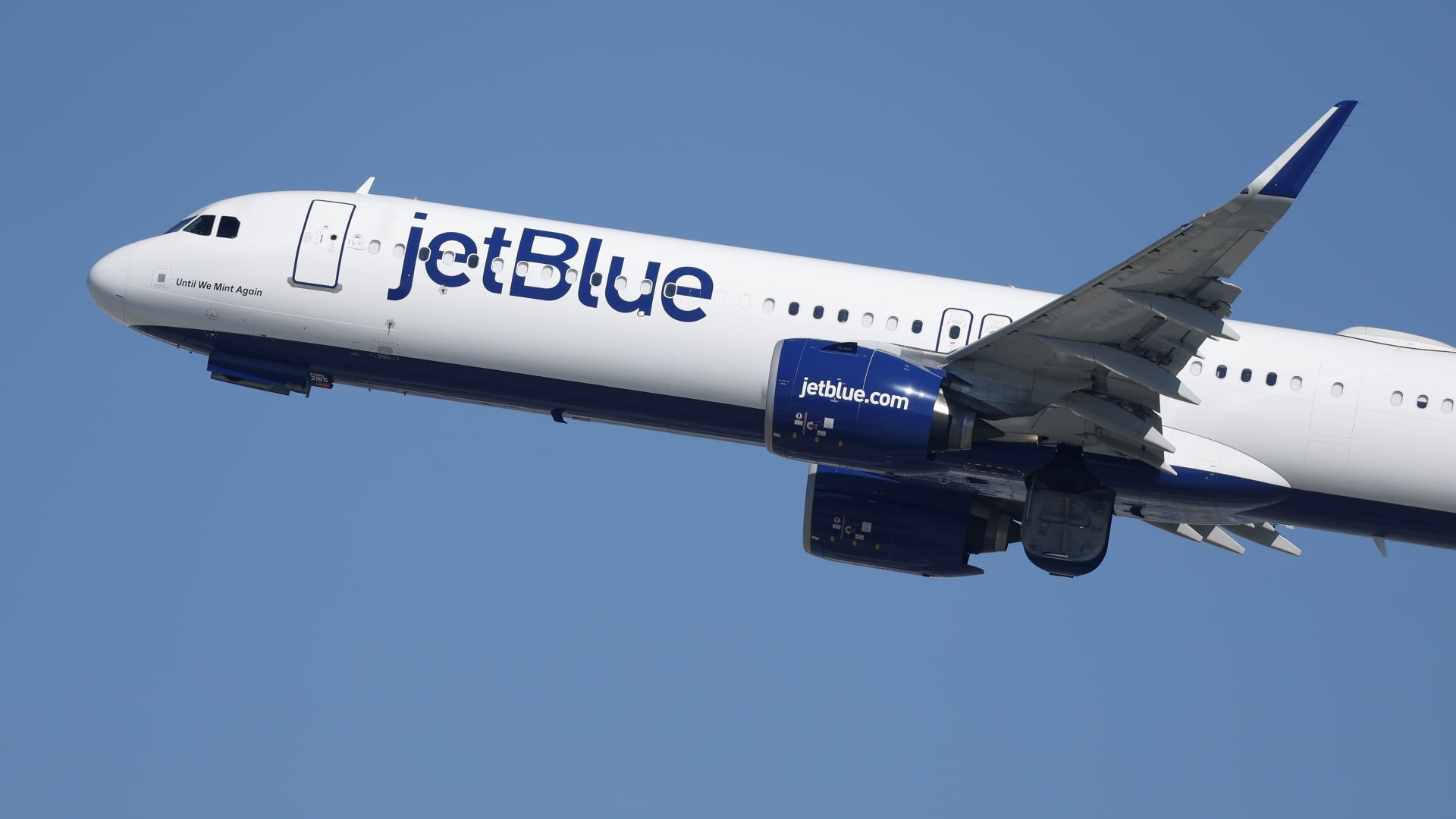
JetBlue is raising its bag fees as fuel costs squeeze airlines

JetBlue will reportedly hike its bag fees, as the cost of jet fuel continues to climb amid the war in Iran. It’s the latest example of carriers finding ways to push rising costs onto travelers.

Last week, United Airlines CEO Scott Kirby said that if fuel prices remain elevated, fares would need to rise another 20% for his airline to break even this year.

As CNBC reported, when one airline raises fees, others tend to follow.

Earlier this month, JetBlue hiked its first-quarter outlook for operating revenue per seat mile to between 5% and 7%, saying that strong Q1 demand helped “partially offset additional expenses realized from operational disruptions and rising fuel costs.” Now, the carrier appears to be making moves to further boost revenue to offset those costs.

Earlier on Monday, JetBlue rival Alaska Air lowered its Q1 profit forecast. The refining margins for the carrier’s cheapest fuel option — sourced from Singapore and representing about 20% of Alaska’s overall supply — have spiked 400% since February.

JetBlue did not immediately respond to a request for comment.

As CNBC reported, when one airline raises fees, others tend to follow.

Earlier this month, JetBlue hiked its first-quarter outlook for operating revenue per seat mile to between 5% and 7%, saying that strong Q1 demand helped “partially offset additional expenses realized from operational disruptions and rising fuel costs.” Now, the carrier appears to be making moves to further boost revenue to offset those costs.

Earlier on Monday, JetBlue rival Alaska Air lowered its Q1 profit forecast. The refining margins for the carrier’s cheapest fuel option — sourced from Singapore and representing about 20% of Alaska’s overall supply — have spiked 400% since February.

JetBlue did not immediately respond to a request for comment.

business

Netflix is hiking its prices again

Netflix is raising its subscription prices for the fourth time in four years, a move first spotted by Android Authority.

Per Netflix’s US pricing page, the cost of an ad-supported plan is climbing $1 to $8.99 per month, while the cost of a standard ad-free plan is going up $2 to $19.99 per month. The premium tier has also risen $2 to $26.99 per month.

The streamer last raised its subscription costs more than a year ago in January 2025. It also hiked prices in 2023, 2022, 2020, and 2019. Netflix shares climbed about 2% on the news.

“Our approach remains the same: we continue offering a range of prices and plans to meet a variety of needs, and as we deliver more value to our members we are updating our prices to enable us to reinvest in quality entertainment and improve their experience by updating our prices,” said a Netflix spokesperson, in a statement to Sherwood News.

The streamer last raised its subscription costs more than a year ago in January 2025. It also hiked prices in 2023, 2022, 2020, and 2019. Netflix shares climbed about 2% on the news.

“Our approach remains the same: we continue offering a range of prices and plans to meet a variety of needs, and as we deliver more value to our members we are updating our prices to enable us to reinvest in quality entertainment and improve their experience by updating our prices,” said a Netflix spokesperson, in a statement to Sherwood News.

Latest Stories

Sherwood Media, LLC produces fresh and unique perspectives on topical financial news and is a fully owned subsidiary of Robinhood Markets, Inc., and any views expressed here do not necessarily reflect the views of any other Robinhood affiliate, including Robinhood Markets, Inc., Robinhood Financial LLC, Robinhood Securities, LLC, Robinhood Crypto, LLC, Robinhood Derivatives, LLC, or Robinhood Money, LLC. Futures and event contracts are offered through Robinhood Derivatives, LLC.