

Crocs’ prince charming
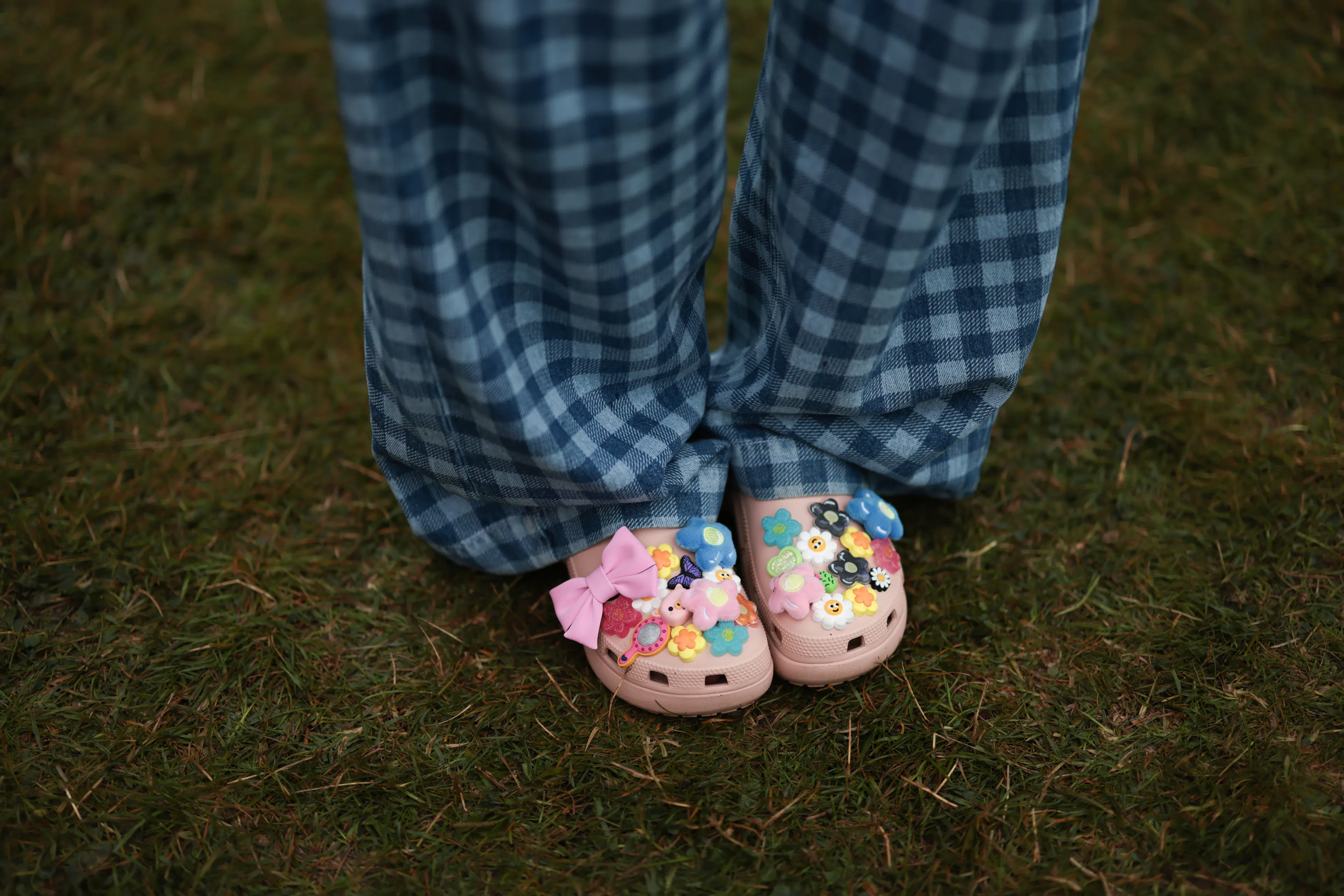
Crocs spent $10 million to buy a company that made tiny plastic charms. Now it’s pumping out $250 million in yearly revenue.
A small bet on Jibbitz 20 years ago has turned into a big win, especially for its margins.
Being a shareholder of Crocs, the maker of the clunky foam footwear that people love to hate, has been anything but comfortable in recent years. The stock has surged, retrenched, surged, and fallen back again.
One reason the company keeps coming back is its high margins: when you sell somewhat pricey products made of your own proprietary foam (known as Croslite), you’re generally able to turn more of your revenue to profit. On that front, Crocs is well ahead of its competitors, and part of the reason is likely Jibbitz.
Jibbitz are colorful charms that can be popped into the holes in Crocs to turn the shoe into a branded demonstration of their wearers’ obsessions. Branded Jibbitz can be bought for everything from licensed pop culture characters and sports team logos to tiny food items, animals, initials, gemstones, and travel icons dangling off the same pair of clogs.
They’re generally sold in multipacks at the likes of Foot Locker but are also available online, and cost between $3 and $5 per widget. Around three in four Crocs buyers end up buying Jibbitz to make their clogs their own, the company told CNBC.
Beyond being something that shoppers enjoy, they’re also a major contributor to the bottom line of the Crocs business, and have been since the footwear firm bought Boulder, Colorado, family-owned business Jibbitz in 2006 for $10 million in cash.
And they’re a steadily growing part of Crocs’ business: Jibbitz accounted for around $260 million to $270 million in sales last year, CEO Andrew Rees implied in the company’s Q4 2025 update in mid-February.
Analysts see Jibbitz as central to the brand’s strategy to generate excitement and give consumers reasons to keep on coming back.
“Jibbitz are very important for Crocs, both as a revenue driver and as part of the company’s ecosystem,” said Neil Saunders, managing director for retail at GlobalData.
The company has previously said that Jibbitz buyers are twice as valuable to Crocs than the average customer in terms of purchases.
Crocs initially didn’t respond to several requests for comment from Sherwood News, then did acknowledge an interview request, but stopped replying to subsequent emails. But the importance of Jibbitz to the brand has been acknowledged publicly by its leadership. At a June 2025 event held by Robert W. Baird, Rees said that there are three big platforms within the company: clogs, sandals, and “personalization, which is our Jibbitz.”
Clogs are — at least in the United States — a mature market, Rees said. “Almost everybody has a pair,” he said. “Everybody’s kids have a pair. They have multiple pairs, and we think that’s well penetrated.” As a result, Rees said, the company wasn’t likely to see much high growth out of that area of the business.
But it was still seeing success from Jibbitz, which are cheap to make, easy to impulse-buy, and keep customers spending long after they’ve bought the shoes. It’s “extremely high margin,” said Rees, explaining that it has historically accounted for about 8% of all Crocs sales. “We see the personalization trend continue to be super strong around the globe.”
“They basically elongate the sales cycle and enlarge the share of wallet that Crocs can take from a customer,” Saunders said, echoing many of the points Rees made, including about keeping customers engaged beyond the initial pair of shoes they purchase. “On the revenue front, Jibbitz are both high-margin and provide ongoing sales.”
For a product that most people don’t look at all that often, they’re a differentiator that helps “the brand stand out in a crowded market,” Saunders said.
Beyond standing out, Jibbitz also help make Crocs… kind of cool?
“The appeal of Jibbitz for both kids and adults is the personalization of a shoe that was initially perceived as plain or downright ugly, based on who you asked,” said Asif Suria, an entrepreneur and investor who has tracked how Jibbitz has helped Crocs grow. “The low cost of these little fun additions make it an impulse purchase that are easy to replace as the tastes of the owner change over time,” he said.
Crocs for sale in London in 2007:

Crocs for sale in California in 2024:

The tiny tchotchkes are so crucial to the future growth of Crocs that the company is starting to “Jibbitize” other products it plans to sell this year, according to Barclays analysts who attended a product review hosted by the company last year. There they saw opportunities to add the charms to bags and other products Crocs plans to sell.
“It gives them a lot of freedom to stay culturally relevant,” agreed Bia Bezamat, associate director at Kantar, a global insights company. Jibbitz works as an ongoing revenue stream for Crocs because they enable “low stakes” self-expression and can respond to fast-moving cultural moments without requiring Crocs to redesign its core shoe, Bezamat said. It also helps the slightly cringe Crocs brand piggyback on others that have more cultural cache.
Suria says that Jibbitz is a rare bright spot for Crocs, which has struggled with a soured 2022 purchase of Italian footwear brand HeyDude for $2.5 billion. “The impact on Crocs from [the Jibbitz] acquisition was the exact opposite of what they experienced with their ill-fated HeyDude acquisition,” Suria said. “The acquisition price was very low and adoption was rapid. They essentially took something that was working and gave it scale.”
The contrasting fates of the purchases “show how acquisitions can make or break companies depending on both the price paid and attempting to predict how fickle consumer tastes can evolve over time,” Suria said.
But for a core product as staid as Crocs are — visible on the feet of those trudging around supermarkets and strip malls for two decades now — Jibbitz are a key way to keep Crocs fresh.
“That’s important when you’re talking about Crocs, because they’re pretty dull and everyday,” said Bezamat. For a company struggling with sales in a maturing market, that’s manna from heaven. “Instead of having to redesign a different shoe to stay fresh and part of the cultural conversation, they can just bring out new accessories.”



