


Discount stores are having a moment in America, drawing high- and low-income consumers alike
Everyone loves a deal in 2025 — and Aldi, Walmart, and Dollar Tree are all cashing in.
With festivities in full swing, millions of bargain-hunting Americans are venturing to Walmart for discount decorations, dinner hauls, and stocking fillers. Some are also heading to the retailer for some bougier (boulangerie-r?) items.
In Walmart’s third-quarter earnings, executives outlined a croissant craze that led the retailer to “remove the shelf” for the baked goods due to the sheer volume being shifted. The example highlighted the growth driven by “upper- and middle-income households,” dubbed the “gentrification of Walmart” by Quartz.
Al-di-dah
Sales have been booming at discount chains like Dollar General, Dollar Tree, and Walmart in recent quarters — to be expected considering the rising cost of goods and increasingly difficult job market.
Perhaps less expected, though, is the increasing proclivity of richer cohorts to hunt for bargains. Data from GlobalData Retail via CBS News showed almost 28% of high-income consumers reported shopping at discount stores this year, up from 20% four years ago.
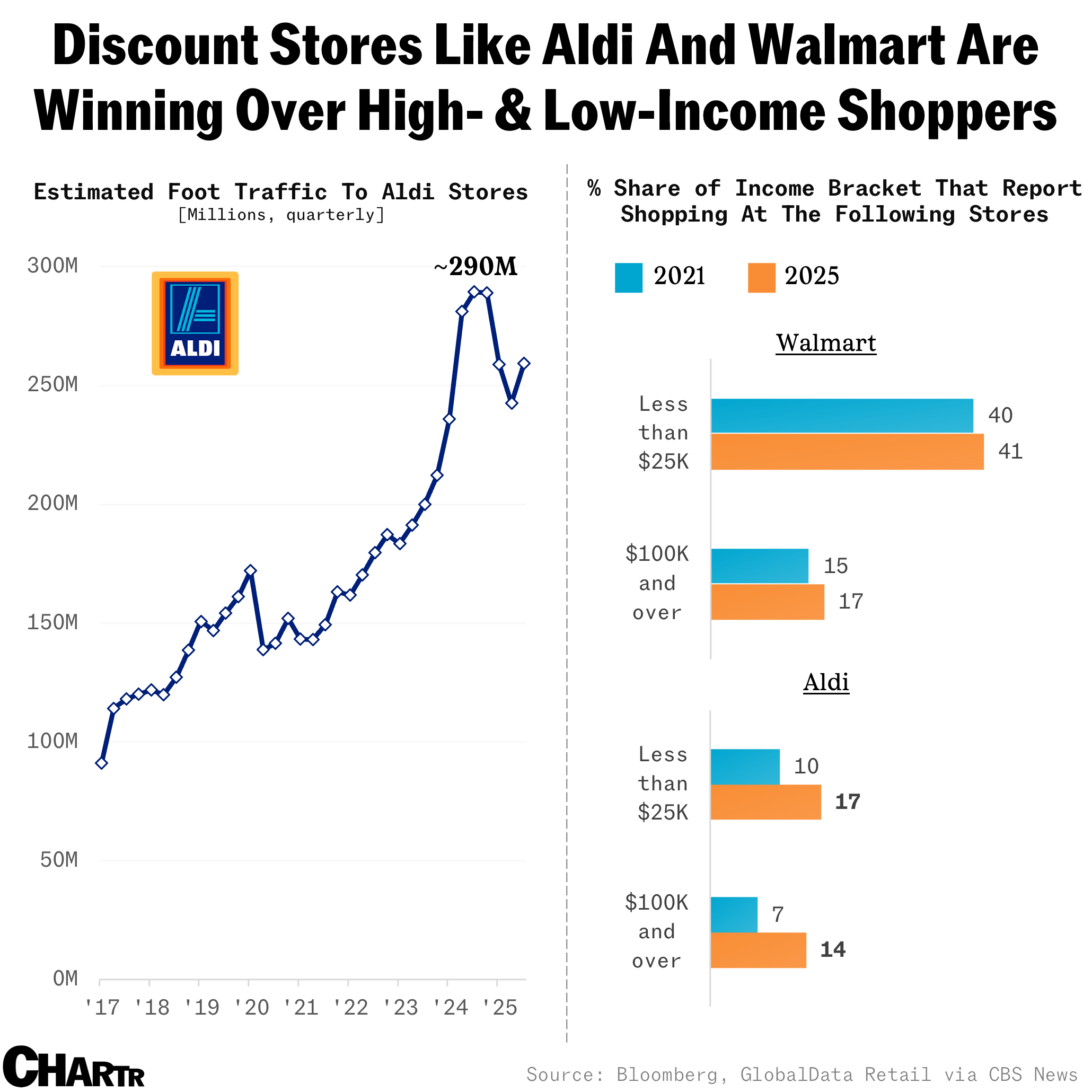
One case study is Aldi, which has effectively doubled its consumer base with incomes over $100,000 since 2021, per GlobalData, as well as gaining ground with households earning less than $25,000.
The German grocer has seen store traffic climb as it undergoes a rapid US expansion, with plans for over 3,200 stores by the end of 2028. Like Walmart, many of Aldi’s offerings, including organic produce and pantry staples, are appealing to a growing share of higher-income shoppers.
Still, while additive-free products have helped ensnare some pocket-lined patisser-ati, ultimately Aldi can credit competitively low prices for its soaring sales — with value deals enticing both ends of the earnings spectrum.



