


Eli Lilly insists its telehealth partners must “follow the law” after CFO comments confused industry watchers
Lilly did not respond to specific questions asking how the practices of its partner companies are different from the ones they sued.
Eli Lilly says the telehealth providers it partners with must "follow the law" when it comes to compounding, following its chief financial officer's statements from earlier this week that confused industry watchers.
At a conference on Tuesday, Lucas Montarce, Lilly’s chief financial officer, said a provision in Lilly’s partnerships with telehealth providers is that they don't compound either tirzepatide or semaglutide, the scientific names for Zepbound and Wegovy. That statement baffled some industry onlookers because two of the largest companies Lilly has partnerships with, Ro and Noom, appear to still offer compounded options.
For background: For a couple of years, telehealth platforms were able to sell exact copies of Zepbound and Novo Nordisk’s Wegovy while their main ingredients were in a shortage. Many continue to sell specialized versions, to the annoyance of the drugmakers. Lilly has struck partnerships with some telehealth companies to offer cheaper versions of its blockbuster weight-loss drug Zepbound on their platforms.
In a response to Sherwood’s questions about some of its partners still offering compounded versions, a spokesperson for Lilly said in a statement that its "integration agreements require telehealth companies to follow the law."
"Anyone continuing to sell mass compounded tirzepatide or semaglutide products, including by referring to them as 'personalized,' 'tailored' or something similar, is breaking the law and putting patient safety at risk," Lilly said.
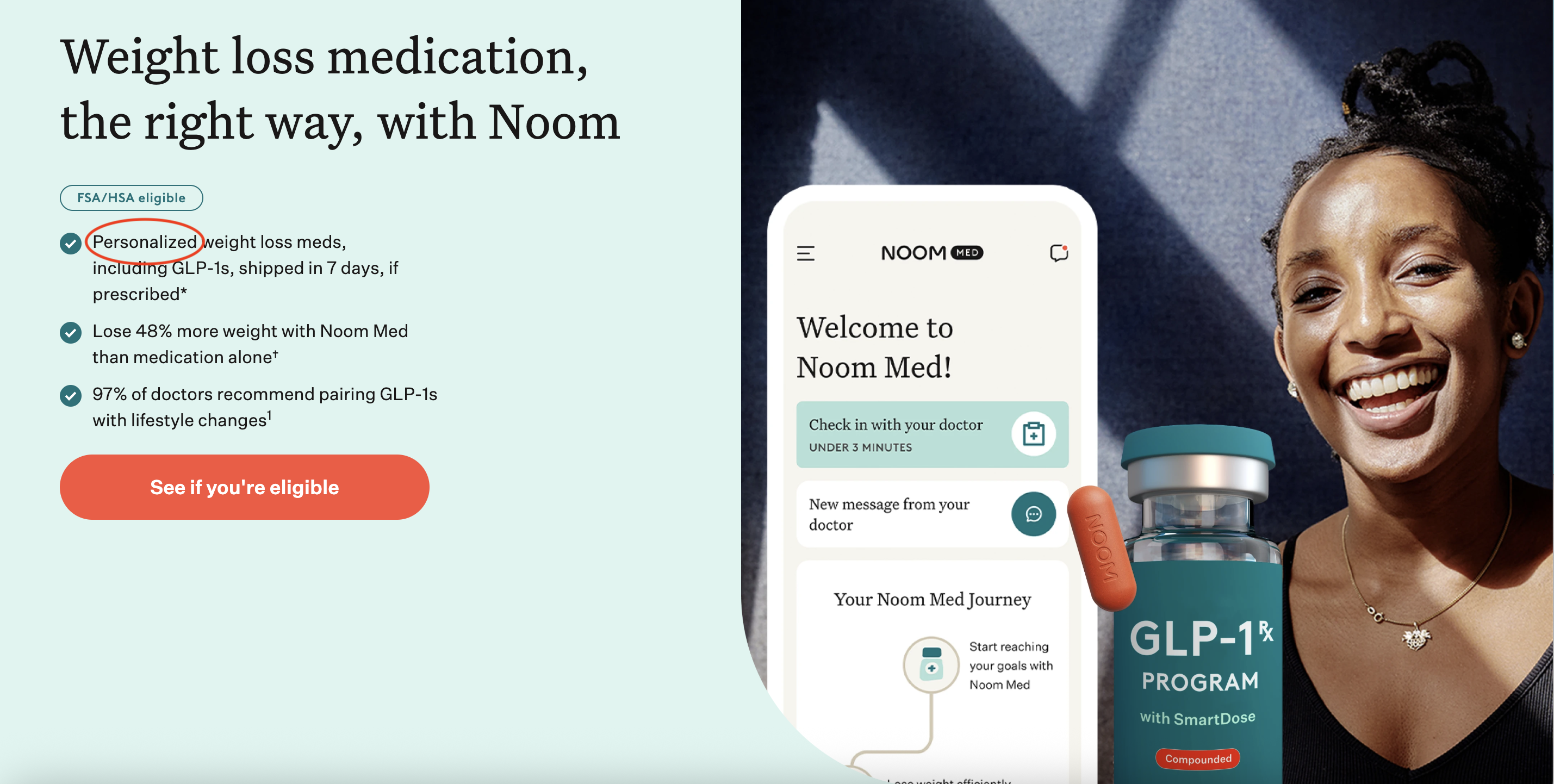
As of Thursday, Noom still lists "personalized" GLP-1s as an offering on its site. On Tuesday, Ro offered compounded semaglutide as an option after filling out the intake survey, but on Thursday the survey concluded with no specific treatment recommendations. It's more profitable for a telehealth company to sell compounded drugs versus generic or branded drugs.
Lilly has sued several smaller telehealth providers, including Mochi Health and Fella, for selling compounded tirzepatide. Lilly did not respond to specific questions asking how the practices of its partner companies are different from the ones they sued.
"At the heart of this issue is who gets to decide what’s right for the patient—their doctor or the drug manufacturer. For us, it will always be the doctor and the individual needs of the patient," Myra Ahmad, CEO of Mochi Health, said in a statement to Sherwood.
A spokesperson for Ro declined to comment on the terms of the agreement. Noom did not respond to requests for comment.
Hims & Hers likely the largest of its peers, does not have a partnership with Lilly. In April, investors misinterpreted an announcement from the company as a partnership between Hims and Lilly, leading the drugmaker to issue a statement clarifying there is "no affiliation."
A spokesperson for Hims said Tuesday that Montarce's comments were "pretty misleading.” In a statement on Thursday, Hims pushed back on Lilly's characterizations of compounded treatments.
“When done responsibly, compounding is a safe, well-established practice that provides choice and enables more people to get the care they need," they said. "To suggest otherwise misrepresents both the science and the reality of how millions receive care today. Hims declined to comment on its own negotiations with the drugmaker.


