Business
Still life of Ozempic and Wegovy with weight scale.
(Michael Siluk/Getty Images)

Lawsuit alleges Lilly, Novo locked up telehealth to kill compounded GLP-1s

Novo Nordisk CEO Mike Doustdar estimated that around 1.5 million US patients are using compounded versions of the company’s drugs.

Strive Specialties, one of the largest compounding pharmacies in the country, accused Eli Lilly and Novo Nordisk of locking up telehealth companies they partner with in an effort to cut off businesses like them from the GLP-1 market.

Telehealth is one of the primary ways patients access weight-loss medications. Novo and Lilly have partnerships with companies like Ro, Weight Watchers, and LifeMD to distribute branded versions of their weight-loss drugs.

According to Strive, those partnerships bar those telehealth companies from working with compounders, which make bespoke or “personalized” versions of Lilly and Novo’s patented drugs — often for lower prices than the branded version sold by the drugmakers. The drugmakers have argued compounders simply mass-produce copies of their patented drugs with unnecessary tweaks.

“These agreements limit both prescriber choice and patient access to the medications that would most benefit the individual patient,” Strive said in a lawsuit filed Wednesday.

The lawsuit cites Novo’s short-lived partnership with Hims & Hers. Novo abruptly called off the deal with Hims because it continued to sell compounded versions of its blockbuster weight-loss shot, Wegovy. (Hims contracts with Strive to fulfill some of its prescriptions.)
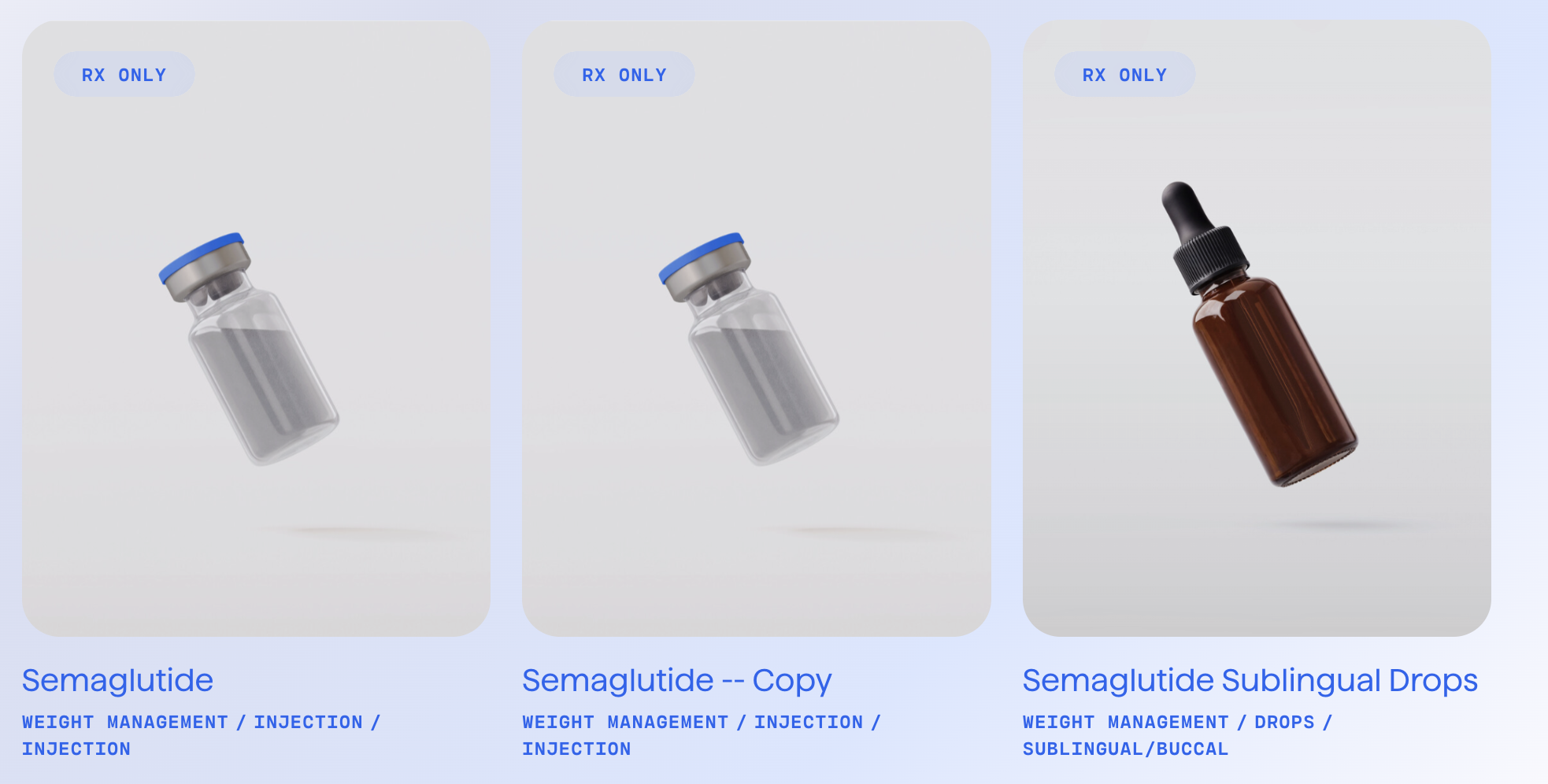
Strive Pharmacy screenshot
A screenshot from Strive Specialties’ website. Semaglutide is the active ingredient in Novo Nordisk’s Ozempic and Wegovy (Sherwood News)

Novo did not immediately respond to a request for comment. A spokesperson for Lilly called Strive’s lawsuit “an attempt to shift focus away from its own conduct.”

Lilly sued Strive last year, accusing it of false and deceptive online marketing. That lawsuit was dismissed in October after a judge said it did not have jurisdiction to sue in Delaware. Lilly refiled the suit later that month in Arizona, where Strive is based.

Compounders like Strive were supposed to stop mass-producing copies of GLP-1s earlier this year once the FDA no longer classified the drugs as being in a shortage, but some continue to advertise “personalized” or “microdosed” versions that are, in theory or in practice, slightly different than the meds the big drugmakers sell. They are also significantly cheaper than branded drugs, though Novo and Lilly have slashed their cash-pay prices to make the drugs more accessible.

At the JPMorgan Healthcare Conference this week, Novo CEO Mike Doustdar estimated that around 1.5 million US patients are using compounded versions of the company’s drugs.

“It’s not because this 1.5 million patients like to have unsafe, knock-off versions of our products,” he said Monday. “They [compounders] grabbed a part of the consumers that simply were price-sensitive to the whole thing.”

More Business

See all Business
Capsule Pill and Dots

Justice Department accuses telehealth Zealthy of fraud, says remedy may bankrupt it

The feds say they don’t think Zealthy has the liquidity to pay what it owes customers.

Netflix playground

Will investing in kids games finally make Netflix Games “the Netflix of games”?

Netflix is launching a game for preschoolers, its latest foray into stuff-you-play instead of stuff-you-watch.

business

American Airlines joins the flock, hiking bag fees amid higher jet fuel prices

American Airlines on Thursday announced that it, too, will be hiking the fees it charges customers to check luggage.

With the move, all four of the major US airlines, which together control about 80% of the US market, have now hiked their baggage fees in recent days amid surging jet fuel prices.

The change will go into effect on tickets bought on or after Thursday, the same day Southwest’s hike begins.

Since late March, JetBlue, Delta Air Lines, United Airlines, Canada’s WestJet, and Southwest have hiked their fees. Experts expect more major carriers to follow, and to potentially tweak the pricing of other ancillary revenue sources like seat assignments and carry-on luggage.

The change will go into effect on tickets bought on or after Thursday, the same day Southwest’s hike begins.

Since late March, JetBlue, Delta Air Lines, United Airlines, Canada’s WestJet, and Southwest have hiked their fees. Experts expect more major carriers to follow, and to potentially tweak the pricing of other ancillary revenue sources like seat assignments and carry-on luggage.

business

Less than a year after implementing them, Southwest is also hiking its bag fees

Southwest Airlines has joined the growing list of airlines opting to hike their bag fees amid sustained higher jet fuel costs.

Starting today, the first checked bag at the carrier — which implemented bag fees less than a year ago — will jump from $35 to $45, and the second from $45 to $55. Southwest quietly disclosed the change Tuesday.

Southwest assigned the decision to “part of an ongoing analysis of the business and against the evolving global backdrop.”

As of Wednesday, jet fuel prices dropped to $4.16 a gallon, per the Argus US Jet Fuel Index, down from $4.81 on Tuesday following President Trump’s ceasefire announcement, which sent travel stocks soaring. Major airlines have shed some of those gains in premarket trading Thursday.

With the move to hike bag fees, Southwest joins JetBlue, United Airlines, Delta Air Lines, and Canada’s WestJet, all of which also boosted fees this month. Experts expect more major carriers to follow, and to potentially tweak the pricing of other ancillary revenue sources like seat assignments and carry-on luggage.

Southwest assigned the decision to “part of an ongoing analysis of the business and against the evolving global backdrop.”

As of Wednesday, jet fuel prices dropped to $4.16 a gallon, per the Argus US Jet Fuel Index, down from $4.81 on Tuesday following President Trump’s ceasefire announcement, which sent travel stocks soaring. Major airlines have shed some of those gains in premarket trading Thursday.

With the move to hike bag fees, Southwest joins JetBlue, United Airlines, Delta Air Lines, and Canada’s WestJet, all of which also boosted fees this month. Experts expect more major carriers to follow, and to potentially tweak the pricing of other ancillary revenue sources like seat assignments and carry-on luggage.

Latest Stories

Sherwood Media, LLC produces fresh and unique perspectives on topical financial news and is a fully owned subsidiary of Robinhood Markets, Inc., and any views expressed here do not necessarily reflect the views of any other Robinhood affiliate, including Robinhood Markets, Inc., Robinhood Financial LLC, Robinhood Securities, LLC, Robinhood Crypto, LLC, Robinhood Derivatives, LLC, or Robinhood Money, LLC. Futures and event contracts are offered through Robinhood Derivatives, LLC.