Business
Meta spending personal security
Sherwood News

Meta spends more than any other US public company on keeping its boss safe outside of work

The murder of Brian Thompson has sent shock waves through the security industry.

New Yorkers woke up on Wednesday morning to the shocking news of the murder of UnitedHealthcare’s top insurance executive, Brian Thompson, in Midtown Manhattan ahead of the company’s investor day.

Online reaction to the murder revealed a deeply rooted frustration — at times spilling into morbid glee, per The New York Times — with America’s healthcare system. It’s also prompted large US companies to reevaluate their security protocols. Indeed, according to The Wall Street Journal, dozens of security chiefs joined a call on Wednesday to discuss safety measures, with some even looking to send armed guards to accompany executives attending conferences this week in New York and other US cities.

The price of safety

Presumably, UnitedHealthcare will now be reviewing its safety protocols, but it’s also likely that other public companies — many of which already spend millions of dollars on security for their top bosses — will consider upping their protection in a permanent way.

For business-related outings, companies don’t need to disclose the cost of security. But if protection is provided outside of work and is deemed to be a perk or personal benefit, that has to be disclosed in SEC filings, and there’s been a major uptick in personal-security outlays: the median amount spent by S&P 500 companies that disclosed security spending doubled from 2021 to 2023 to nearly $100,000, according to an analysis by executive-compensation data provider Equilar cited by Bloomberg.

This includes a whopping $23 million compensation for Meta’s $1 salary CEO Mark Zuckerberg. That’s more than 3x the not-so-close runner-up, Alphabet’s Sundar Pichai, and, as mentioned, doesn’t include any security spending during work travels or at offices. The social-media giant is obviously concerned about protecting its chief executive, who “is synonymous with Meta” and as a result is exposed to any “negative sentiment” associated with the company, per its SEC filing.

Elon Musk also owns a security company tasked with protecting... Elon Musk. Tesla has paid this security company nearly $3 million since December 2023.

More Business

See all Business
The entrance of Allbirds seen from Hayes St. in San Francisco, Calif.

Allbirds, the once buzzy multibillion-dollar sneaker startup, is selling up for $39 million

That’s less than 1% of its peak market cap about four years ago.

Tom Jones3/31/26
business

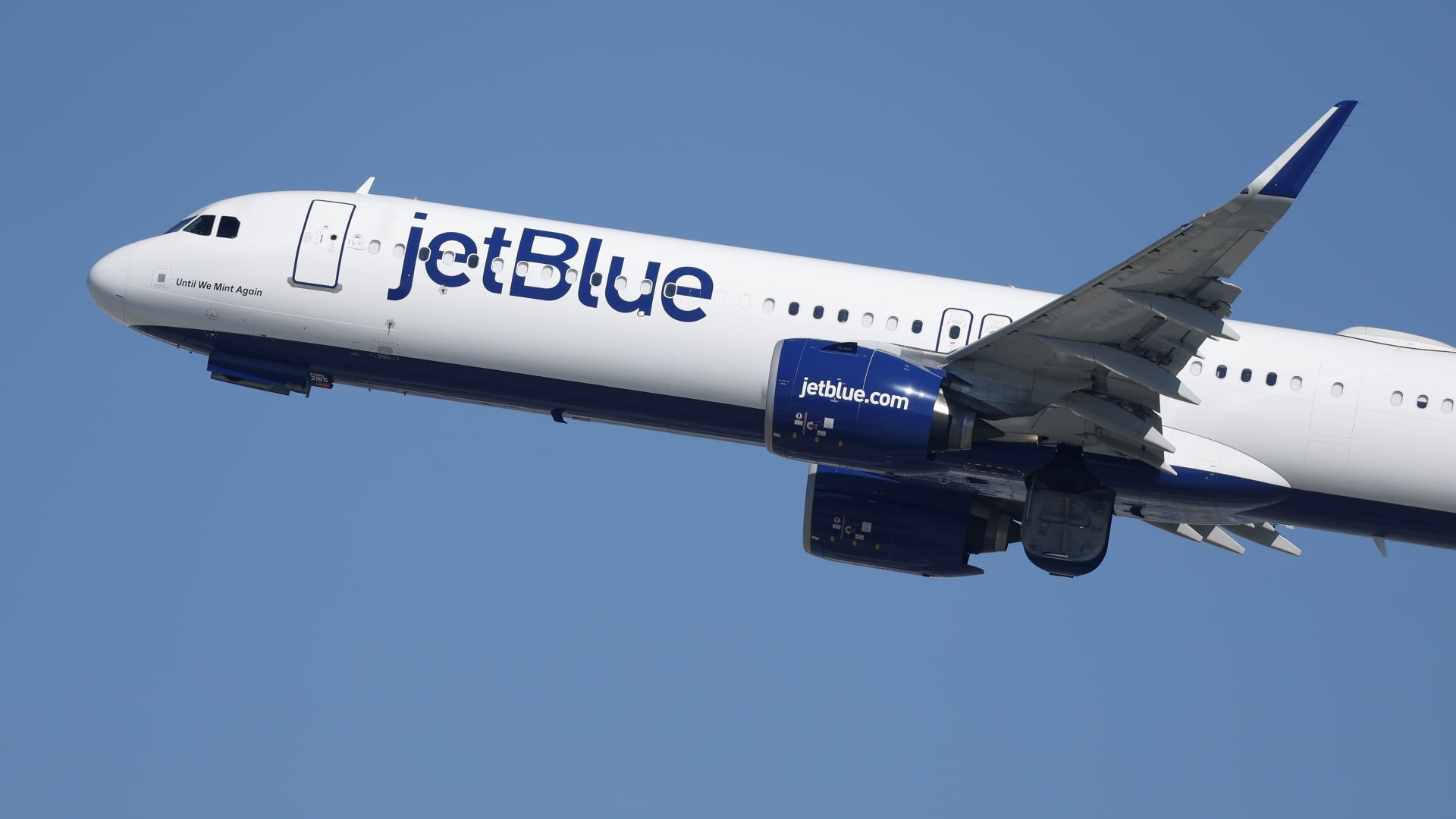
JetBlue is raising its bag fees as fuel costs squeeze airlines

JetBlue will reportedly hike its bag fees, as the cost of jet fuel continues to climb amid the war in Iran. It’s the latest example of carriers finding ways to push rising costs onto travelers.

Last week, United Airlines CEO Scott Kirby said that if fuel prices remain elevated, fares would need to rise another 20% for his airline to break even this year.

As CNBC reported, when one airline raises fees, others tend to follow.

Earlier this month, JetBlue hiked its first-quarter outlook for operating revenue per seat mile to between 5% and 7%, saying that strong Q1 demand helped “partially offset additional expenses realized from operational disruptions and rising fuel costs.” Now, the carrier appears to be making moves to further boost revenue to offset those costs.

Earlier on Monday, JetBlue rival Alaska Air lowered its Q1 profit forecast. The refining margins for the carrier’s cheapest fuel option — sourced from Singapore and representing about 20% of Alaska’s overall supply — have spiked 400% since February.

JetBlue did not immediately respond to a request for comment.

As CNBC reported, when one airline raises fees, others tend to follow.

Earlier this month, JetBlue hiked its first-quarter outlook for operating revenue per seat mile to between 5% and 7%, saying that strong Q1 demand helped “partially offset additional expenses realized from operational disruptions and rising fuel costs.” Now, the carrier appears to be making moves to further boost revenue to offset those costs.

Earlier on Monday, JetBlue rival Alaska Air lowered its Q1 profit forecast. The refining margins for the carrier’s cheapest fuel option — sourced from Singapore and representing about 20% of Alaska’s overall supply — have spiked 400% since February.

JetBlue did not immediately respond to a request for comment.

Latest Stories

Sherwood Media, LLC produces fresh and unique perspectives on topical financial news and is a fully owned subsidiary of Robinhood Markets, Inc., and any views expressed here do not necessarily reflect the views of any other Robinhood affiliate, including Robinhood Markets, Inc., Robinhood Financial LLC, Robinhood Securities, LLC, Robinhood Crypto, LLC, Robinhood Derivatives, LLC, or Robinhood Money, LLC. Futures and event contracts are offered through Robinhood Derivatives, LLC.