

“These build-outs are not going to be like a theme park.”
WE’LL DO IT LIVE

Netflix is building an anti-Disneyland
Netflix wants to break into the live experiences business, but instead of betting on massive amusement parks, it wants to be everything, everywhere, all at once.
If you find yourself hungry after a night of partying in Las Vegas, you’re now able to gorge on a plate of crispy chicken and waffle sliders, Hawkins-style, as Eleven from “Stranger Things” might enjoy them. Or how about a “Bridgerton”-themed Regency tea feast?
These are just a few things on the menu at Netflix Bites, a new restaurant that opened its doors at the MGM Hotel & Casino in Las Vegas this week. It’s is part of a broader strategy for Netflix to enter the lucrative live experiences business, albeit with a Netflix-like twist. Instead of copying the wildly successful theme park strategy employed by the likes of Disney and NBC’s Universal Studios, the streamer is opening up shop in malls, partnering with VR arcades, and touring the world with pop-up experiences related to its shows.
Netflix’s biggest bet yet on this front is Netflix House, a series of permanent entertainment venues housed in shopping malls, with two initial locations scheduled to open in Dallas and King of Prussia, Pennsylvania, later this year. Each Netflix House will offer ticketed experiences related to popular shows, merch stores, and yes, proprietary restaurants like Netflix Bites across 100,000 square feet. It’s the closest Netflix has gotten to opening up its own theme parks, though on a much smaller budget, as co-CEO Ted Sarandos remarked during a 2023 investor call.
“These build-outs are not going to be like a theme park. They won’t have that gigantic capex,” Sarandos said. “We expect that fans will go multiple times a year, not just once every couple of years. It’s... a business that’s really good at growing our brands and strengthening our brands.”
Growing brands sounds good on paper, but investors might ask themselves: what’s the actual business case for these don’t-call-it-a-theme-park ventures?
The most lucrative place on earth
Consumers spend a ton of money on Hollywood-themed in-person entertainment — but most of it flows to just one company. Disney’s experiences segment, which includes everything from theme parks to cruises to Disney stores, generated more than $34 billion in revenue in the company’s fiscal 2024, with operating profits of close to $9.3 billion.
That’s nearly as much as Netflix’s total operating profit last year. In fact, before the pandemic, Disney’s experiences division was surpassing Netflix’s global revenue by billions of dollars a year. The company’s theme parks and cruises hit a rough patch when the world shut down in early 2020, with operating profits crashing from a healthy $6.8 billion in fiscal 2019 into negative territory in fiscal 2020.
Disneyland & Co. has seen a remarkable recovery since. In 2023 alone, 142 million people flocked to Disney’s theme parks, according to real estate advisory company AECOM, whose senior theme park analyst Francisco Refuerzo recently wrote that “the industry has basically returned to its pre-pandemic position.”
It’s an industry dominated by Disney: 12 of the 20 most-attended theme parks are owned and operated by the company, AECOM data shows, with Comcast’s Universal Studios operating another five parks. That’s perhaps why Disney CEO Bob Iger seemed unperturbed by Netflix’s budding live experience business when asked about it at a tech industry event in 2022.
“I don’t have an opinion on that,” Iger said, shrugging and eliciting laughter from his audience. “It seems kind of small, but… worth experimenting.”
Duffle bags, VR games, and dreams of more
Netflix has long considered entering the entertainment business. When then CEO Reed Hastings was asked about any such plans at a company press event in 2018, he seemed enthusiastic. “Broadway, theme parks… that would be amazing,” Hastings said. “When I go to theme parks, I’m like, can you imagine Netflix content here some day?”
Hastings did caution at the time that we might not see a Netflix theme park any time soon — “not in the next 5 or 10 years,” as he put it — but the company has made steady moves to reach beyond the screen and into the real world ever since.
Netflix has struck several merchandise licensing deals, lending its brand to everything from a “Stranger Things” Monopoly game to “Bridgerton” tea to a “Cobra Kai” gym bag. Merch deals like this can be lucrative, with global sales of licensed merchandise hitting $356.5 billion in 2023, Licensing International reported. There’s no word on how much Netflix’s deals with Target and other retailers bring in; the company’s own online merch store is estimated to generate a much more modest $2.3 million per month.
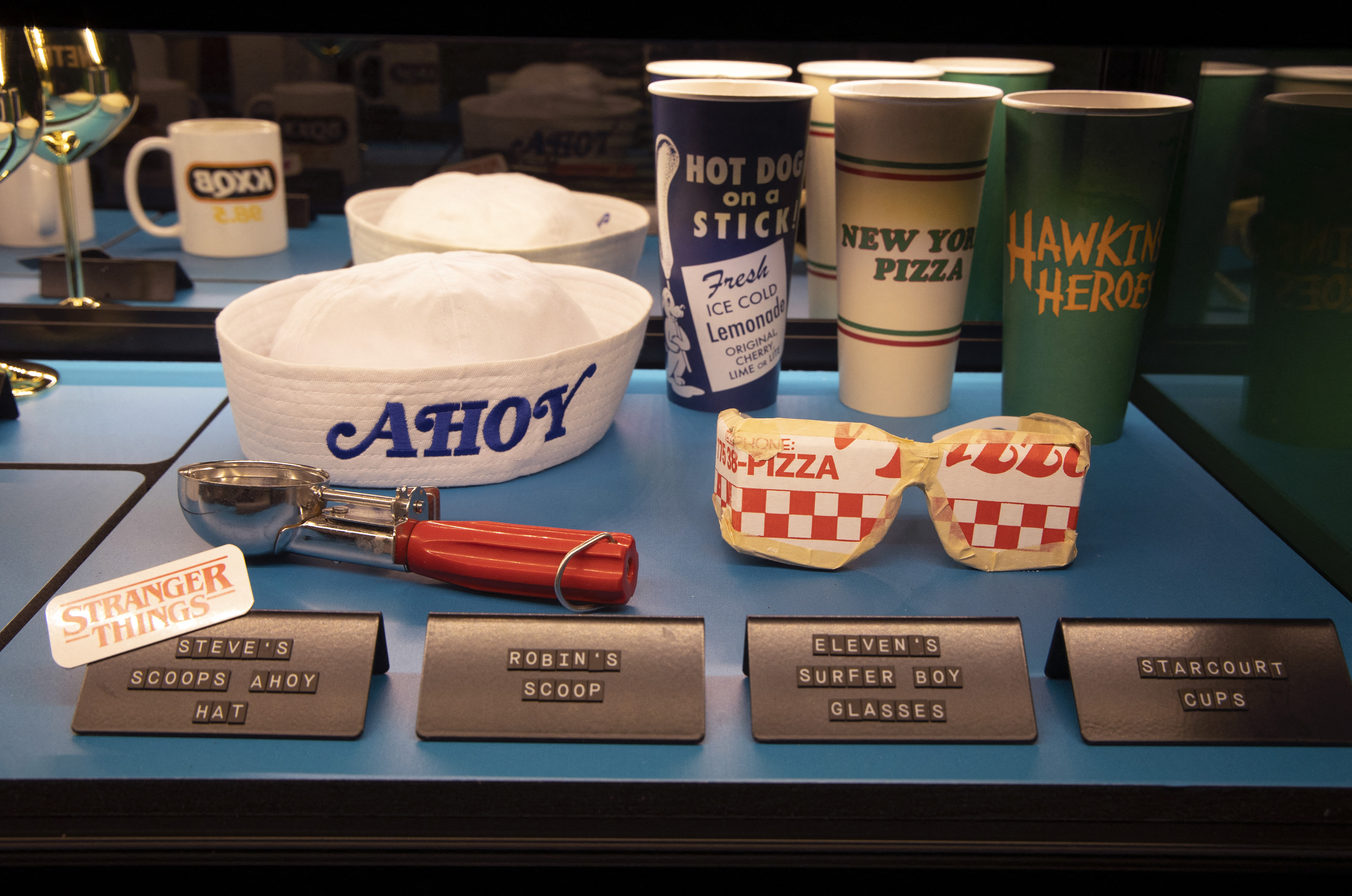
The streamer has also operated more than 50 pop-up experiences in 25 cities across the globe, including a “Bridgerton” ball, a “Squid Game” experience, and a temporary restaurant featuring talent from Netflix culinary shows like “Chef’s Table.” Perhaps proving that Hastings wasn’t just talking hypotheticals, Netflix is also set to bring a “Stranger Things” play to Broadway next month.
Netflix has embraced licensing for location-based entertainment, too. The company has teamed up with Sandbox VR, a startup with 55 VR entertainment centers across North America, Europe, and Asia, for a “Squid Game” VR experience. Earlier this year, they partnered on an experience dedicated to Zack Snyder’s “Rebel Moon” franchise. “It was extremely successful commercially,” Sandbox’s content SVP Michael Hampden said. “Netflix was extremely happy with how it turned out.”
The company has yet to reveal how much money it’s making with any of these deals and ventures, and investors may not get any details for quite some time. Starting this quarter, the streamer won’t even break out how many subscribers it has anymore. Company execs have justified this change with the fact that subscriber metrics matter less now that millions of consumers stream Netflix shows with ads. However, the change also has the side effect that new and emerging revenue streams, including merch and experiences, can be more easily lumped in with everything else.
Was Disney too early?
The irony of Netflix taking on Disney with smaller venues is that it’s actually an idea straight out of Disney’s playbook. Back in the 1990s, Disney executives hatched a plan to bring some of the Kingdom’s magic closer to its fans with a series of smaller indoor venues called Disney Quest. With a footprint comparable to that of the two upcoming Netflix House locations, Disney Quest was supposed to open in six cities across North America, and, if successful, eventually expand globally.
The company opened its first Disney Quest location adjacent to its existing theme parks in Orlando, Florida, in 1998, followed by a second outpost in Chicago in 1999. Both locations used cutting-edge technology, including some of the first VR headsets ever available to the public, to bring Disney attractions to life in an indoor setting — driving up costs that were ultimately too much to stomach. DisneyQuest Chicago closed in 2001. Thanks to its location, the Orlando outpost survived until 2017, but the dream of bringing Disneyland everywhere had died long before.
“They were just too early,” said Brent Bushnell, founder of Two Bit Circus, a Los Angeles-based micro amusement park. “They had to do everything from scratch.” That not only required massive investments, but also limited Disney’s ability to regularly refresh attractions.
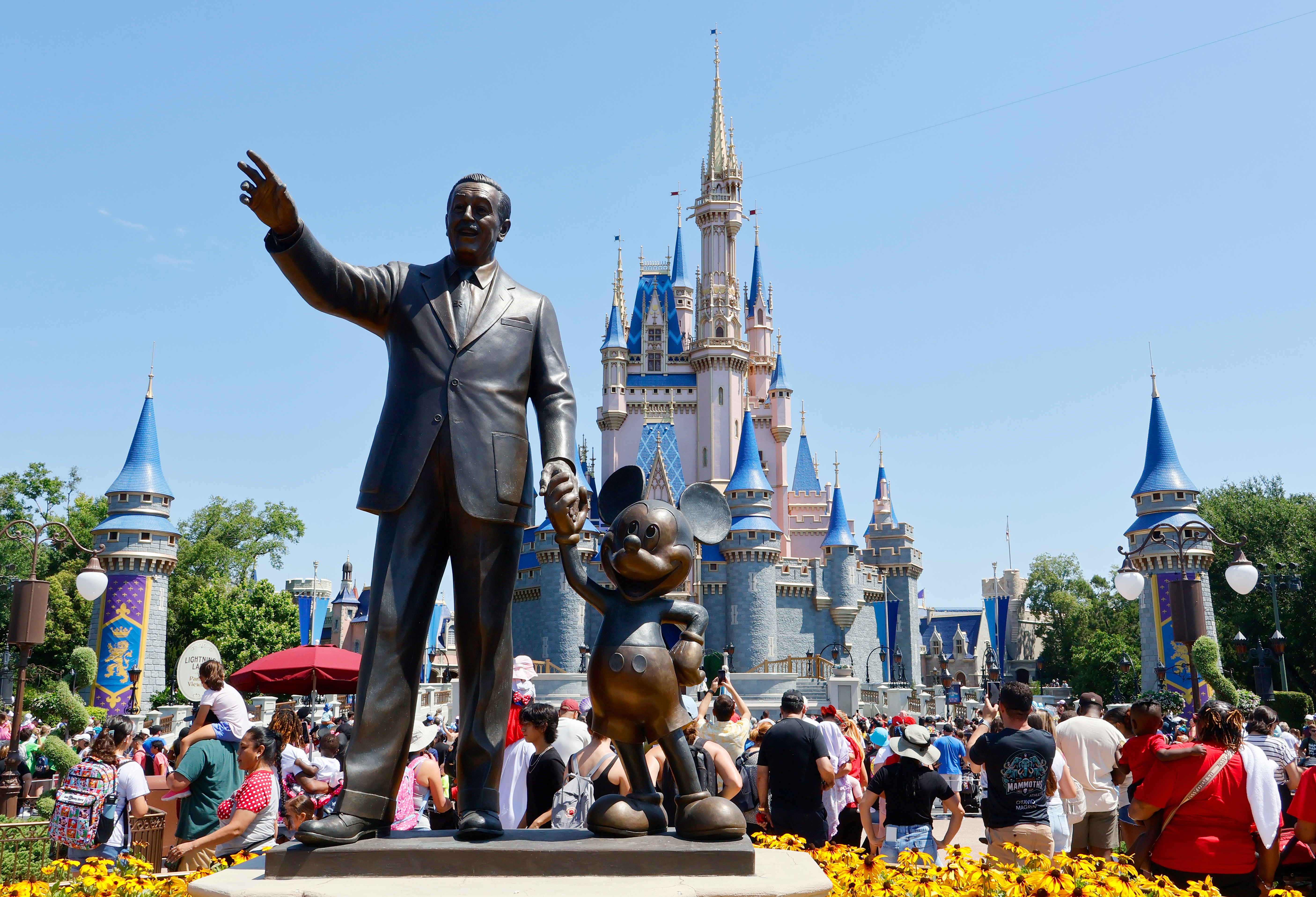
For local theme parks to work, companies like Netflix have to treat them more like movie theaters, Bushnell argued. “Disney in Orlando can work, because you constantly have new tourists,” he said. “Most people do that once in their life, or once as a kid and once as a parent. But for these to work, you’re going to [need] repeats. People [who] want to come back regularly, like they did for bowling alleys and movie theaters. And that is going to require dynamism.”
Modern technologies make it much easier to rotate attractions. Sandbox VR, for instance, uses the same physical space — a bare room outfitted with high-tech VR trackers — to let people play through both its “Squid Game” and “Rebel Moon” Netflix VR experiences.
At the same time, consumers have changed how they shop, with e-commerce accounting for 16.1% of all retail spend last year, up 8.1% from 2023. This has led to a number of notable retail chain bankruptcies and widespread store closures, leaving commercial real estate owners eager to accommodate companies like Netflix. “They’re getting hip to the fact that the magical 10-year lease is not coming,” Bushnell said. “And rather than be empty for another five years, they’d rather put something in there.”
How much money Netflix will be able to make with a series of mall-based, distributed theme parks is still anyone’s guess at this point. But its chances to succeed are better than ever, Bushnell said: “Finally, the timing is lining up to really make the business model possible.”
Janko Roettgers is a Bay Area-based reporter covering the intersection of technology and entertainment, and the author of the weekly Lowpass newsletter.



