
Business
NYC trash
A New Yorker walking past a pile of trash (Charly Triballeau / Getty Images)
Weird Money

New York’s $1.6 million trash can revolution

New York City paid McKinsey to help it revamp its sanitation network

Jack Raines

One of my favorite tropes is that organizations pay management consultants, such as McKinsey & Company, millions of dollars to create slide decks with obvious solutions, such as “reduce expenses and increase revenue.”

One of my favorite things about living in New York is that, despite being the largest city-wide economy in the world, New York’s sidewalks are covered with piles of trash bags every evening. It was only fitting, then, that in 2022, New York City’s Department of Sanitation (DSNY) paid McKinsey  $1.6 million to conduct a 20-week waste containerization needs study, and earlier this week, New York City Mayor Eric Adams unveiled the city’s first-ever official NYC Bin.

The DSNY also put forth a proposed rule requiring that all buildings with one to nine residential units and all special use buildings that receive DSNY collection (e.g. city agency buildings, houses of worship, and professional offices located within residential buildings) put their trash in containers, effective November 12, 2024. This will, according to Mayor Adams, “containerize more than 70% of the city’s trash to protect our most valuable and limited resource — our public space.”

A few things to note here: first, plenty of NYC residents have already been using trash cans, and, assuming their current lids have securing latches, they’ll have until 2026 to switch to the NYC-branded containers. Second, this is part of a larger investment, which includes the development of new automatic side-loading trucks designed to service the new trash cans. For what it’s worth, many of New York’s streets are notoriously narrow, and curb space in busy areas is nonexistent, making the trash servicing process more difficult than in other, less densely populated areas.

If you’re curious, The DSNY published a 2023 Containerization Report, in which it cited McKinsey’s work, and the report is quite interesting. A few stats:

  • New Yorkers leave 44 million pounds of trash on curbs each day (!!!)

  • Choosing whether or not to use wheeled shared containers (the really big metal containers that trucks can pick up, not the smaller trash bins referenced above) would have a massive impact on the city’s entire sanitation system, including which trucks to invest in.

  • McKinsey studied the sanitation systems of dozens of cities across the US, Latin America, Europe, Asia, and Australia when creating their report for New York.

  • Some of the slides, such as the one below, are hysterical:
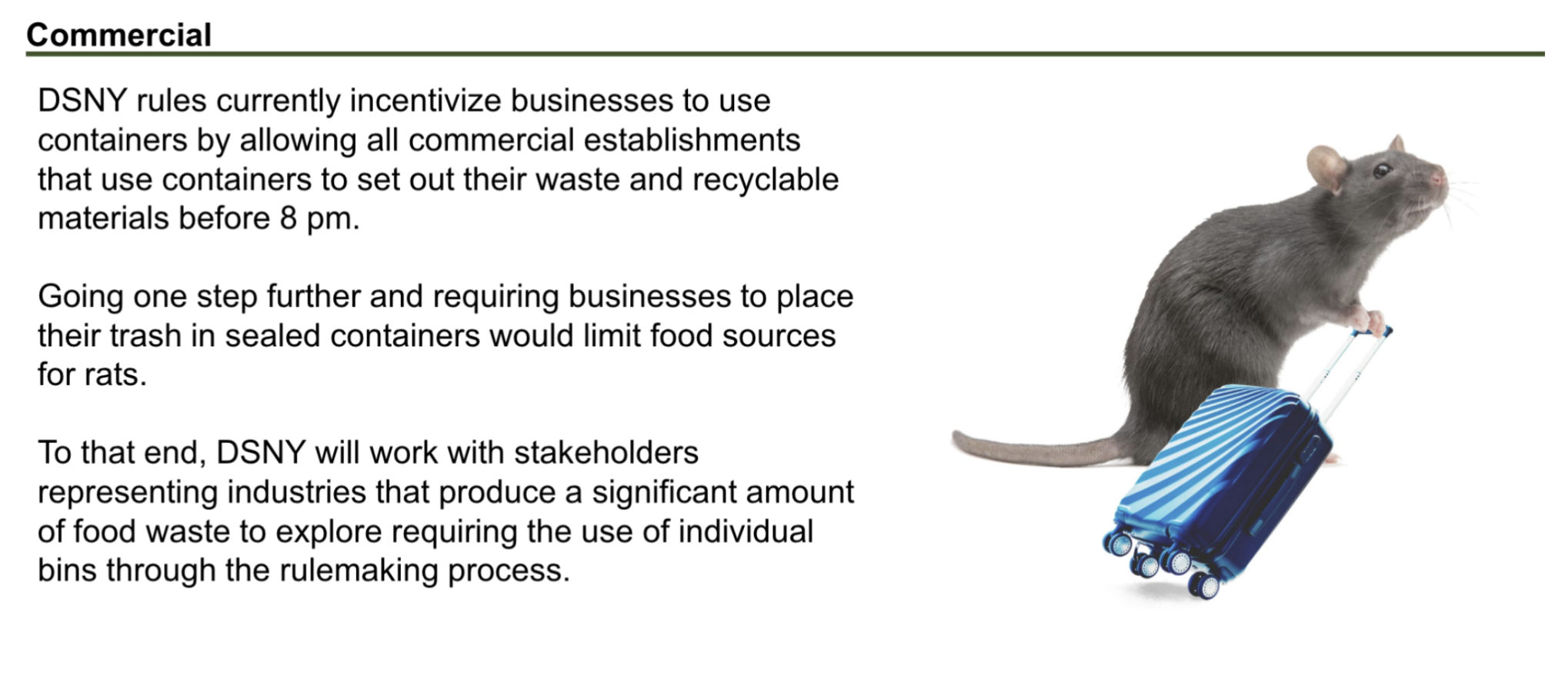
New York City Sanitation Deck Slide
A slide from the NYC Department of Sanitation's 2023 deck.

While the “consultants get paid millions for obvious recommendations” is a fun trope, $1.6 million feels more than reasonable if it helps clean up our rat problem.

More Business

See all Business
business

Netflix is down amid reports it’s leading the Warner Bros. bidding war as Paramount cries foul

Netflix’s charm offensive appears to be working.

Netflix is reportedly emerging as the leader in the bidding war for Warner Bros. Discovery after second-round bids this week, edging out entertainment juggernaut rivals Comcast and Paramount Skydance.

Investors don’t appear psyched by the streaming leader’s turn of fortune: the stock is down on Thursday morning, a day after closing down nearly 5% following reports that scooping up HBO Max wouldn’t necessarily result in a big market share boost.

Paramount, which has reportedly made five bids for Warner Bros. Discovery, doesn’t love the current state of play, either. The company sent WBD a letter questioning the “fairness and adequacy” of the process, highlighting reports that WBD’s board favors Netflix and is resisting Paramount.

Any offer would be subject to regulatory approval — a fact that may have weighed against Netflix’s offer given that cofounder Reed Hastings’ politics are vocally to the left, very much at odds with the current regulatory regime. Paramount seems confident in its ability to get approval, reportedly boosting its breakup fee to $5 billion should its potential acquisition fall apart in the regulatory process.

Investors don’t appear psyched by the streaming leader’s turn of fortune: the stock is down on Thursday morning, a day after closing down nearly 5% following reports that scooping up HBO Max wouldn’t necessarily result in a big market share boost.

Paramount, which has reportedly made five bids for Warner Bros. Discovery, doesn’t love the current state of play, either. The company sent WBD a letter questioning the “fairness and adequacy” of the process, highlighting reports that WBD’s board favors Netflix and is resisting Paramount.

Any offer would be subject to regulatory approval — a fact that may have weighed against Netflix’s offer given that cofounder Reed Hastings’ politics are vocally to the left, very much at odds with the current regulatory regime. Paramount seems confident in its ability to get approval, reportedly boosting its breakup fee to $5 billion should its potential acquisition fall apart in the regulatory process.

business

Delta says the government shutdown will cost it $200 million in Q4

The 43-day government shutdown that ended last month will result in a $200 million ding for Delta Air Lines, the airline said in a filing on Wednesday.

That’s about $100,000 per shutdown-related canceled flight. (Delta previously said it canceled more than 2,000 flights due to FAA flight reductions.) When the company reports its fourth-quarter earnings, the shutdown will lop off about $0.25 per share.

Delta initially stayed calm about the shutdown, with CEO Ed Bastian stating in early October that the company was running smoothly and hadn’t seen any impacts at all. One historically long shutdown later, Delta wasn’t able to remain untouched.

The skies have since cleared, though, and Delta’s filing states that booking growth has “returned to initial expectations following a temporary softening in November.”

Delta’s shares were up over 2% as of Wednesday’s market open.

Delta initially stayed calm about the shutdown, with CEO Ed Bastian stating in early October that the company was running smoothly and hadn’t seen any impacts at all. One historically long shutdown later, Delta wasn’t able to remain untouched.

The skies have since cleared, though, and Delta’s filing states that booking growth has “returned to initial expectations following a temporary softening in November.”

Delta’s shares were up over 2% as of Wednesday’s market open.

Latest Stories

Sherwood Media, LLC produces fresh and unique perspectives on topical financial news and is a fully owned subsidiary of Robinhood Markets, Inc., and any views expressed here do not necessarily reflect the views of any other Robinhood affiliate, including Robinhood Markets, Inc., Robinhood Financial LLC, Robinhood Securities, LLC, Robinhood Crypto, LLC, or Robinhood Money, LLC.