
Business
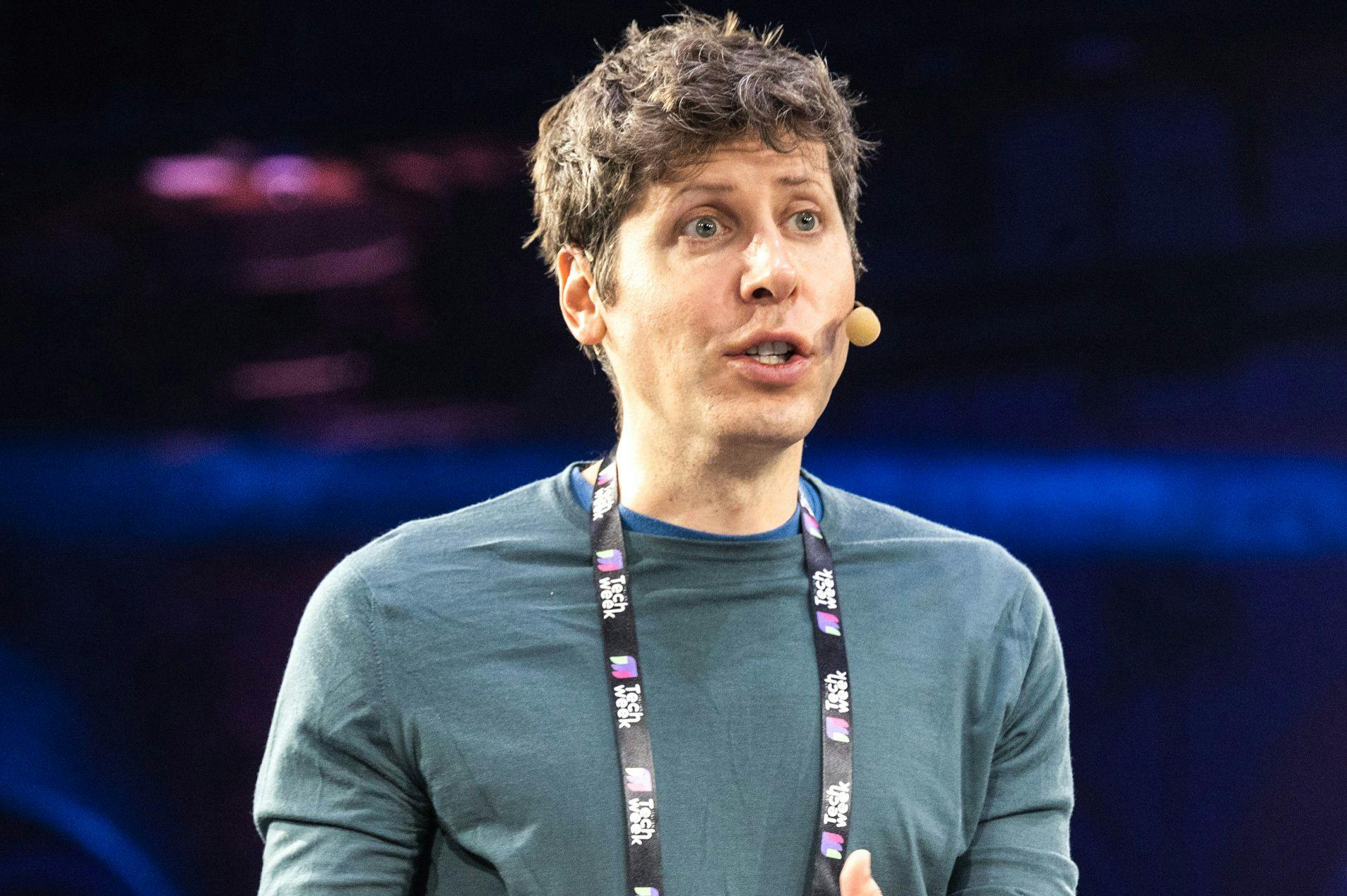
Sam Altman, Co-Founder of Open AI.
(Daniele/AGF/Shutterstock)

OpenAI takes its assault on Google to the next level by rolling out ChatGPT Search

The company also launched a web-browser extension that would allow users to set ChatGPT search as their default search engine.

Jon Keegan

ChatGPT now has a full-fledged search engine. Today OpenAI announced ChatGPT Search, a new feature built into the company’s ChatGPT AI tool, which opens a new front in the company’s competition with Google.

The feature is available to paid “plus” and “team” subscribers now, and will be rolled out to enterprise and educational customers in the coming weeks, followed by free users months later.

Shares of Google fell 1.8% after the news on Thursday as the broader market also declined.

Users don’t have to specify that they want to perform a web search when asking a question, as the tool will perform web searches when it needs to, but users can choose to select a button that will just give them web results for their queries.

“By integrating search with a chat interface, users can engage with information in a new way, while content owners gain new opportunities to reach a broader audience. We hope to help users discover publishers and websites, while bringing more choice to search,” OpenAI wrote in a press release.

The responses to search queries contain citations, appearing as small gray buttons with the name of the source of the information. Tapping on the buttons takes you to the source article. Users can also pop open a citations sidebar, first listing the cited sources, then a list of relevant search results below it.
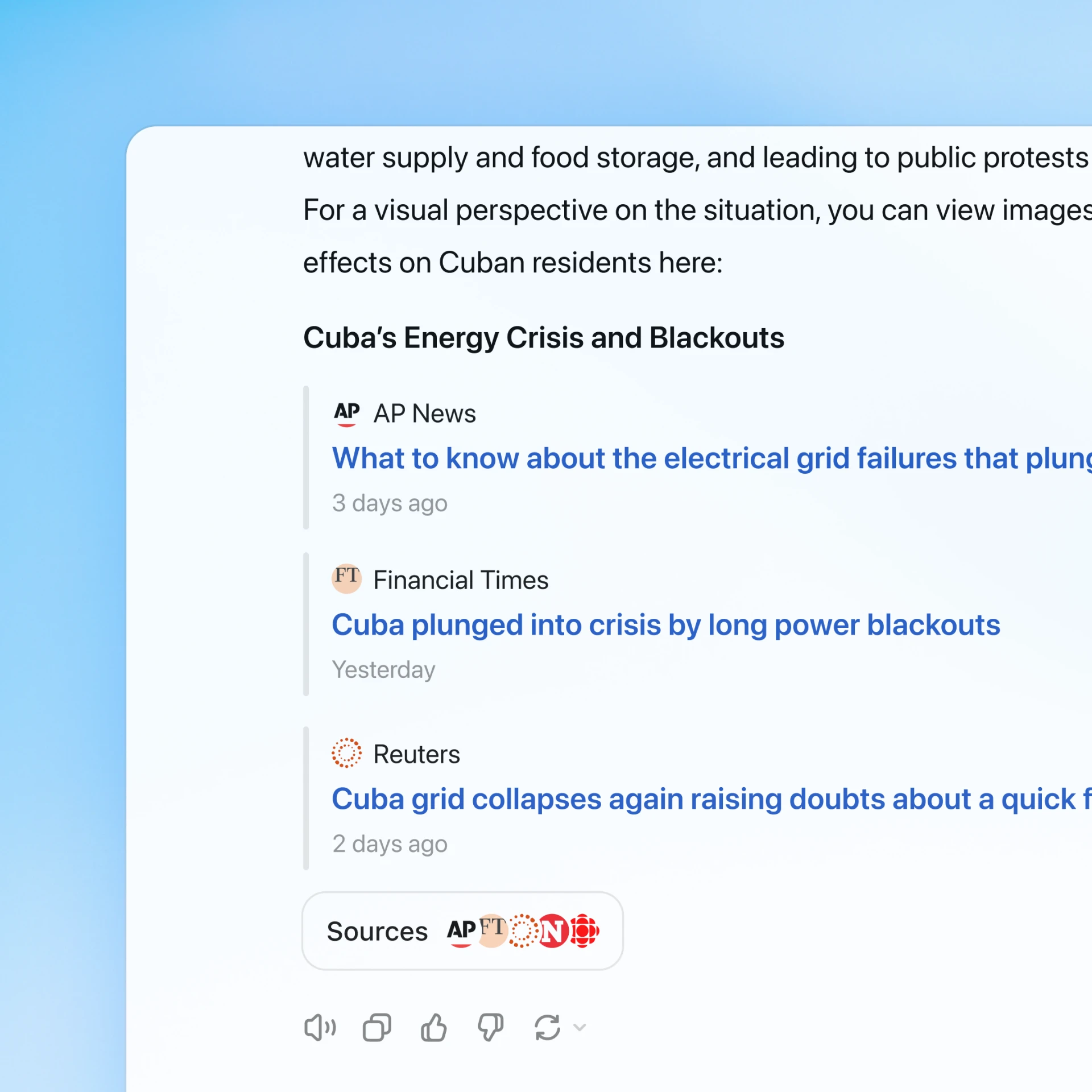
Screenshot of ChatGPT Search results (OpenAI)

OpenAI has signed content deals with over a dozen large publishers such as News Corp, the Associated Press, Condé Nast, and Reuters, and this new feature appears to show the fruit of those deals. The company says other publishers can choose to appear in search results by allowing OpenAI’s “OAI-SearchBot” to scrape their sites.

Search results with citations was one of the distinguishing features of startup Perplexity.AI, but the company was recently sued by News Corp’s Dow Jones and New York Post unit for copyright violations. OpenAI’s licensing deals appear designed to avoid this type of legal exposure.

OpenAI also released a web-browser extension to allow users to set ChatGPT Search as the default search engine.

More Business

See all Business
$35.4B

The tariffs imposed by the Trump administration have cost automakers at least $35.4 billion since the start of 2025, according to a new analysis by Automotive News.

That total will continue to climb this year, since the Supreme Court’s February tariff ruling largely leaves the 25% levy on vehicles and auto parts untouched.

Toyota has taken the biggest hit, projecting more than $9 billion in tariff costs in its fiscal year ending this month, while Detroit’s big three automakers — Ford, GM, and Stellantis — were hit with a combined $6.5 billion tariff charge in 2025.

In the fourth quarter, automakers sold about 8% fewer imported vehicles in the US compared to the same period a year ago, per the Automotive News Research & Data Center.

Tariff charges come at a rough time for legacy carmakers, which are also scaling back EV plans following the Trump administration’s elimination of tax credits and fuel standard goals. According to Automotive News, the cost of EV write-downs and restructuring is, so far, nearly $70 billion.

Universal Studios Orlando Theme Park

Universal Studios is giving theaters a longer minimum exclusive run

Universal will now guarantee a minimum of five weekends before a movie hits home screens — which might help theater companies like AMC finally get back to profitability.

Tesla Will Open Up Its Chargers To Other Brands, In Order To Receive Federal Subsidies

After a big pullback for EVs, climbing gas prices are causing drivers to eye them again

Still, the market is much different than it was the last time oil prices were this high.

business
Rani Molla

How Tesla quietly wound up owning a small piece of SpaceX

Tesla is converting its recent $2 billion investment in Elon Musk’s AI company, xAI, into a small ownership stake in SpaceX — just months before the rocket maker’s highly anticipated IPO.

Here’s what happened: Tesla announced its xAI investment in late January, after a shareholder proposal to invest fell short last year. Several days later, xAI merged with SpaceX. All three companies are headed by Musk.

Now, regulatory filings with the Federal Trade Commission show Tesla converting that investment into a small stake in SpaceX, formalizing the financial link between the companies ahead of the rocket maker’s IPO. SpaceX is expected to go public this year at a valuation some speculate could top $1.75 trillion, potentially making it the biggest company to ever go public. (The current record holder, Saudi Aramco, went public at a more than $1.7 trillion valuation in 2020.)

While the size of Tesla’s stake wasn’t available, Bloomberg reports that the investment would equate to ownership of less than 1%.

While SpaceX and Tesla have engaged in related-party transactions over the years, Tesla had not previously disclosed an equity investment in SpaceX.

Now, regulatory filings with the Federal Trade Commission show Tesla converting that investment into a small stake in SpaceX, formalizing the financial link between the companies ahead of the rocket maker’s IPO. SpaceX is expected to go public this year at a valuation some speculate could top $1.75 trillion, potentially making it the biggest company to ever go public. (The current record holder, Saudi Aramco, went public at a more than $1.7 trillion valuation in 2020.)

While the size of Tesla’s stake wasn’t available, Bloomberg reports that the investment would equate to ownership of less than 1%.

While SpaceX and Tesla have engaged in related-party transactions over the years, Tesla had not previously disclosed an equity investment in SpaceX.

Latest Stories

Sherwood Media, LLC produces fresh and unique perspectives on topical financial news and is a fully owned subsidiary of Robinhood Markets, Inc., and any views expressed here do not necessarily reflect the views of any other Robinhood affiliate, including Robinhood Markets, Inc., Robinhood Financial LLC, Robinhood Securities, LLC, Robinhood Crypto, LLC, Robinhood Derivatives, LLC, or Robinhood Money, LLC. Futures and event contracts are offered through Robinhood Derivatives, LLC.
