Business
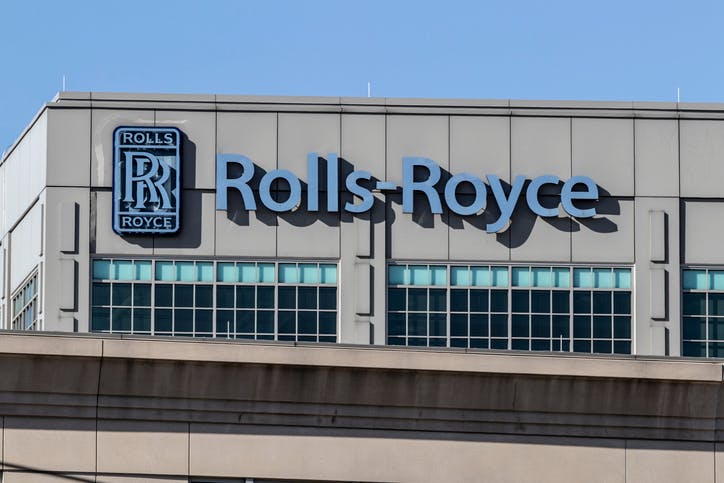
Rolls-Royce Aerospace corporate headquarters (Getty Images)
Rolls-Royce Aerospace corporate headquarters circa November 2021

Rolls-Royce’s profits surge to record highs as AI and jet demand power turnaround

Operating profit jumped 40% in 2025, driven by civil aerospace, defense spending, and the data center boom.

Hyunsoo Rim

In 2020, Rolls-Royce was burning through billions in cash and cutting a fifth of its workforce as Covid battered the global aviation industry. Just five years later, the British engineering giant has posted its highest profits in company history. 

On Thursday, the company reported an underlying operating profit of 3.5 billion pounds for 2025, a 40% year-on-year increase and the fourth straight year where it’s done better than analysts expected. It also announced a share buyback of up to 9 billion pounds, sending shares to an all-time high, nearly double where they sat a year ago.

Since CEO Tufan Erginbilgiç took over in January 2023, the struggling company has seen a rapid turnaround, with underlying revenues growing nearly 60% between 2022 and 2025. Profits have grown even faster, rising more than fivefold over the same time frame, as all three of its business engines begin to purr.

Rolls Royce Sankey
Sherwood News

In 2025, Civil Aerospace, the group’s largest division, saw revenues grow 15% to 10.4 billion pounds, with operating profits up 41% on surging demand for wide-body jets — a sharp turnaround from a few years ago, when Covid grounded fleets and dried up engine service revenues. Its Defence segment posted steady 8% revenue growth to 4.8 billion pounds, buoyed by rising military spending from European and US governments. Power Systems, meanwhile, was the standout division, with revenues up 19% to 4.9 billion pounds and profits soaring 60%, driven by the AI-fueled data center boom.

Now Erginbilgiç wants more. According to a new Financial Times report, the company has asked the UK government for up to 200 million pounds in funding to help develop a new engine for short-haul planes. That’s a lucrative segment that Rolls-Royce actually exited in 2013, but now aims to rejoin, as Airbus and Boeing are expected to pick engines for their next-generation short-haul jets by the end of the decade.

More Business

See all Business
business

The Trump administration is reportedly planning a 50% made-in-America requirement for USMCA tariff relief

Qualifying for USMCA-related lower tariffs may soon require more US-made vehicle components, according to reporting by The Wall Street Journal.

The Trump administration is reportedly planning to introduce a 50% US content requirement for vehicles covered by the trade pact to receive lower tariffs. The content would be measured by cost, according to the WSJ.

There currently isn’t any US-specific requirement for those lower tariff rates, but in order to receive preferential tariffs, vehicles are must contain at least 75% regional content (components made in North America). Per Reuters reporting, the Trump admin is seeking to raise the regional requirement to 82%.

These reported plans are subject to change as the US negotiates USMCA terms with Mexico over the next few months.

Overall, Tesla will likely have the easiest time qualifying for any stricter requirements. The automaker’s vehicles contained the highest amount of US/Canadian content in 2025, according to American University research. Ford, GM, and Stellantis all scored lower.

Notably: the underlying government data that many domestic content measurements rely on intentionally combines US and Canadian components, so it’s difficult to know exactly how much of any given vehicle is specifically US-made.

There currently isn’t any US-specific requirement for those lower tariff rates, but in order to receive preferential tariffs, vehicles are must contain at least 75% regional content (components made in North America). Per Reuters reporting, the Trump admin is seeking to raise the regional requirement to 82%.

These reported plans are subject to change as the US negotiates USMCA terms with Mexico over the next few months.

Overall, Tesla will likely have the easiest time qualifying for any stricter requirements. The automaker’s vehicles contained the highest amount of US/Canadian content in 2025, according to American University research. Ford, GM, and Stellantis all scored lower.

Notably: the underlying government data that many domestic content measurements rely on intentionally combines US and Canadian components, so it’s difficult to know exactly how much of any given vehicle is specifically US-made.

business
Tom Jones

The $640,000 Luce makes the average Ferrari look like a bargain

Put aside the shape; put aside the smoothing out of Ferrari’s iconic sharp edges; put aside, even, the calls from former Chairman and President Luca Cordero di Montezemolo to “take the Prancing Horse off.” On the grounds of price alone, Luce detractors might have a point.

By now, many of us will have read the criticisms of Ferrari’s first fully electric vehicle, as the Luce — which was unveiled to the world earlier this week and promptly saw the company’s shares crash out in New York and Milan — gets subtly shaded by competitors online and not-so-subtly shaded by basically everyone else.

What makes all of this worse for Ferrari is that, even by the luxury car maker’s notoriously high standards, they’ve slapped a pretty hefty price tag on the Luce, and the company’s CEO, Benedetto Vigna, has already been forced to defend the €550,000 ($640,000) price point, saying yesterday that it’s “fair to pay for innovation,” per Reuters.

While Ferrari’s cars have been getting more expensive of late, as recently as 2022, Ferrari’s average revenue per car sold was around $340,000. At nearly twice that price, this new electric model is obviously proving a little much (visually, conceptually, and financially) for many loyal and long-standing fans of the Prancing Horse to stomach.

Ferrari Luce cost chart
Sherwood News

By now, many of us will have read the criticisms of Ferrari’s first fully electric vehicle, as the Luce — which was unveiled to the world earlier this week and promptly saw the company’s shares crash out in New York and Milan — gets subtly shaded by competitors online and not-so-subtly shaded by basically everyone else.

What makes all of this worse for Ferrari is that, even by the luxury car maker’s notoriously high standards, they’ve slapped a pretty hefty price tag on the Luce, and the company’s CEO, Benedetto Vigna, has already been forced to defend the €550,000 ($640,000) price point, saying yesterday that it’s “fair to pay for innovation,” per Reuters.

While Ferrari’s cars have been getting more expensive of late, as recently as 2022, Ferrari’s average revenue per car sold was around $340,000. At nearly twice that price, this new electric model is obviously proving a little much (visually, conceptually, and financially) for many loyal and long-standing fans of the Prancing Horse to stomach.

Ferrari Luce cost chart
Sherwood News

Latest Stories

Sherwood Media, LLC and Chartr Limited produce fresh and unique perspectives on topical financial news and are fully owned subsidiaries of Robinhood Markets, Inc., and any views expressed here do not necessarily reflect the views of any other Robinhood affiliate, including Robinhood Markets, Inc., Robinhood Financial LLC, Robinhood Securities, LLC, Robinhood Crypto, LLC, Robinhood Money, LLC, Robinhood U.K. Ltd, Robinhood Derivatives, LLC, Robinhood Gold, LLC, Robinhood Asset Management, LLC, Robinhood Credit, Inc., Robinhood Ventures DE, LLC and, where applicable, its managed investment vehicles.