

Di$tract€d driving
ALL ABOUT THE REV

The rise of in-car ads: Automakers now view infotainment screens as huge possible sources of ad revenue
Our cars are already trying to sell us stuff. CarPlay is disappearing because automakers want our data. And soon, cars may even eavesdrop on our conversations for ad targeting.
The modern car can parallel park itself, power a house during a blackout, pick its driver up from a parking lot, and remotely control a PlayStation 5. So does it really come as a surprise that it might also try to earn a little commission on selling you a sandwich?
Cars, like many other functional utilities now decked out with large connected screens, are quickly becoming an advertising gold mine. That potential revenue is leading automakers to test the controversial addition of in-car ads — and likely playing into the growing wave of automakers scrapping popular phone-mirroring systems like Apple CarPlay and Android Auto from their models.
In-car ads appear pretty subtle, for the most part — an in-map suggestion that a Dunkin’ Donuts is nearby on an early morning commute, or a gas station promotion on the infotainment screen when the tank is nearing empty — but as vehicles become more sophisticated, their ads do, too. Ford has even patented a system that would listen to your in-car conversations and serve you up relevant ads based on what you and your passengers said.
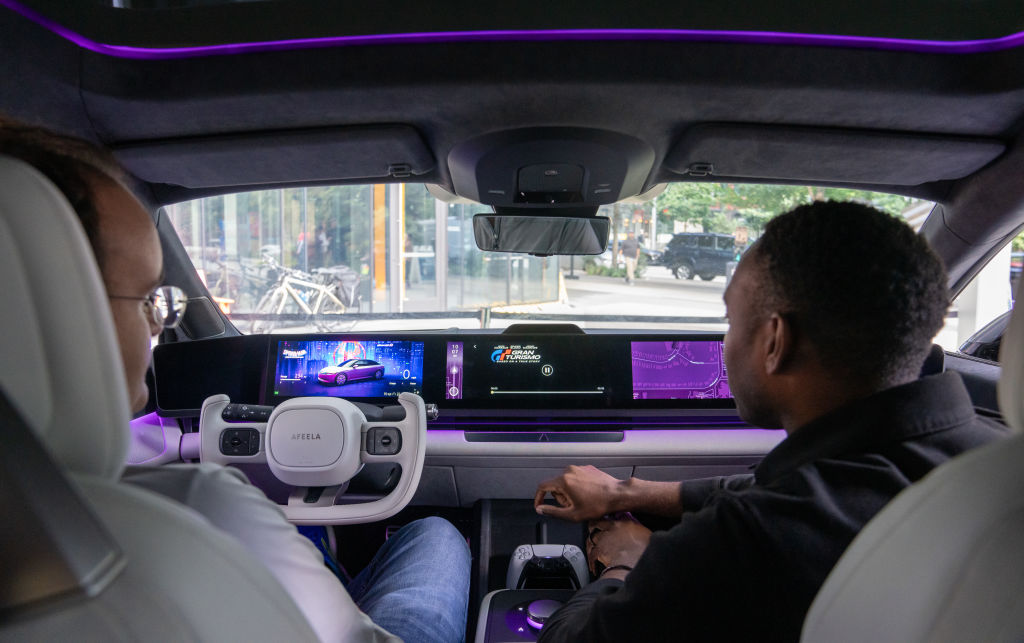
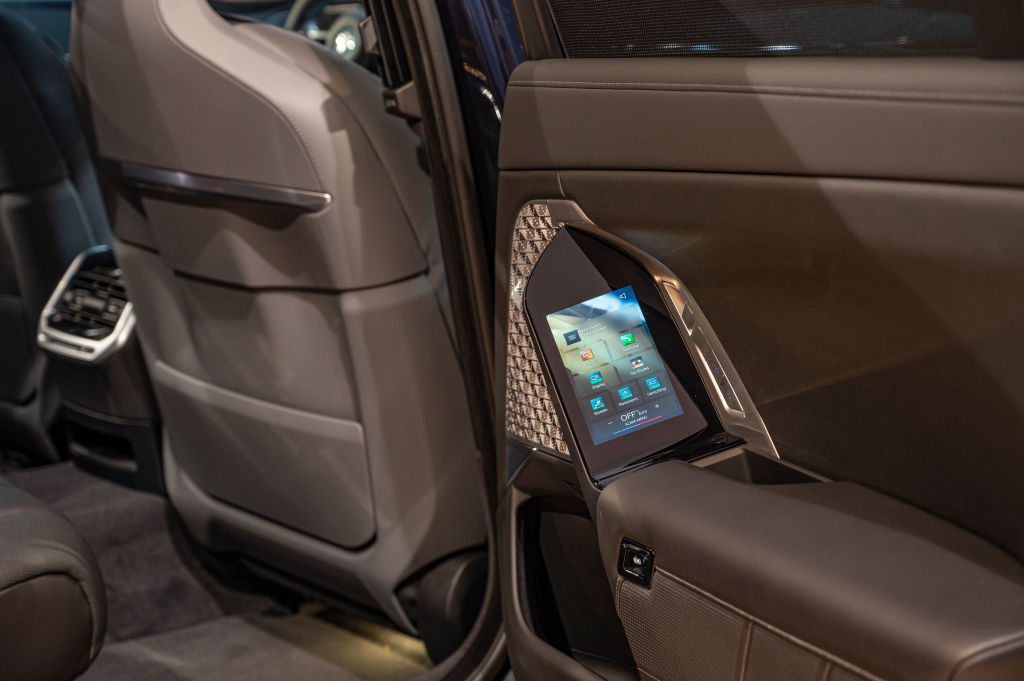
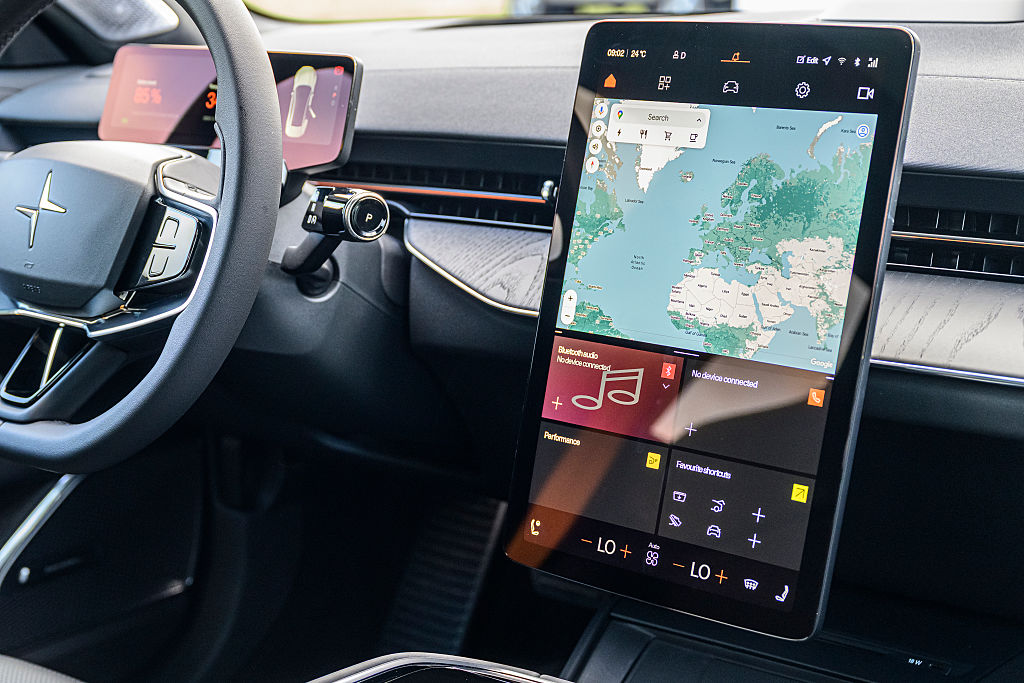
In late November, X user and automotive writer Zerin Dube posted a photo of a marketing notification he received in his Jeep Grand Cherokee. Dube referred to the pop-up, which offered bonus cash toward the purchase of a new Stellantis vehicle, as an example of “late stage capitalism.” Despite the initial critique, Dube followed up the post two days later, writing, “Well it worked and now we have a Grand Cherokee and a Rubicon X.”
In an email, Stellantis said its in-vehicle message tech is used only on vehicle startup, while stationary, to alert drivers to “important messages, such as exclusive sales offers, vehicle recalls and vehicle health monitor alerts.”
Late stage capitalism popping up on our Grand Cherokee. pic.twitter.com/VyVRkuGGw1
— Zerin Dube (@SpeedSportLife) November 18, 2025
That sort of interaction is music to automakers’ ears. Flush with a shocking amount of driver data, and with connected screens in 97% of new cars worldwide, manufacturers and advertisers are figuring out how to turn that data into relevant ads. The car screen also offers benefits that other advertising locations don’t: the captive attention of a consumer who’s already on the move.
German-based driver interaction platform 4screen is at the forefront of the in-car ad industry. Partnered with 16 vehicle brands including Stellantis, Toyota, Volkswagen, and Mercedes, 4screen says its technology works on all infotainment systems (including Apple CarPlay and Android Auto). The company is operational in a dozen countries, having launched in the US in 2024.
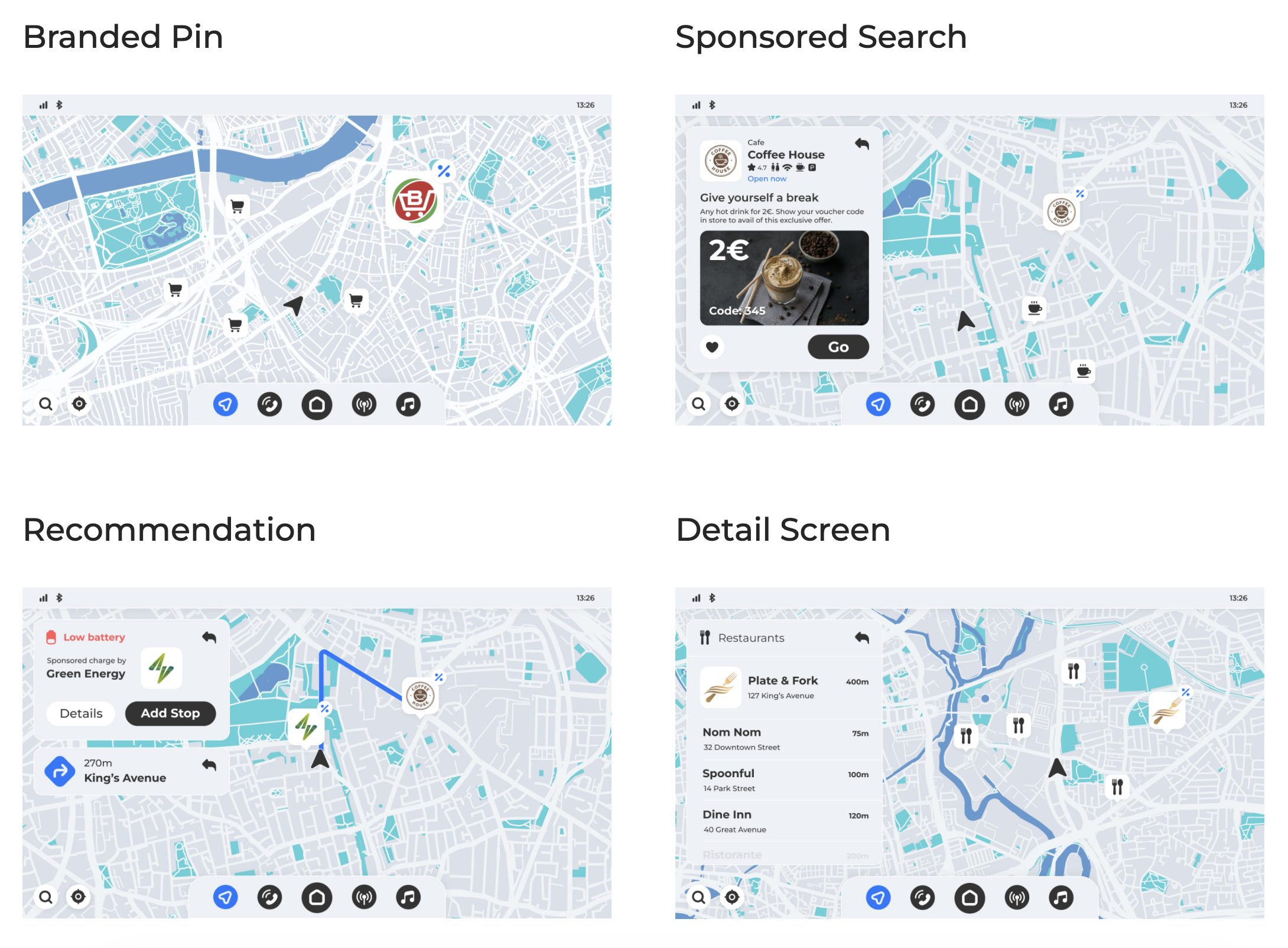
4screen is integrated into the infotainment screens of its automaker partners, and its ads show up as branded pins, sponsored searches, and pop-up recommendations. Cofounder and CEO Fabian Beste told Sherwood News that the goal is to be nonintrusive marketing and high value for drivers. The majority of 4screen’s marketing is currently geared toward utility: EV charging locations, supermarkets, or after-sale verticals like maintenance suggestions. Ads, Beste says, are an obvious next step for today’s cars.
“Vehicle connectivity rates are increasing, and if you compare in-car digital business models to those on other screens — smartphones, TVs, and so on — this is a massive, untapped market,” Beste said in an interview. “Considering the automobile as a digital device, why does it miss out on generating third-party revenue, a model virtually every other digital device successfully utilizes?”
4screen’s proprietary tracking system measures a given ad’s success by tracking parking rates. For up to three days after a push is sent out, a car parking at a given advertised location (be it a specific restaurant or gas station) is considered a success. Currently, 4screen says its ads result in a 3% to 7% boost in parking rates on average at these locations.
In-car ads are still a relative novelty, but the industry’s showing signs of big buy-in. In October, Tesla controversially partnered with Disney to promote “Tron: Ares” by rolling out an update that allowed drivers to replace their on-board visualizations with a Tron bike.
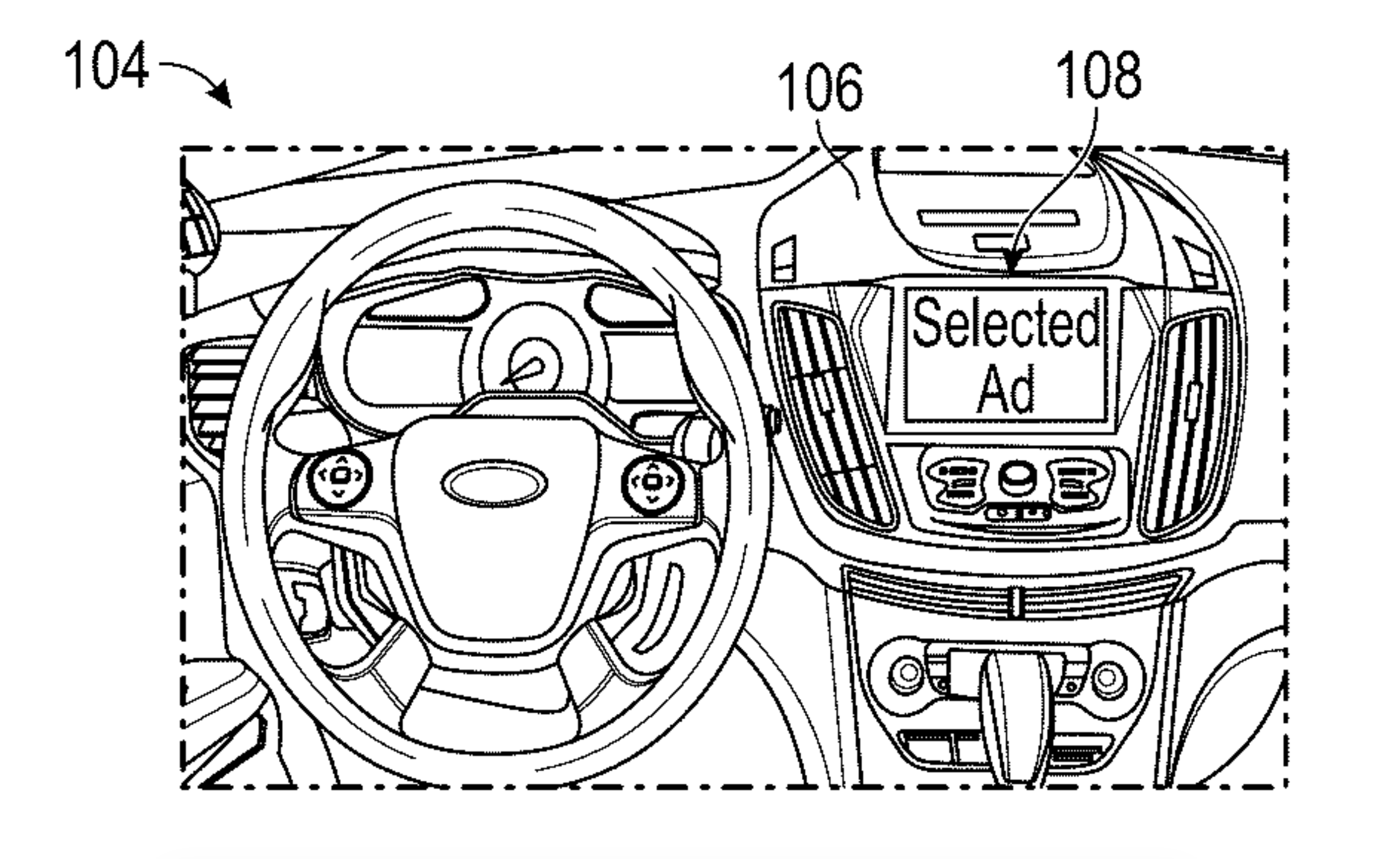
Ford has filed multiple patents for in-car advertising systems in recent years. One would use a car’s cameras to read nearby billboards and display similar ads on its infotainment screen; another could listen to conversations in the car, parsing for relevant key words. While many patents never see the light of day, these do at least reveal that major automakers are thinking deeply about how to integrate advertising into the car.
The market potential could be huge. Statista estimates there are 400 million “connected cars” currently on roads worldwide. The Center of Automotive Management, a German research institute, estimates “in-car e-commerce” revenues could reach between $100 and $120 per car, per year by 2030, creating an addressable market of more than $50 billion.
“We see a tremendous uptick in interest at the moment,” Beste said. “The current growth rate is easily tripling, approximately every year.”
The potential to tap into their existing car screens is likely a big part of why automakers have become increasingly antagonistic toward in-vehicle phone-mirroring systems like Apple’s CarPlay or Android Auto, despite their popularity. Rivian CEO RJ Scaringe has repeatedly defended the EV maker’s decision to omit those interfaces. Last year, GM said it would drop support for the systems in all of its vehicles.
“We’re at the very, very early stages of services we can have on a vehicle to improve the overall customer experience and make the journey smoother,” CEO Mary Barra said in an interview with the Verge in October.
The growth of autonomous driving tech also boosts the potential for the in-car ad market. Passengers in a self-driving car with nothing to do but read billboards may be more receptive to “stop at McDonald’s?” suggestions. Google’s robotaxi company Waymo last year denied reports that it would use data from its in-car cameras to target ads to riders amid privacy concerns. 4screen says it’s currently working on formats and use cases suitable for augmented reality or video streaming — though those features would be active only in autonomous modes.
The general public is hardly ever exactly thrilled about the idea of advertising making its way into another part of their lives (even if the car is one of the places we’re already most conditioned to encounter advertising). According to Beste, 4screen’s model doesn’t work if there’s too much friction. In-car marketing, he says, should avoid the blinky “overload” that’s come to dominate the open web and smartphones. Safety regulations also limit the ability of advertisers to be overly pushy via the infotainment screen.
“This ecosystem is fundamentally driven by a positive driver experience,” Beste said. “If the driver is happy and engaged, it naturally creates a beneficial environment.”



