Analysts see “signs of stabilization” for bitcoin ETFs, previous crypto position reduction “behind us”
Bitcoin ETFs have seen over $1.1 billion leave the funds in the past three days, but the worst may be over, JPMorgan analysts say.
Bitcoin has been stuck in the $89,343 to $91,360 range over the past 24 hours and bitcoin ETFs continue to bleed, recording $1.1 billion in outflows in the past three days, SoSoValue data shows.
Yet JPMorgan analysts see the light at the end of the tunnel, saying that there are “signs of stabilization and of bottoming out in bitcoin ETF flows so far in January.”
They added that these signs “are also seen in other crypto indicators in perpetual futures.”
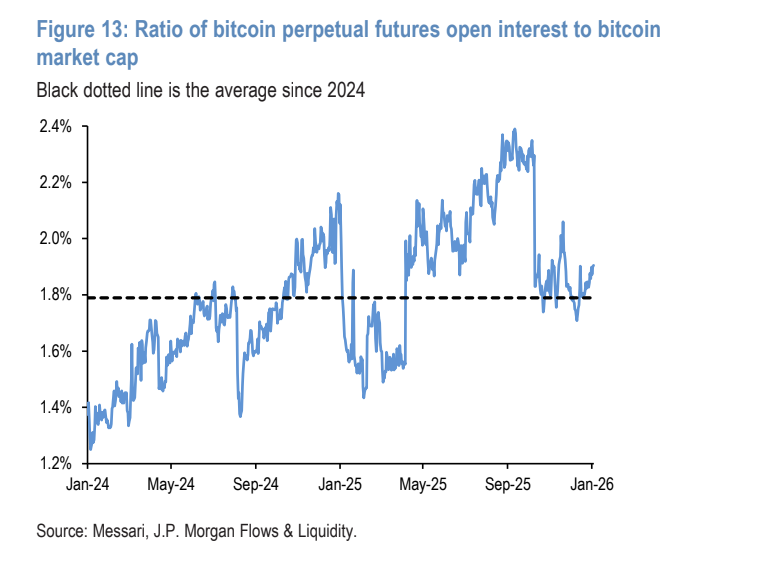
“Taken together, all these indicators suggest that the previous crypto position reduction by both retail and institutional investors during the last quarter of 2025 is likely behind us,” Nikolaos Panigirtzoglou, JPMorgan managing director of global market strategy, wrote in a research note.
Nic Puckrin, cofounder of Coin Bureau, told Sherwood News there are several drivers for the selling pressure we’re seeing in bitcoin ETFs, including today’s nonfarm payroll numbers and the Supreme Court’s tariff decision.
“There’s a lack of conviction in the market, and it shows in the flows and the fact that the price struggled to push higher after the early January rally. The level to watch is still around $94,000 if we’re to see a meaningful move higher,” Puckrin said.
Other analysts are also watching the Supreme Court’s ruling on tariffs, which some see as “a major test of policy predictability itself,” according to Bitunix.
“Crypto markets are highly sensitive to such macro variables. The tariff ruling will directly influence inflation expectations, the US dollar, and global risk appetite, potentially amplifying volatility in bitcoin and other major crypto assets,” Dean Chen, an analyst at Bitunix Exchange, said.
JPMorgan analysts also said they remain “skeptical” of the view that a deterioration in liquidity conditions has played a role in the recent crypto market correction, contrary to many experts’ rationale.
“Instead, we believe that de-risking, triggered by the October 10th MSCI announcement regarding MicroStrategy index exclusion, has been the main driver of the crypto market correction,” they wrote. (MSCI later announced Strategy would remain in the index.)
In another (mostly) contrarian view, CryptoQuant analysts said that “whale buying is being misread and LTH [long-term holdings] selling overstated.”
In a January 9 report, the analysts said LTH spending is overstated in headline data. While the holders “have spent large volumes of coins,” it is not “at new record as a significant portion of LTH spending was also due to exchanges’ internal transactions,” they said.
The analysts also said that large bitcoin investors are not buying the dip and their holdings have declined “at the fastest pace since early 2023.”
“The total balance in addresses holding between 1K and 10K is down by 220K BTC from a year ago, after reaching a cycle top of +409K BTC around March 2024,” they wrote, adding that it’s the sharpest decline in holdings since early 2023.
“A similar situation occurred in 2021-2022, as Bitcoin entered its previous bear cycle, with holdings’ growth peaking at +473 BTC and turning negative before the bitcoin price peaked,” they said.