Crypto
solana
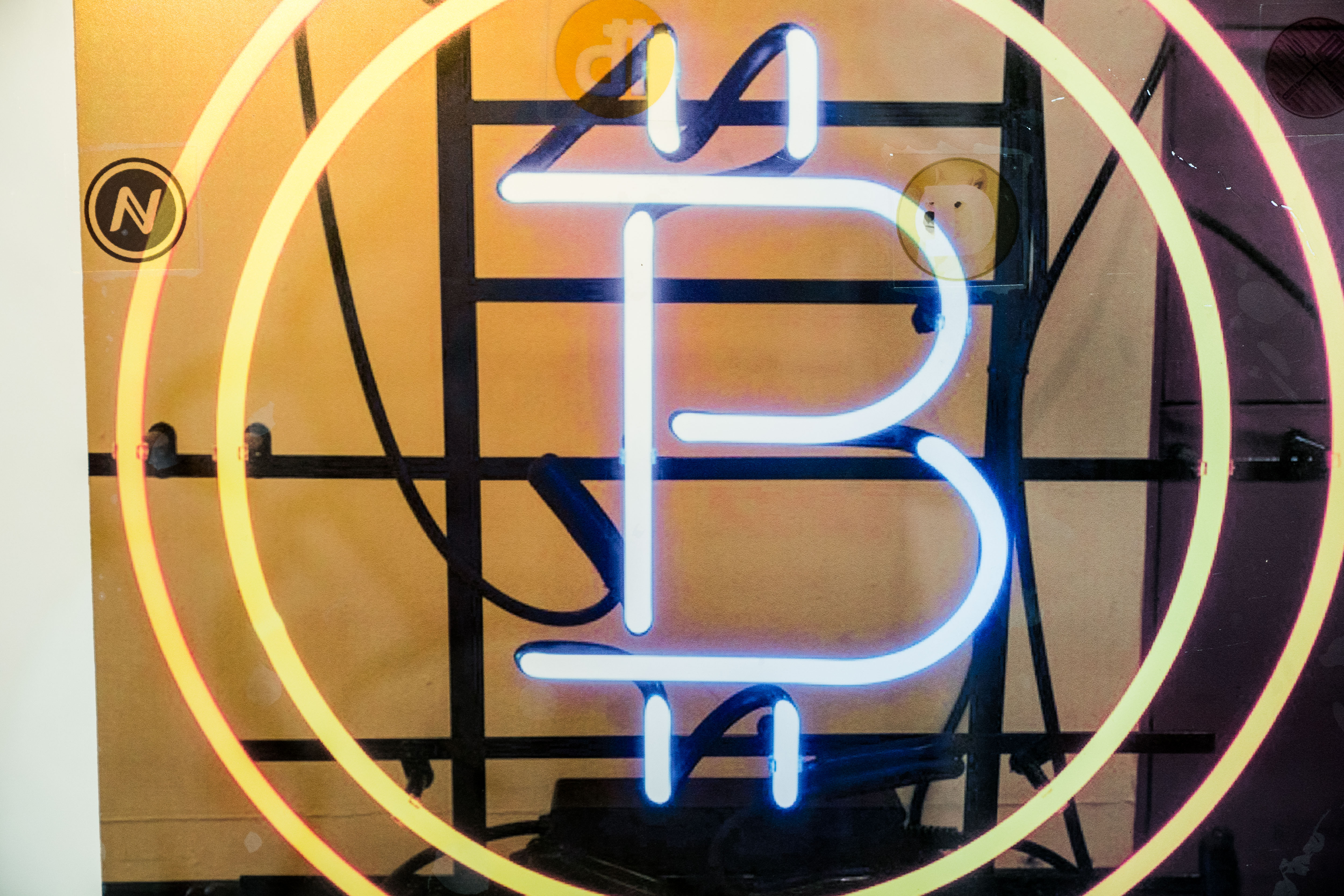
A person walks past a Solana Spaces store (Joe Raedle/Getty Images)

Cantor initiates coverage of 3 solana companies, says SOL is “overlooked”

Analysts also argued that SOL is superior to ETH for treasuries.

Yaël Bizouati-Kennedy

Amid the digital gold rush to mimic Strategy’s bitcoin treasury reserve, Cantor analysts initiated coverage of three companies that have opted for solana treasuries: DeFi Development Corp., Sol Strategies, and Upexi.

Bitcoin gets a lot of focus (rightfully so), but SOL is being overlooked,” they wrote in a June 16 note.

Cantor analysts argued that Solana is superior to its main competitor, Ethereum, namely because it “offers superior throughput and lower cost.”

Solana is the sixth-largest crypto, with a $79 billion market cap.

The analysts wrote:

“Developer growth on SOL has far exceeded that on ETH recently, and we expect this to continue. Thus, using SOL over ETH as a treasury asset makes sense: these businesses think that SOL can overtake ETH, which currently has a market cap that is ~259% higher than SOL.”

A big differentiator between SOL and BTC treasuries is the ability to stake, they argued, adding that this will help “Solana treasury companies growing SOL/share faster than BTC treasury companies growing BTC/share.”

They said, however, that bitcoin is still considered “the safest and most-decentralized digital asset with its primary use-case being a reserve asset protecting against monetary debasement.”

Joseph Onorati, CEO and chairman of DeFi Dev Corp., told Sherwood News that both ethereum and solana are suitable for a crypto treasury strategy.

“They are both highly volatile, earn native yield, and have active DeFi communities where a treasury strategy company could be active,” he said.

Cantor has an “overweight” rating on DeFi Dev and a $45 price target, a significant upside from the current price of $30.

Meanwhile, Cantor has an “overweight” rating on Upexi, with a $16 price target, representing a 60% upside from this morning’s price of $10.  

Brian Rudick, Upexi’s chief strategy officer, told Sherwood that he views bitcoin as the best monetary asset and solana as the best high-performance blockchain. 

“With so much of the success of a digital asset treasury company determined by the performance of the cryptocurrency it holds, it’s imperative for a digital asset treasury company to be underpinned by an endgame winning asset such as solana,” Rudick said.

Rudick also argued that it’s “the best high-performance blockchain for three reasons.”

It’s one of the first second-generation smart contract blockchains, enabling it to have both best-in-class technology and network effects; it also has one of the most vibrant ecosystems of users, developers, and dapps. 

“Lastly, Solana is leading on many key metrics, such as daily average users, dapp revenue, and DEX volumes, even at a smaller market cap compared to some other chains,” he added.

Finally, Cantor analysts have an overweight rating on Sol Strategies, with a CA$4 (US$2.95) price target, representing a 62% upside from the current price.

The Canadian publicly listed company recently filed an initial prospectus “allowing for up to $1B USD in potential financings.”

SOL Strategies CEO Leah Wald told Sherwood that Cantor’s coverage reflects the growing institutional recognition of solana’s potential.

“What matters is having the right chain for the right use case, and when it comes to choosing a unique treasury asset, solana’s unique principles provide for an interesting opportunity,” she said.

Yesterday, MemeStrategy, Asia’s first publicly listed digital asset company, announced it acquired 2,440 SOL, “establishing it as the first Hong Kong-listed company to invest in the Solana ecosystem,” according to a press release

More Crypto

See all Crypto
crypto

Crypto spot ETF flows diverge, a sign of investor rotation

Investors appear to be rotating where they are placing their crypto bets, but not necessarily fleeing the asset class entirely. 

Last month, spot bitcoin ETFs registered $206.5 million in outflows, marking their fourth straight month of redemptions. Ethereum spot ETFs saw even heavier withdrawal as $369.9 million left the investment vehicles, also marking a fourth consecutive monthly outflow. 

Since November, spot bitcoin and ethereum ETFs have posted more than $9.1 billion in cumulative outflows.

Bitcoin and ethereum are the market’s virtual ATMs, according to Chris Soriano, cofounder and chief commercial officer at BridgePort. “It’s no surprise when institutions start laying off risk or meet redemptions, they naturally sell what’s most liquid first,” Soriano told Sherwood News. “This is no different than when a traditional fund manager trims S&P 500 exposure before touching their small-cap growth positions.” 

On the other hand, newer funds based on altcoins haven’t stopped recording monthly green candles. 

Spot XRP ETFs pulled in $58 million last month and have yet to post a single negative month since their launch in November. Spot solana ETFs attracted $63 million and, likewise, remain in the black since their debut in October. 

The outflows of the two largest cryptocurrencies combined with the modest inflows of the two smaller tokens suggest a rotation regime, Soriano argued. “Institutions trimming their core liquid holdings while selectively adding to high-conviction, higher-beta positions where they think there’s more juice in the squeeze. It’s not a contradiction; it’s portfolio mechanics behaving exactly as you’d expect,” Soriano continued.

He added that XRP and solana’s markets are also thinner, which means the same dollar of buying pressure registers as a louder, more persistent inflow signal than it ever would in BTC or ETH.

Nic Roberts-Huntley, CEO and cofounder of Blueprint Finance, told Sherwood that bitcoin and etheruem’s outflows combined with XRP and solana’s inflows “may signal a broader market transition, one where capital increasingly chases specific use cases rather than the entire asset class moving in lockstep.”

crypto

Ethereum struggles to hold market gains

After rallying from $1,830 to above $2,100 on Wednesday, ethereum struggled to hold on to its gains and dipped under $2,000, a round psychological price level, on Thursday. 

The seesaw price action helped liquidate $146 million worth of leveraged long and short positions on ethereum in the last 24 hours, data from CoinGlass shows.  

While ethereum was due for a relief rally after entering into oversold conditions as measured by its relative strength index, some are still maintaining a bearish sentiment, according to Delphi Digital analyst Simon Shockey.

With ethereum now trading under $2,000, Shockey called the rally “unconvincing.” He told Sherwood News that he doesn’t “think most crypto natives are compelled to really believe the lows are in,” adding that he could see ethereum fall further from here and make new lows in the second half of the year. 

The price action comes as cofounder Vitalik Buterin has sold $35 million worth of ethereum tokens since the start of February and the paper loss for the largest ethereum treasury firm, BitMine Immersion Technologies, has climbed to nearly $7.9 billion

On the positive side, ethereum developers introduced a new road map that involves seven hard fork upgrades by 2029 and several north stars, one of which aims to make ethereum a “post quantum” layer 1 network.

Latest Stories

Sherwood Media, LLC produces fresh and unique perspectives on topical financial news and is a fully owned subsidiary of Robinhood Markets, Inc., and any views expressed here do not necessarily reflect the views of any other Robinhood affiliate, including Robinhood Markets, Inc., Robinhood Financial LLC, Robinhood Securities, LLC, Robinhood Crypto, LLC, or Robinhood Money, LLC.