How a crypto game called Hamster Kombat growth hacked the entire internet
The clicker game now has some of the fastest-growing channels in the world.
The common wisdom is that the crypto boom is well and truly over. Even though there are, of course, plenty of crypto evangelists and even NFT collectors still out there, the Silicon Valley hype cycle has moved on to AI. So you might not know that one of the biggest brands on social media right now is a cryptocurrency-based video game called Hamster Kombat.
According to our data, Hamster Kombat's X account is the hottest page on the app, going from zero to 10 million new followers in just three months. Meanwhile, its YouTube account is the fastest growing account in history. In June, it gained over 20 million new subscribers, second only to MrBeast. Its fanbase is using Telegram at such a scale that, last month, Telegram jumped to the number three most-downloaded app on Android. But what is this game and why is eating social media right now?
Hamster Kombat runs inside of Telegram, on the app's custom blockchain, TON (Telegram Open Network), which launched in 2019. Like many other crypto projects, TON had dubious legal status, and in March 2020, the state of New York officially banned TON’s crypto tokens (called Grams at the time) from being publicly sold. Telegram officially separated from TON in May, but because the blockchain was open source, it restarted basically immediately as “The Open Network,” aka TON again, and still remains closely tied to Telegram.
The blockchain’s currency is now called TONCoin, which currently has a market cap well over $18 billion (that’s greater than dogecoin’s market cap) and powers a lot of blockchain games and services that run on Telegram. And the biggest of which is Hamster Kombat.
When Hamster Kombat launched in March of this year there was a marketing push to all of Telegram's users asking them to join. And, similar to Threads’ close relationship with Instagram helping inflate user numbers, Hamster Kombat now counts basically every Telegram user as a Hamster Kombat user, making it tough to get a handle on how many people are actually playing this game (they say 250 million). But strangest of all, the creator of the game remains anonymous. Crypto media outlets have joked that it's a CIA operation.
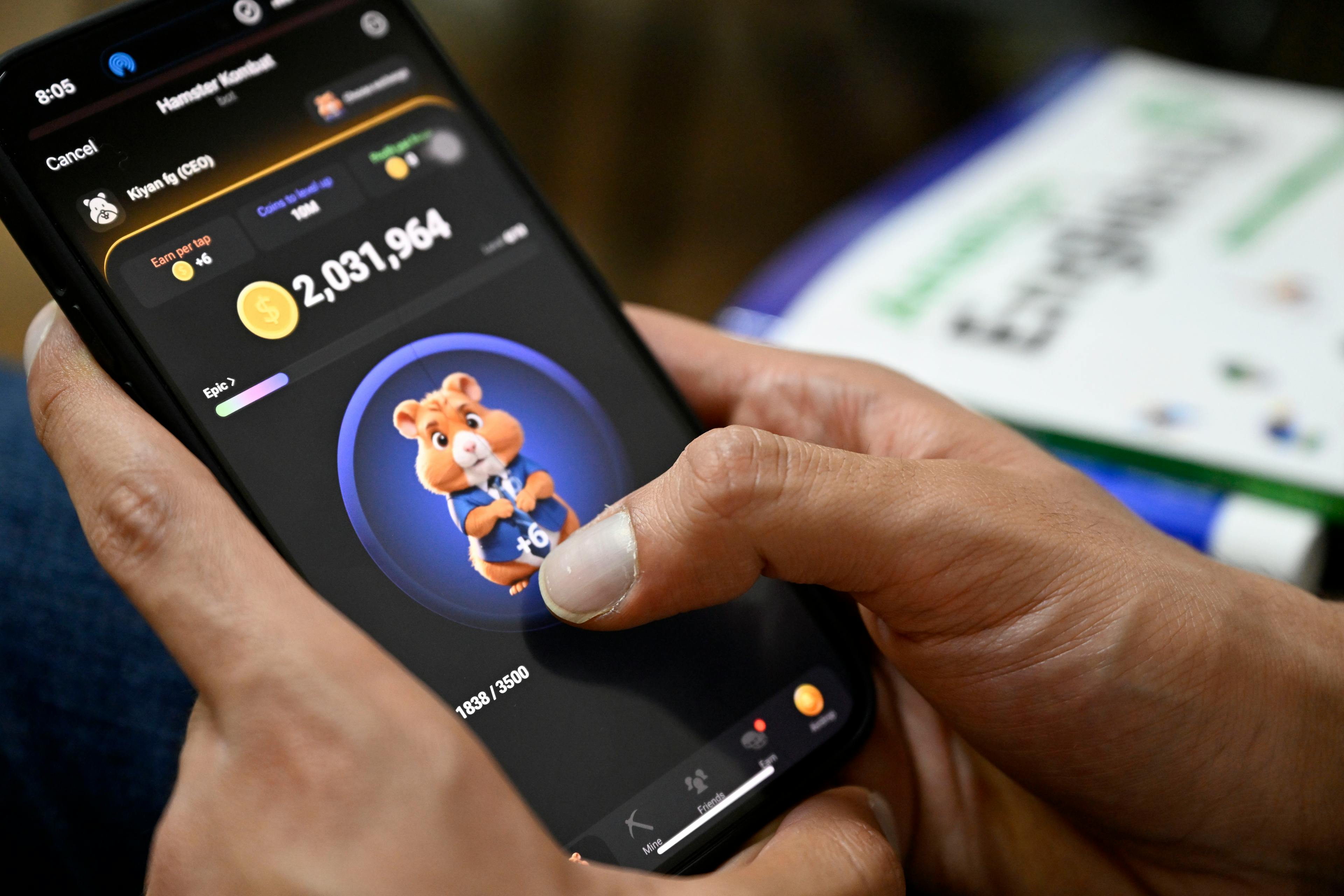
As for how one actually plays Hamster Kombat, you don't really. You have a pet hamster and you earn in-game coins by clicking on the hamster a la Cookie Clicker. If you're looking for any kind of lore, you basically have to click on the hamster to raise his levels until he becomes the CEO of a crypto exchange. Very meta.
💥 NEW EXCHANGE ALERT 💥
— Hamster Kombat (@hamster_kombat) July 12, 2024
🔔 Hey СEOs!
We are excited to announce that we're adding one more exchange to the game, and you can now become a CEO of https://t.co/3kDO6FrcEh in Hamster Kombat!
🤩 @Cryptocom is a global cryptocurrency platform and one of the industry leaders in… pic.twitter.com/50Hrwcy9Yp
But Hamster Kombat does have one clever gameplay innovation that is driving its extreme growth on social media. Aside from tapping on your virtual hamster to get coins, the game also gives you daily rewards for opening it every day. For instance, if you complete a 10-day streak you end up with seven million coins. And inside the app every day are other challenges, the majority of which are performed elsewhere on the web.
The game rewards you with coins for joining its Telegram Group, for watching its YouTube videos, for following the game on X, and for inviting more friends into the game. This large-scale, gamified inauthentic behavior is likely why Hamster Kombat's most recent YouTube video has 8.1 million views and every single comment is literally the same phrase over and over again: "Thanks to the Hamster Team for supporting our country." Based on the human beings making content about Hamster Kombat on YouTube, much of their user base is in India and Southeast Asia. Another clue to their user base is that many of the subtitles for Hamster Kombat's YouTube videos are set to Russian.
Right now, there is no way to convert Hamster Kombat's coins into real money, or even other cryptocurrency. But that’s changing soon. An "Airdrop" of $HMSTR tokens is scheduled for this month, which may explain why so many users are following the game's accounts right now. For those not familiar with crypto parlance, basically, there will finally be a way to link your progress in the game to a crypto token you can trade on open markets. Users may get issued free tokens based on how regularly they're playing the game or how many in-game coins they’ve amassed (the details of the airdrop are not yet confirmed).
Hamster Kombat is often compared to Notcoin, which was the first clicker game that launched on Telegram in January and did its own AirDrop of the NOTcoin token back in May. It also runs inside of Telegram on the TON blockchain and doled out more than 80 million NOT tokens to players. Right now, one NOT token is worth about $0.016, which isn't bad as far as niche crypto tokens go — dogecoin’s token, DOGE, is worth about $0.12 at the moment. It’s important to point out that Telegram's crypto wallet isn't available in the US, which adds to the proof that the majority of the game's audience-turned-investors are not in America.
But what makes Hamster Kombat much more powerful than Notcoin, or other popular crypto games that have come before it, like Axie Infinity or 9Gag’s Memeland, is that it has added a new layer on top of the slot machine gameplay loop that keeps players hooked. Not only is it asking you to keep clicking on a virtual hamster to earn an in-game currency that it is promising you will eventually be tied to a crypto token, it's also asking you — and rewarding you — to invite your friends. Paying you in-game currency to follow its social media accounts so other people learn about the game and do the same. To watch its content and trick algorithms into promoting it further. Until everyone is playing Hamster Kombat.
Garbage Day is an award-winning newsletter that focuses on web culture and technology, covering a mix of memes, trends, and internet drama. We also run a program called Garbage Intelligence, a monthly report tracking the rise and fall of creators and accounts across every major platform on the web. And we'll be sharing some of our findings here in Sherwood. You can subscribe to Garbage Day here.