How has Trump changed crypto in his first 100 days
As we approach April 30, 2025, how has the “crypto president” kept his campaign promises?
The self-proclaimed crypto president made lofty promises for the industry during his campaign, and has continued to embrace crypto since his inauguration.
On the campaign trail, President Trump pledged:
To establish a national bitcoin reserve;
To mine all bitcoin in the US and take bitcoin to the moon;
To make the US the “crypto capital of the world”;
And to reverse the previous administration and former SEC Chair Gary Gensler’s sterner stance toward the industry and end the “war on crypto.”
All this earned him the support and dollars of industry heavyweights. Many, including Coinbase and Ripple, poured millions into the campaign via Fairshake, a pro-crypto PAC, to advance more crypto-friendly legislation and candidates. The PAC raised more than $260 million in 2024.
The effort initially paid off: on Inauguration Day, bitcoin hit an all-time intraday high of $109,114, underscoring the massive enthusiasm and optimism for crypto’s future, though it has since fallen back to the $80,000 range. Crypto’s overall market cap is down to $2.6 trillion as of April 15 from $3.36 trillion on Inauguration Day.
Trump’s newfound enthusiasm for crypto has also boosted mainstream and institutional adoption, helping propel many new crypto products, like altcoin and meme coin ETFs.
It’s clear that crypto now has a seat at the White House table, but as we approach the landmark of Trump’s first 100 days in office, let’s examine how he’s kept his crypto promises.
Many remain bullish on the president’s commitment to crypto, applauding the administration’s steps in the first 100 days, yet others argue there’s a big gap between campaign crypto swagger and tangible results, lamenting the lack of velocity in action.
As Autonomys CEO Todd Ruoff said, while it’s a mixed bag, it’s not a failure, as this is the most crypto-aware administration yet.
“The intent is there. The execution is just catching up. The space moves at light speed, and the government doesn’t, but compared to the last five years, this is forward motion. The next 100 days will tell us whether it’s real alignment or just flirtation,” Ruoff said.
Establish a bitcoin national reserve
This was largely considered to be Trump’s pièce de résistance crypto promise. Most of the crypto world coalesced around this idea, arguing that it would offer “a hedge against currency devaluation and economic uncertainty” and that, as a store of value, it could reduce the national debt.
On January 23, Trump signed an executive order to establish regulatory clarity for digital financial technology, saying this was proof he was fulfilling his promise to make the US the planet’s crypto capital.
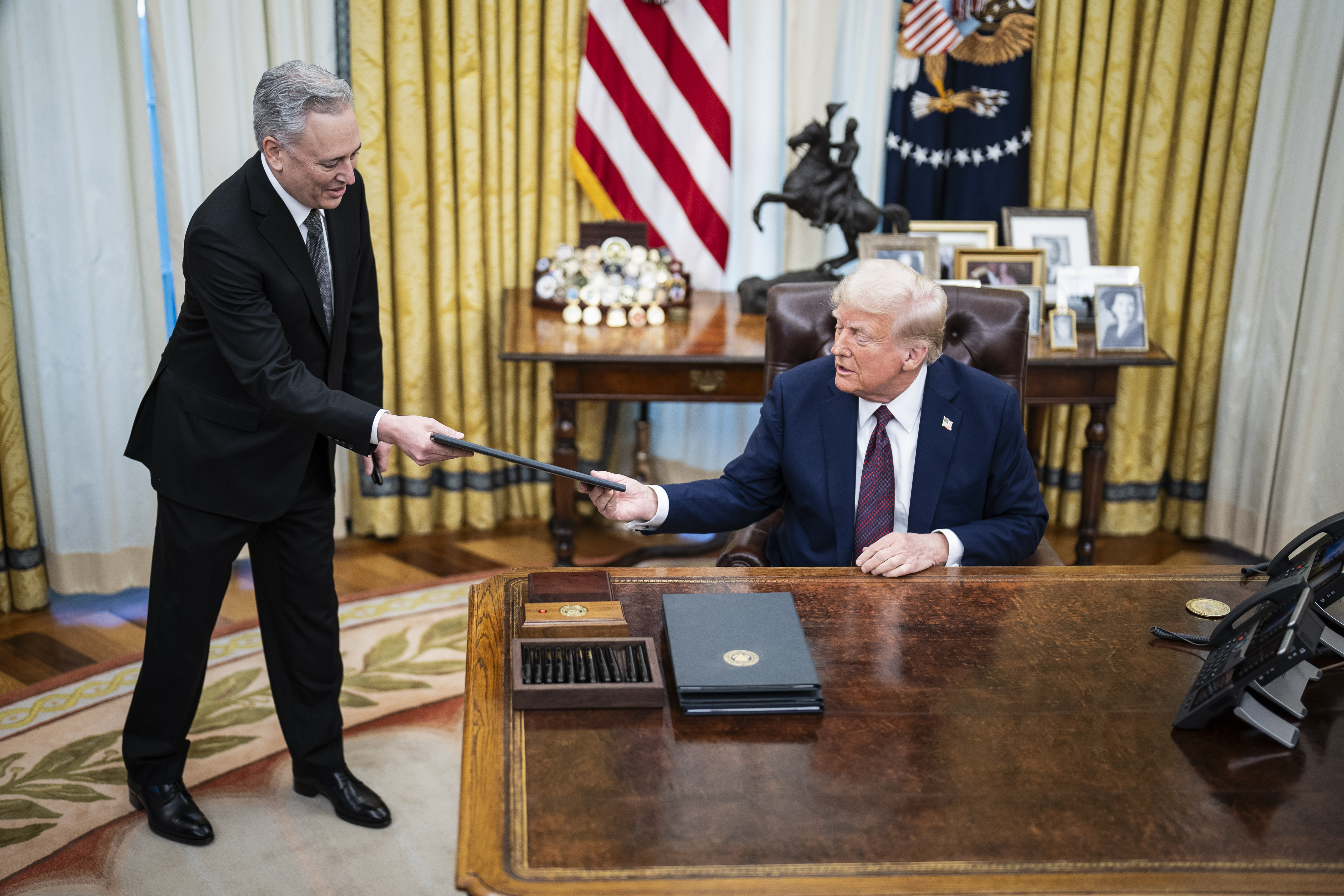
The order established the Presidential Working Group on Digital Asset Markets, tasked with “evaluating the creation of a strategic national digital assets stockpile.”
While the crypto community rejoiced, as this was the first tangible sign of the bitcoin reserve, the lack of details about what this “stockpile” would entail left many anxious.
Almost two months later, on March 2, Trump announced on Truth Social that the reserve (no longer a “stockpile”) would include four assets besides bitcoin: ethereum, XRP, Solana, and cardano. This upset some in the community, including Coinbase CEO Brian Armstrong, who commented, “Just Bitcoin would probably be the best option.”
On March 6, the eve of the initial White House Crypto Summit, Trump finally signed the much-awaited executive order to establish a bitcoin reserve. While some of the crypto world rejoiced, bitcoin, on the other hand, turned red immediately following the announcement, falling from $91,000 to $85,000.
The disappointment stems from the fact that the order doesn’t include a budget for making additional bitcoin purchases to create the reserve, but confines it to currencies seized by the government, dashing hopes that additional demand for the cryptocurrency would raise prices.
Instead, it stated that the administration will examine “budget-neutral strategies for acquiring additional bitcoin, provided that those strategies impose no incremental costs on American taxpayers.” Finally, many were disappointed that the reserve will indeed include altcoins, such as XRP and solana.
“The bitcoin reserve, while a nice sentiment, wasn’t all that groundbreaking because it’s simply bitcoin the government was already holding,” said Chris Chung, founder of solana-based swap platform Titan. “So it was somewhat anticlimactic for the market.”
On the other hand, some observers also acknowledged that the mere fact it’s on paper is a tremendous step forward.
As Nic Puckrin, founder of Coin Bureau, put it, the reserve “wouldn’t even have been a distant whisper in the government” a year ago.
“At times like these, it’s important to zoom out and compare to the past to understand how momentous a certain piece of news is — even if it isn’t as major as first expected,” he added.
Boost US bitcoin mining and make America the world’s crypto capital
While Trump promised to help bitcoin miners, the sector has largely struggled since the start of his second term, facing the combination of a volatile macro environment, uncertainty around trade policy, and all-time high hash rates. The mining industry depends exclusively on ASIC computer chips from China, and increased tariffs on these could raise production costs for miners.
“With thin margins to begin with, this additional cost could break some miners’ profitability,” Two Prime CEO Alexander Blume said, adding that competition for miners continues to increase, making it more challenging to mine blocks successfully.
In turn, these miners may have a hard time competing with their non-US peers, including Canadian firms Hive and Bitfarms and UK-based Argo, Blume said.
That said, since the election, US miners are faring better than their Canadian counterparts, though all are soundly in the red.
Meanwhile, the president’s son, Eric Trump, announced on March 31 his partnership with bitcoin miner Hut 8 to launch American Bitcoin Corp., which “aims to become the world’s largest, most efficient pure-play miner while building a robust strategic Bitcoin reserve.”
Blume said the move signals the administration’s interest in the sector’s potential.
The big one: Ending the “war on crypto” and making the US the hub for crypto innovation
Trump campaigned as the “crypto president” and promised a much friendlier environment for crypto to thrive under, and in his first 100 days, he has made progress.
The new, crypto-friendly SEC, with Paul Atkins recently confirmed as chair, has dismissed many crypto companies’ litigations, including those against Coinbase, Robinhood, Kraken, Crypto.com, and Ripple. (Sherwood Media is an independently operated subsidiary of Robinhood Markets Inc.)
Many saw the SEC’s case against Ripple as emblematic of Gensler’s “regulation by enforcement” approach. In March, Ripple CEO Brad Garlinghousedeemed the outcome “a resounding victory.”
This came after several years of legal battles for the company, going back to 2020. To make a long, winding story as short as possible: the SEC sued Ripple, alleging it sold its native token, XRP, as an unregistered security. In January 2023, the judge ruled that XRP was a security when Ripple sold it to institutional clients but wasn’t a security when it was sold to retail traders. The US District Court for the Southern District of New York then ordered Ripple to pay a $125 million civil penalty in August 2023. In October, the SEC appealed the decision, and later that month, Ripple filed a cross-appeal.
During this administration, both sides have agreed to pause the appeals “in light of the parties having reached an agreement-in-principle, subject to Commission approval, to resolve the underlying case.” On April 16, Ripple and the SEC were officially granted that pause.
Ending the war on crypto has also translated into several pardons. In March, Trump pardoned the three cofounders of crypto exchange BitMEX, as well as another employee. The Commodity Futures Trading Commission had filed a lawsuit in 2020 against these individuals and BitMex, and last July, BitMEX “pled guilty… to violating the Bank Secrecy Act by willfully failing to establish, implement, and maintain an adequate anti-money laundering (‘AML’) program,” according to the press release.
Trump also pardoned Ross Ulbricht, who ran the Silk Road dark web marketplace. Bitcoin was the dominant payment method on the platform, and his pardon was lauded by libertarians and many in the crypto community.
Another clear sign of regime change are Trump’s appointment of David Sacks as his “Crypto Czar” and the creation of a new SEC “Crypto Task Force,” led by staunch crypto proponent Hester Peirce.
“Five years ago, I remarked that ‘figuring out how to deal with the SEC on crypto issues [was] like a regulatory version of an escape room,’” Peirce wrote. “Now it is time to help open the door.”
Further reflecting this 180-degree regulation shift, in early April, the administration said it was disbanding the National Cryptocurrency Enforcement Team “effective immediately” to end “regulation by prosecution.”
So far, steps to help individual investors are conspicuously absent, and while the group has had several roundtables to discuss issues facing the industry, these haven’t translated into concrete actions.
“If this task force is going to be taken seriously, it needs to shift from research mode to action mode fast,” Autonomys’ Ruoff said. “The crypto ecosystem is built on velocity.”
Crypto legislation advances
Trump signed his first piece of crypto legislation on April 10, repealing the IRS rule set to take effect in 2026. Under the previous administration’s rule, DeFi brokers would have been required to follow “the same reporting rules as brokers for securities and operators of custodial digital asset trading platforms.”
This would have been troublesome for DeFi exchanges to comply with. Because of the nature of the technology, few decentralized exchanges know who their users are, Charles Wayn, cofounder of Galxe, explained. He added that centralized exchanges will still need to comply with this rule.
“As one of the more significant crypto bills signed by Donald Trump to date, it signals further crypto-friendly regulation from the new US administration,” Wayn said.
Gerald Gallagher, general counsel for Sei Labs, said this was achieved through bipartisan effort.
“I visited with members on the Hill, including Rep. Mike Carey [who sponsored the bill], the day of the markup for the resolution, and we found that legislators not only understand the unreasonable approach of the last administration, but are additionally aligned with making it possible for the industry to flourish and innovate in the US,” Gallagher said.
The law does not change reporting requirements for centralized exchanges like Coinbase or lessen any individual burden on tax reporting. While reversing this broker rule is a clear win for the industry, the space still awaits meaningful decisions about staking and capital gains.
“If they’re serious about making the US competitive, they need to address staking clarity and rethink the outdated tax architecture for digital assets,” Ruoff said.
Stablecoin legislation moves forward but wobbles
Legislation around stablecoins (a type of crypto pegged to an asset like the US dollar) is advancing in Congress thanks to a somewhat broad bipartisan effort. This was considered the “easiest” piece of crypto legislation with the highest chance of materializing, as it’s less politically charged than, as Eric Trump has teased, 0% capital gains on crypto.
However, the Trump family’s involvement in the space could impede the process. On March 25, World Liberty Financial, the DeFi crypto project backed by the president, announced it planned to launch a stablecoin.
“I’ve had several Democrats approach me about it,” Sen. Cynthia Lummis, who chairs the new digital assets subcommittee, told Axios, adding that the Trump family’s crypto investments make it harder to advance a stablecoin bill.
Another point of contention concerns yield-bearing stablecoins. As they stand, both the House STABLE Act (Stablecoin Transparency and Accountability for a Better Ledger Economy) and the Senate GENIUS Act (Guiding and Establishing National Innovation in U.S. Stablecoins) prohibit yields. Coinbase CEO Brian Armstrong has been vocal on the subject, arguing that “stablecoin legislation should allow consumers to earn interest on stablecoins.”
The GENIUS Act is now headed to the Senate floor.
Geoff Kendrick, global head of digital assets at Standard Chartered, said in an April 15 note that “this paves the way for passage by Congress and presidential sign-off by the summer.” He estimated that this will cause stablecoin supply to jump to $2 trillion, from today’s $230 billion, by the end of 2028.
Finally, Trump also followed his promise to ban central bank digital currencies, which he said “threaten the stability of the financial system, individual privacy, and the sovereignty of the United States.”
Clearing the runway for alt and meme coin ETFs
The progress on ETFs has been one of the most dizzyingly rapid crypto developments since Trump took office. As of March, there were more than 60 alt and meme coin ETF filings, including those based on XRP, dogecoin, solana, litecoin, and bonk. Most of the deadlines for a decision on these approvals are in October.
To put this in perspective, the entire bitcoin ETF process took years. For instance, Grayscale incorporated a bitcoin trust in 2013 and converted it to an ETF in February 2017. The SEC approved it (along with several others) in January 2024.
An SEC approval of any alt or meme coin ETF in under a year would be quite a regulatory feat.
But not everyone in the industry is sold on the idea. Coin Bureau’s Puckrin said the number of filings “has gotten out of hand.”
“While some blue-chip crypto assets like solana or XRP deserve an ETF, meme coins like PENGU certainly don’t, and these filings just undermine legitimate cryptocurrency projects that are set to stay for the long term,” he added.
Underscoring both progress and interest in the space, the first-ever XRP-based ETF hit the market earlier this month. Teucrium Investment Advisors launched a leveraged ETF linked to XRP, trading on NYSE Arca under the ticker XXRP.
So, how is everybody feeling about the first 100 days for crypto?
Crypto enthusiasts are feeling all the feels. But while the optimism is still palpable, many are also getting antsy at the lack of speed and concrete actions.
“Look, I didn’t expect a miracle in 100 days. But the delta between campaign swagger and policy delivery is wide,” Thomas Franklin, CEO and founder of Swapped, said. “There is still room in 2025 for real change: clear staking regulations, real tax reform, altcoin ETFs, federal adoption. But the clock’s ticking, and if they do not lock it in soon, the window’s going to shut fast.”
The White House Crypto Summit may best encapsulate how it’s going. The March event was announced to much fanfare but failed to deliver anything meaningful. It was basically nothing more than a nice photo op, or “an exemplary exercise in public relations,” as some put it, leaving many wondering why the new FIFA Cup award was there.
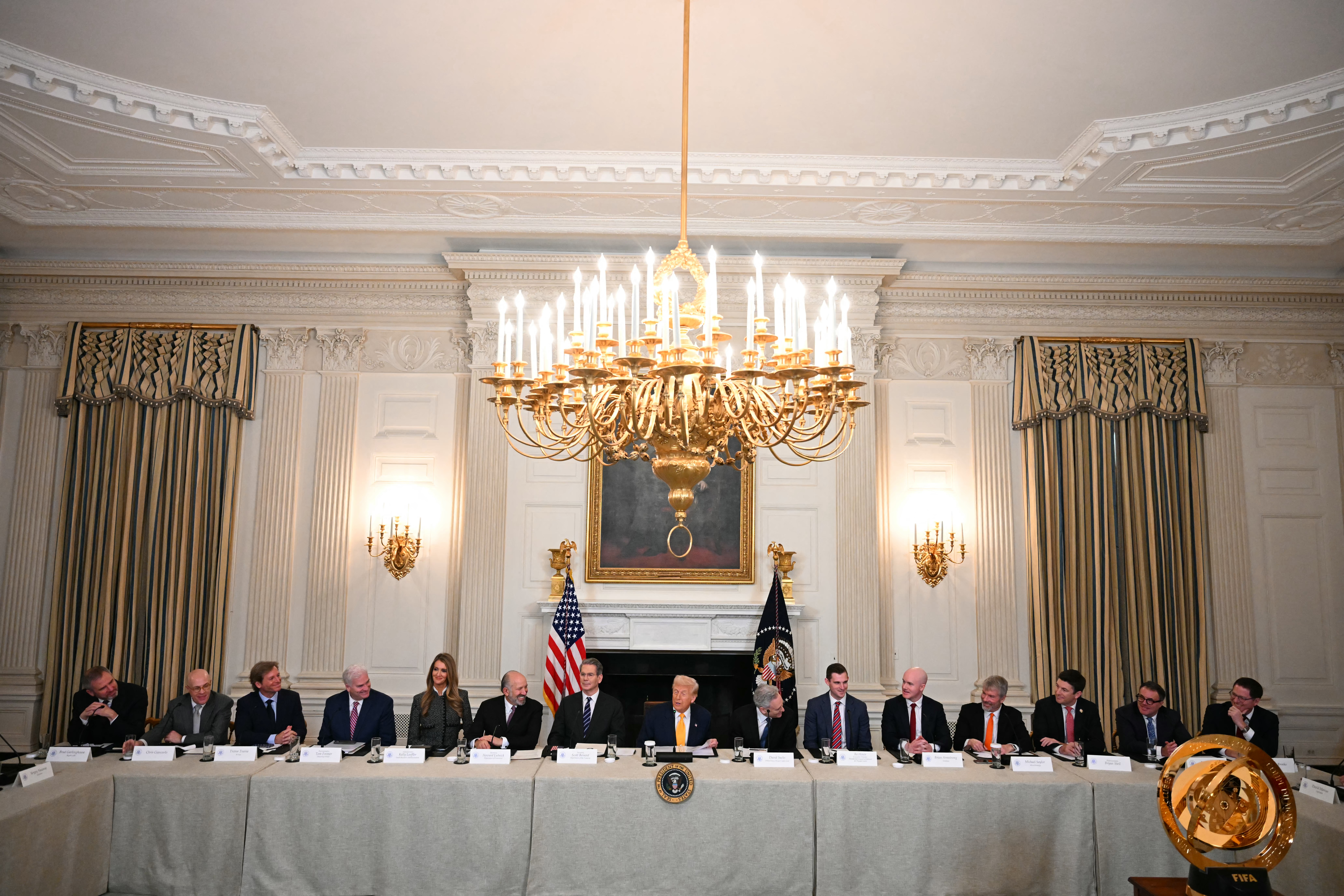
Yet, not all is doom and gloom. While there haven’t been any truly groundbreaking government initiatives, “the mere fact that the POTUS has signaled openness and support for digital assets has completely changed the attitude toward crypto in the US,” Titan founder Chris Chung said.
“This is a major shift and its long-term impact shouldn’t be underestimated,” he added. “However, looking at where we are in the market, many crypto investors will certainly feel let down; this is nothing like the raging bull market that was expected.”
Finally, some also stress that while crypto doesn’t need permission, a strong policy helps expand who can participate.
“What’s encouraging is that the tone in DC has changed,” Ruoff said. “Builders aren’t being treated like threats anymore. They’re being invited into the conversation. That alone is progress.”