Crypto
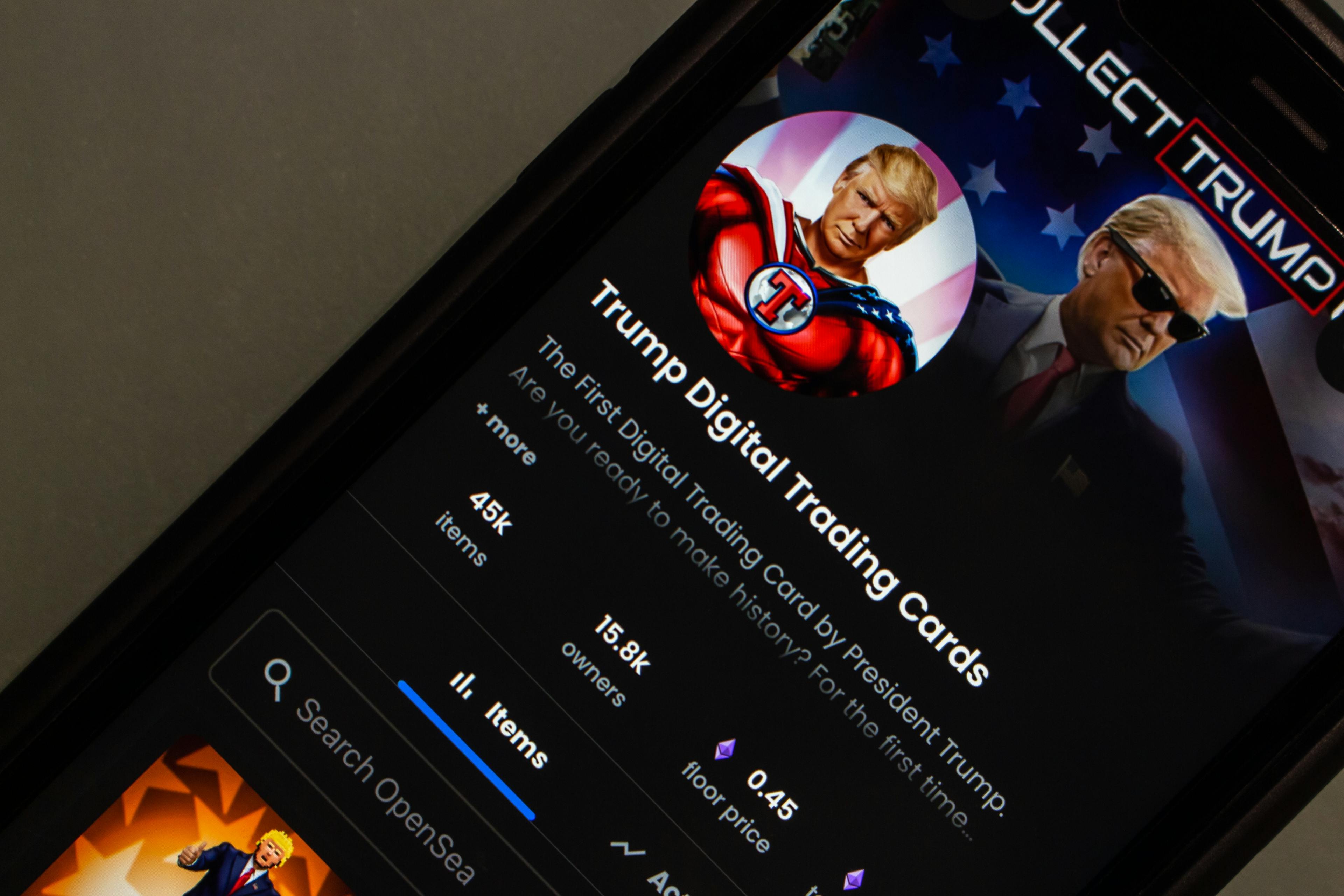
Trump NFTs on a phone
(Shutterstock)

Trump is good for crypto, but are Trump’s crypto projects doing well?

We took a look at World Liberty Financial and Trump’s NFTs since the election

Donald Trump’s election win has set the stage for a massive crypto rally that is already gaining momentum with bullish investors betting on the incoming crypto-friendly administration.

The numbers speak for themselves: the total crypto market cap stood at $2.43 trillion on November 1 and has jumped to $3.41 trillion today. Bitcoin’s was hovering around $68,000 on Election Day. Today, it hit over $99,000 in the wee hours of the morning.

But the story is not all positive for the crypto endeavors of the self-proclaimed “crypto president.”

World Liberty Financial, the DeFi crypto project associated with Trump, and its token, WLFI, debuted in October to great fanfare but dismal interest. While the project is not dead in the water, it has been struggling. 

Just before the election, the company said it planned to sell “up to $30 million” worth of tokens “before terminating sale,” according to an October 31 Securities and Exchange Commission filing — a dramatic cut from the original $300 million ambition for sales.

World Liberty Financial’s website shows that 18.644 billion tokens remain. The project has sold 1.36 billion since its launch.

The token has enjoyed a mini bump since the election, but it’s a far cry from the market rally the crypto ecosystem has been enjoying since November 5. Data on Dune Analytics shows that from Election Day to November 18, the company sold about $6 million worth of tokens, bringing the total raised to just over $20 million, an amount that represents 67% of the smaller, revised target.

What happened?

First, many experts raised red flags about the project, from Anthony Scaramucci calling it a “full-on scam” to Galaxy Digital analysts saying that the launch occurred “not with a bang, but a whimper.”

On top of that, technical problems plagued the site on launch day. The token is available only to accredited investors — limiting the pool of individuals who have access to it — and it’s “nontransferable,” which means that “it is locked indefinitely in a wallet or smart contract,” according to its “gold paper” (most projects have a white paper). 

All these factors have dampened investor enthusiasm, said Jon Alper, an estate and wealth management lawyer.

“While it’s premature to declare the project a complete failure, these setbacks suggest a challenging path forward,” Alper said.

How Trump’s NFT collections are doing

Trump’s digital trading-card collections enjoyed a postelection sales volume spike… but it didn’t last.

Trump has released four batches of NFTs, the last one in August, the “America First” collection, which includes a whopping 360,000 cards. As with previous collections, NFTs were priced initially at $99 and buying a lot of them came with perks, like a dinner with him at Mar-a-Lago or a “piece of the actual suit from his famous debate!” The sale of this edition “has ended,” according the website, which gives no further details.

The first collection, with 44,000 cards, and the second one, with 46,000, sold out. Meanwhile, the third collection, aka “The Mugshot Collection,” of 100,000 NFTs did not, nor did the “America First” edition.

The first NFT collection saw a 963% spike in sales volume 24 hours after the election, but netted just $17,714 in sales, a relatively tiny amount in the NFT market.

“Typically, top collections on Magic Eden or OpenSea get hundreds of thousands if not millions of dollars in daily volume,” Harrison Seletsky, director of business development at digital-identity platform Space ID, told Sherwood News. 

And the Trump bump didn’t last. While sales look good for the first and second collection if you consider the last 30 days, with both reporting sales increases of over 200%, it looks a lot worse if you just consider the past seven days, with a 73% drop for the first collection and the second edition seeing a 69% decline in sales.

Similarly, that first collection’s floor price (the lowest price available for any NFT in the collection) saw a huge jump on Election Day to $253 from $135, but it’s back to $104 on November 22, just $5 over its 2022 price. 

In comparison, other NFT collections have been able to ride the postelection crypto wave. Popular NFT collections like CryptoPunks are seeing a resurgence of interest, with its floor price hitting over $125,000 today, a rise of nearly 45% since Election Day. The NFT market as a whole saw $181 million in trading volume from November 11 to 17, a 94% week-over-week increase. 

Taking the “past performance does not indicate future” results mantra to heart, Trump is still giving new crypto ideas a try. Trump Media & Technology Group is reportedly trying to buy crypto-trading platform Bakkt and filed a trademark for a crypto-payments service called TruthFi on Monday.

Yaël Bizouati-Kennedy is a financial journalist who’s written for Dow Jones, The Financial Times Group, and Business Insider, among others.

More Crypto

See all Crypto
crypto

GameStop transfers all but 1 bitcoin to Coinbase as collateral

It’s been one year since GameStop added bitcoin as a treasury reserve asset, but the company has since halted its accumulation strategy, joining a fray of companies pivoting away from HODLing the cryptocurrency.

The gaming and collectibles retailer was at one point the 21st-largest bitcoin treasury company, but has since dropped to 190th after pledging all but one of its 4,710 bitcoin as collateral for its covered-call strategy with Coinbase Credit, data from Bitcoin Treasuries shows. Earlier this year, GameStop moved 51% of its bitcoin to Coinbase Prime, triggering speculation that it would offload the asset.

Coinbase Credit has the “right to rehypothecate, commingle, or unilaterally sell the Pledged Bitcoin,” per GameStop’s 10K filing with the SEC on Tuesday. “As a result of these rights, we concluded that control of the Pledged Bitcoin transferred to the counterparty. Accordingly, we derecognized the Pledged Bitcoin as an intangible asset.” That said, GameStop also “recognized digital assets receivable of $368.3 million... representing our contractual right to receive equivalent amount of Bitcoin in the future.”

GameStop sold covered‑call option contracts, which have strike prices ranging from $105,000 to $110,000 and maturities extending through March 2026, to mitigate its exposure to bitcoin’s price volatility and generate incremental yield. 

The move comes as a number of other bitcoin firms have reached a tipping point and sold part of their stockpile. 

  • Empery Digital, the 23rd-largest bitcoin treasury firm, announced in a March press release that it sold $4.2 million worth of BTC to fund share repurchases. DL News also reported that a shareholder who owns 9.8% of Empery Digital demanded the company sell its entire bitcoin stockpile and the immediate resignation of its CEO and entire board of directors. 

  • GD Culture Group approved the sale of an unspecified amount of its 7,500-bitcoin reserve to fund its share repurchase program, according to a press release last month. 

  • Elsewhere, Cango sold 4,451 BTC to reduce its overall finance leverage and strengthen its balance sheet, while Riot Platforms sold around $200 million worth of bitcoin in November and December.

Despite GameStop’s pledge to Coinbase Credit, the company has technically left the door open to resume its bitcoin strategy: the gaming firm said it intends to use net proceeds from its convertible 2030 notes for general corporate purposes, including the acquisition of bitcoin. 

Shares of GameStop are up 2.7% today after posting lackluster Q4 results yesterday.

The move comes as a number of other bitcoin firms have reached a tipping point and sold part of their stockpile. 

  • Empery Digital, the 23rd-largest bitcoin treasury firm, announced in a March press release that it sold $4.2 million worth of BTC to fund share repurchases. DL News also reported that a shareholder who owns 9.8% of Empery Digital demanded the company sell its entire bitcoin stockpile and the immediate resignation of its CEO and entire board of directors. 

  • GD Culture Group approved the sale of an unspecified amount of its 7,500-bitcoin reserve to fund its share repurchase program, according to a press release last month. 

  • Elsewhere, Cango sold 4,451 BTC to reduce its overall finance leverage and strengthen its balance sheet, while Riot Platforms sold around $200 million worth of bitcoin in November and December.

Despite GameStop’s pledge to Coinbase Credit, the company has technically left the door open to resume its bitcoin strategy: the gaming firm said it intends to use net proceeds from its convertible 2030 notes for general corporate purposes, including the acquisition of bitcoin. 

Shares of GameStop are up 2.7% today after posting lackluster Q4 results yesterday.

crypto

Circle plunges on report of proposal prohibiting platforms from offering yield payments

Circle, the firm behind the second-largest stablecoin, USDC, sank over 18.5% after journalist Eleanor Terrett posted on X that lawmakers are considering a proposal that would prohibit platforms such as exchanges and brokers from offering yield payments for holding stablecoins. Shares of US-based crypto exchange Coinbase, which has benefited from its ties to Circle and holds a minority interest in the stablecoin issuer, also fell on the report.

Stablecoin competitor Tether also announced signing a “Big Four” accounting firm to complete a full independent financial statement audit today, aimed at providing assurance that USDT is fully backed and highly liquid, the company’s press release said. The firm has never before allowed an independent audit, which has long plagued the company as investors questioned whether USDT is actually backed by its reserves.

The amount of Circle’s USDC in circulation sits at $81 billion, less than half the figure of the industry leader, Tether, whose USDT stablecoin sits at $184.2 billion, data from blockchain analytics firm Artemis shows

Stablecoin competitor Tether also announced signing a “Big Four” accounting firm to complete a full independent financial statement audit today, aimed at providing assurance that USDT is fully backed and highly liquid, the company’s press release said. The firm has never before allowed an independent audit, which has long plagued the company as investors questioned whether USDT is actually backed by its reserves.

The amount of Circle’s USDC in circulation sits at $81 billion, less than half the figure of the industry leader, Tether, whose USDT stablecoin sits at $184.2 billion, data from blockchain analytics firm Artemis shows

crypto

NYSE teams up with Securitize to create 24/7 tokenized securities market

Securitize, known for bringing real-world assets onto blockchain rails, has signed a memorandum of understanding with the New York Stock Exchange to develop 24/7 tokenized securities markets. 

The tokenization company will become NYSE’s first digital transfer agent, enabling it to mint digital tokens native on a blockchain that represent shares for stocks and ETFs, The Wall Street Journal reports

“This is about building tokenization in a way that works within real market structure, with the protections, controls, and operational integrity required for public securities,” Securitize cofounder and CEO Carlos Domingo said in a statement. 

The news comes after Securitize, backed by BlackRock and Ark Invest, announced plans last year to go public through a SPAC deal with Cantor Equity Partners at a $1.25 billion valuation. 

The partnership between Securitize and the NYSE makes the tokenization ecosystem increasingly crowded — crypto exchange Kraken is working with Nasdaq to offer tokenized stocks and other exchange-traded products, while S&P Dow Jones announced last week licensing the S&P 500 for a derivative contract on perpetual blockchain network Hyperliquid

Tokenization refers to the process of representing financial assets, such as stocks and private credit, through digital tokens that live on blockchain networks. The global market for tokenization stands at $26.5 billion, multiples higher from one year ago, when the figure sat at $7.8 billion, per data from analytics platform rwa.xyz.

“This is about building tokenization in a way that works within real market structure, with the protections, controls, and operational integrity required for public securities,” Securitize cofounder and CEO Carlos Domingo said in a statement. 

The news comes after Securitize, backed by BlackRock and Ark Invest, announced plans last year to go public through a SPAC deal with Cantor Equity Partners at a $1.25 billion valuation. 

The partnership between Securitize and the NYSE makes the tokenization ecosystem increasingly crowded — crypto exchange Kraken is working with Nasdaq to offer tokenized stocks and other exchange-traded products, while S&P Dow Jones announced last week licensing the S&P 500 for a derivative contract on perpetual blockchain network Hyperliquid

Tokenization refers to the process of representing financial assets, such as stocks and private credit, through digital tokens that live on blockchain networks. The global market for tokenization stands at $26.5 billion, multiples higher from one year ago, when the figure sat at $7.8 billion, per data from analytics platform rwa.xyz.

Latest Stories

Sherwood Media, LLC produces fresh and unique perspectives on topical financial news and is a fully owned subsidiary of Robinhood Markets, Inc., and any views expressed here do not necessarily reflect the views of any other Robinhood affiliate, including Robinhood Markets, Inc., Robinhood Financial LLC, Robinhood Securities, LLC, Robinhood Crypto, LLC, Robinhood Derivatives, LLC, or Robinhood Money, LLC. Futures and event contracts are offered through Robinhood Derivatives, LLC.