
Culture
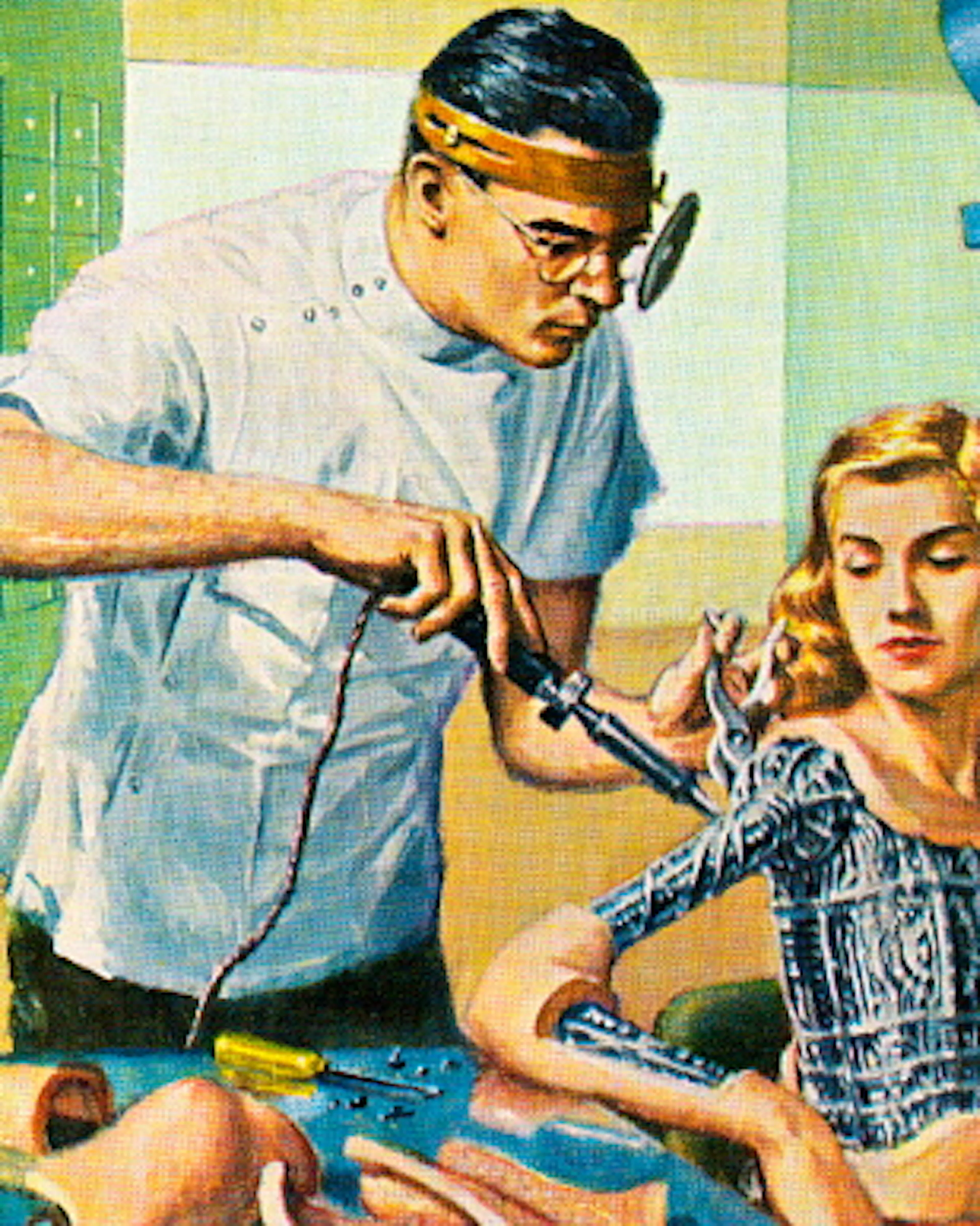
Doctor Working on Robot Woman
(Getty Images)

The peptide gold rush: How impending deregulation could supercharge a shadow industry

Peptides, the gray-market supplements that have flooded Silicon Valley, may soon make their way into the mainstream. Who stands to benefit?

Peptides are a staple of the Silicon Valley wellness underground. But impending actions by the Trump administration could push them into the mainstream, a shift that could commercialize a category of supplements currently in the gray market. 

Health Secretary Robert F. Kennedy Jr. is reportedly poised to allow compounding pharmacies to dispense certain peptides that are currently restricted by the Food and Drug Administration. As of now, consumers are bypassing the FDA by buying vials of peptides labeled “for research use only” and then conducting that research on themselves. 

But with the potential of federal deregulation, an array of players — from billion-dollar telehealth platforms to the gray-market suppliers themselves — are scrambling to establish legitimate supply chains. 

Search interest in the US for “peptides” has skyrocketed and now even surpassed searches for “Ozempic.” The global peptide therapeutics market is valued at approximately $52 billion today and projected to reach $87 billion by 2035, according to one estimate from Precedence Research.

Zak David, managing partner of Pirsek Technologies, which runs a research peptide supplier, Peptide Partners, said his company is preparing to open up facilities to elevate raw materials to medical-grade standards and ultimately supply doctors’ offices.

“There is a rush right now,” David said in an interview. “We know that there’s an increasing number of companies that are gearing up to move out of the gray and into the legitimate market.”

What are peptides?

Peptides are compounds consisting of chains of amino acids. Insulin, which millions of people take to manage diabetes, is a peptide. Semaglutide, the active ingredient in Ozempic, is also a peptide. 

But the term “peptides” is most often used as shorthand for injectable supplements associated with the biohacking tech elite. They are said to help melt fat, build muscle, clear up skin, and improve cognitive function — though most have not been thoroughly researched. 

“Everyone has a Chinese peptide dealer now,” The San Francisco Standard proclaimed in September. In December, hundreds attended a “Chinese Peptide Rave” in San Francisco sponsored by Peptide Partners.

Peptides
(Thomas Jones/Sherwood News)

BPC-157, one popular peptide, is said to have regenerative effects. Another is retatrutide, which is the active component in Eli Lilly’s next-generation GLP-1 currently in late-stage trials. Unlike insulin and Ozempic, BPC-157 and retatrutide are not currently FDA-approved medications.

Compounding pharmacies, which have grown in recent years thanks to demand for knockoff GLP-1s, used to be able to dispense many of the peptides currently accessible only through research suppliers. 

In September 2023, the FDA placed more than a dozen popular peptides, including BPC-157, into a list of drugs compounding pharmacies can’t touch. David from Peptide Partners calls that moment the “peptide apocalypse.” Between then and now, interest in these supplements has exploded, but without direct FDA supervision. 

“Given the eyeballs that have increased since 2023 on this, the public interest, it might spur a lot of, just a lot of growth in compliant pharmaceutical compounding,” David said.

Kennedy, who oversees the FDA’s parent agency, is expected to reverse much of that 2023 decision.

In August, a group of compounding pharmacies that had sued the FDA over its stance on peptides agreed to stand down after the agency said it “expects to submit” a final rule before February 2027 pertaining to some of the peptides the pharmacies want to produce. Kennedy said on the “Joe Rogan Experience” podcast in late February that the Food and Drug Administration would make about 14 different peptides “more accessible.”

New era of peptide dealers

China is a major supplier of active pharmaceutical ingredients, including peptides, so the source may not change — but the dealer may look more like a sleek telehealth site as opposed to a sketchy WhatsApp group. 

Andrew Dudum, CEO of telehealth heavyweight Hims & Hers, told investors in February that the company is actively exploring expanding into “peptide therapies.” The company has a network of its own compounding pharmacies, as well as a peptide facility in California it acquired last year.

Max Marchione, CEO of Superpower, told Sherwood News his company is ready to quickly roll out peptides for its patients as soon as it gets the nod from the FDA. Superpower is one one of several startups that interprets blood tests and sells supplements.

“We have the supply chain set up,” Marchione said in an email. The company is also working with biotechs to run clinical trials on some peptides, he said, adding that he wants to see results by next year. 

Enhanced Games, the Peter Thiel-backed startup known for organizing a “steroid Olympics,” said earlier this month that it would pivot toward telehealth and supplements, including peptides. 

It launched a “personalized performance medicine and supplement platform.” Pending regulatory approval, it will add eight peptides currently banned for human use to its catalog: CJC-1295, ipamorelin, thymosin alpha-1, TB-4, GHRP-2/6, kisspeptin-10, semax, and selank.

“Understanding how popular peptide usage has become globally we intend to invest heavily in this space,” the company’s CEO, Maximilian Martin, said in the statement.

More Culture

See all Culture
culture

Disney is no longer considering spinning off ESPN, reports Business Insider

Disney’s new CEO, Josh D’Amaro, is said to have decided against spinning off sports giant ESPN, according to reporting by Business Insider.

The House of Mouse may still seek other partners to take minority stakes in ESPN, per the report. The NFL gained a 10% stake in the company last year in a deal that saw ESPN acquire NFL Network.

There’s been an ongoing push for several years to spin off ESPN, both inside Disney and from analysts and activist investors. Earlier this year, ESPN Chair Jimmy Pitaro downplayed rumors that emerged amid D’Amaro’s takeover, saying he’s heard the rumor since “the day [he] started at ESPN eight years ago.”

Disney shares were essentially flat in after-hours trading following the report.

There’s been an ongoing push for several years to spin off ESPN, both inside Disney and from analysts and activist investors. Earlier this year, ESPN Chair Jimmy Pitaro downplayed rumors that emerged amid D’Amaro’s takeover, saying he’s heard the rumor since “the day [he] started at ESPN eight years ago.”

Disney shares were essentially flat in after-hours trading following the report.

culture
Saleah Blancaflor

“The Devil Wears Prada 2” strutting toward a fresh rating on Rotten Tomatoes

Gird your loins. “The Devil Wears Prada 2,” the highly anticipated sequel from Disney and 20th Century Studios starring Meryl Streep, Anne Hathaway, Emily Blunt, and Stanley Tucci, comes out this week.

Over the past few months, the studio ramped up its marketing, so you may have seen the fictional Runway magazine with Blunt’s Emily Charlton on the cover at a newsstand pop-up, or come across brand partnerships with L’Oréal Paris, TRESemmé, Tweezerman, or Diet Coke — the list goes on. The global press tour has also taken over social media, with the main cast — and their outfits — traveling across Mexico City, Tokyo, Seoul, Shanghai, New York City, and London to promote the movie. Hathaway and Tucci even appeared throughout a Jeopardy! category on Monday night.

But what do critics think of the movie? While the embargo for formal reviews lifts on Wednesday, April 29, at 12 p.m. ET, the embargo for social media reactions has already lifted, and according to critics from The Hollywood Reporter, Variety, AwardsWatch, and other publications, the general consensus seems mostly positive.

AwardsWatch Editor-in-Chief Erik Anderson posted on X that the sequel “has no right to be as good as it is.” He added, “Just the right kind and number of callbacks and earned nostalgia, Anne Hathaway continues to be our most vibrant star.”

Meanwhile, THR Senior Editor Alex Weprin referred to it as “a biting media parody wrapped up in high fashion,” while Variety Senior Artisans Editor Jazz Tangcay called it “the perfect sequel that exceeded all expectations.”

To be considered “fresh,” movies have to receive at least 60% on Rotten Tomatoes. And while “The Devil Wears Prada 2” hits theaters in only a few days, prediction markets are currently pricing in odds that the movie will score above 65% on the site. That’s all.

Loading...
 

(Event contracts are offered through Robinhood Derivatives, LLC — probabilities referenced or sourced from KalshiEx LLC or ForecastEx LLC.)

But what do critics think of the movie? While the embargo for formal reviews lifts on Wednesday, April 29, at 12 p.m. ET, the embargo for social media reactions has already lifted, and according to critics from The Hollywood Reporter, Variety, AwardsWatch, and other publications, the general consensus seems mostly positive.

AwardsWatch Editor-in-Chief Erik Anderson posted on X that the sequel “has no right to be as good as it is.” He added, “Just the right kind and number of callbacks and earned nostalgia, Anne Hathaway continues to be our most vibrant star.”

Meanwhile, THR Senior Editor Alex Weprin referred to it as “a biting media parody wrapped up in high fashion,” while Variety Senior Artisans Editor Jazz Tangcay called it “the perfect sequel that exceeded all expectations.”

To be considered “fresh,” movies have to receive at least 60% on Rotten Tomatoes. And while “The Devil Wears Prada 2” hits theaters in only a few days, prediction markets are currently pricing in odds that the movie will score above 65% on the site. That’s all.

Loading...
 

(Event contracts are offered through Robinhood Derivatives, LLC — probabilities referenced or sourced from KalshiEx LLC or ForecastEx LLC.)

culture
Saleah Blancaflor

Justin Bieber’s music keeps surging on streaming after Coachella

You better belieb it. After Justin Bieber headlined the Coachella Valley Music & Arts Festival in Indio, California, Billboard reports the pop star is experiencing the biggest non-Super Bowl catalog bump this year, with his music tripling in streams just days after his first set on April 11.

Following Biebers performance on Weekend 2 at Coachella on April 18 (which included appearances from Billie Eilish and SZA), his streams climbed even higher.

On Monday (April 20), Biebers streams reached a new high for the year, amassing 32.4 million official on-demand US streams, according to Luminate, which is a 12% increase from his total the previous Monday (just over 29 million) and a 5% gain from the previous Tuesday (30.9 million), his previous high-water mark for 2026.

Loading...
 

(Event contracts are offered through Robinhood Derivatives, LLC — probabilities referenced or sourced from KalshiEx LLC or ForecastEx LLC.)

Since the Coachella bump, hes had a total of six days with at least 30 million streams, compared with only four days in all of 2025, when he released his “Swag album.

Spotify reported that following Biebers first Coachella set, the pop star reached No. 1 on Spotify’s Global Top Artist chart, with his catalog surpassing 77 million streams in a single day, which marked his biggest streaming day of the year.

While prediction markets currently show that Bruno Mars is in the lead at 74% for the artist with the most monthly Spotify listeners at the end of April, Bieber could slowly catch up with a week left in the month. The Baby singer is currently in second place, with his odds at 27%.

On Monday (April 20), Biebers streams reached a new high for the year, amassing 32.4 million official on-demand US streams, according to Luminate, which is a 12% increase from his total the previous Monday (just over 29 million) and a 5% gain from the previous Tuesday (30.9 million), his previous high-water mark for 2026.

Loading...
 

(Event contracts are offered through Robinhood Derivatives, LLC — probabilities referenced or sourced from KalshiEx LLC or ForecastEx LLC.)

Since the Coachella bump, hes had a total of six days with at least 30 million streams, compared with only four days in all of 2025, when he released his “Swag album.

Spotify reported that following Biebers first Coachella set, the pop star reached No. 1 on Spotify’s Global Top Artist chart, with his catalog surpassing 77 million streams in a single day, which marked his biggest streaming day of the year.

While prediction markets currently show that Bruno Mars is in the lead at 74% for the artist with the most monthly Spotify listeners at the end of April, Bieber could slowly catch up with a week left in the month. The Baby singer is currently in second place, with his odds at 27%.

Latest Stories

Sherwood Media, LLC produces fresh and unique perspectives on topical financial news and is a fully owned subsidiary of Robinhood Markets, Inc., and any views expressed here do not necessarily reflect the views of any other Robinhood affiliate, including Robinhood Markets, Inc., Robinhood Financial LLC, Robinhood Securities, LLC, Robinhood Crypto, LLC, Robinhood Derivatives, LLC, or Robinhood Money, LLC. Futures and event contracts are offered through Robinhood Derivatives, LLC.