

LET THERE BE LIGHT
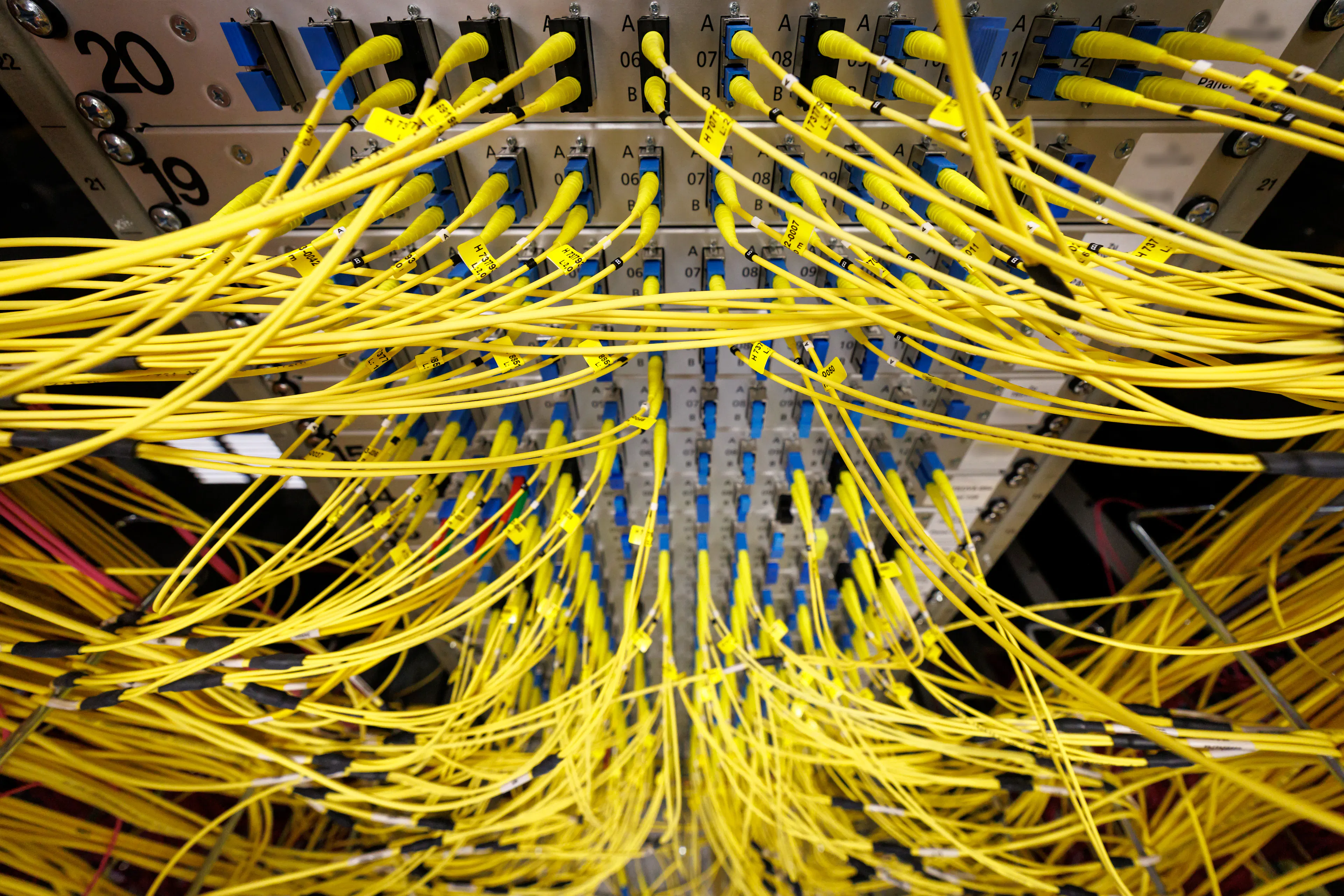
After taking a dip when the war started, fiber-optic stocks are running at light speed again
One of the banner names in the space, Lumentum, just hit an all-time high, up 44% off the post-war low that happened just 19 days ago. But are investors starting to price in perfection?
War or no war, the AI boom continues.
And so does the hunt for companies positioned at choke points in the AI investment frenzy, allowing them to vacuum up a healthy share of the cash pouring into the great AI build-out.
When that wave of capital hits such a bottleneck, it causes product prices to surge, explodes profit margins, and often sends stocks soaring. All three of those things have happened for the companies that produce optical components for AI, and they’ve caught another leg up in recent days after looking wobbly at the start of the Iran war.
These so-called optics companies all handle slightly different aspects of the same undertaking: using light and electrical signals to almost instantly transfer the data that AI technology both consumes and produces.
And over the past few months, the cluster of optical stocks — Lumentum, Coherent, Ciena Corp., and Corning — has elbowed its way toward the top of the heap of AI-related trades.
The gains accelerated Tuesday when Lumentum — which was only officially added to the S&P 500 at the start of the week — jumped 10% and Corning rose 8.4%, making them the two top gainers in the S&P 500 for the day. Coherent, which also just joined the blue-chip index, rose nearly 7%. Lumentum closed at an all-time high, up a whopping 44% off its post-war low just 19 days prior.
Some of the recent momentum amounts to afterglow from the industry’s big annual conference held last week in Los Angeles. It was followed by a flurry of relatively rosy research reports and price target hikes.
On Monday, for instance, analysts at French bank BNP Paribas jacked up their price target for Lumentum to a Wall Street high of $1,040, a 30% premium to where the stock closed Tuesday. They cited company projections for operating expenses and profit margins presented at the conference that “came in above most bullish expectations.”
There’s been a lot of that going around.
As the scale of AI’s data needs has become clear, investors and analysts — and in some cases, the companies themselves — have rushed to revise their demand and sales forecasts sharply higher.
Late last month, Morgan Stanley analysts kicked up the bank’s estimate of the AI-related optical communications market to around $90 billion by 2028, up from roughly $30 billion in 2025.
Likewise, Bank of America this month upped its estimate of the total addressable market for AI optical technology from $14 billion in 2025 to an expected $73 billion in 2030.
At the conference earlier this month, executives from Lumentum told attendees they expected their total addressable market to grow at a 40% annual rate for the next few years, hitting more than $90 billion by 2030. (It was $18 billion in 2025.)
Where is all this growth coming from? A range of areas.
For one thing, analysts say the scale of the AI boom — and AI’s requirements for bandwidth, speed, and power — is beyond the capacity of some long-standing networking technologies, such as the copper cables that carry signals using electricity.
The size of AI data centers and required data speeds further expose the limitations of using copper — which consumes more power and is prone to signal loss over longer distances — compared to fiber-optic cables.
“Copper is an excellent medium at short reaches (<10 meters),” wrote Bank of America analyst Vivek Arya. “But as hyperscalers build larger compute nodes, interconnect even more nodes, and link geo-dispersed data centers, the role of optics expands.”
Meanwhile, data centers are also often being built far away from urban centers, meaning they require more long-haul fiber-optic cabling to connect them to end users and sources of data, analysts say.
“What we’re seeing is that development and construction is expanding toward new and tertiary markets in the United States,” said Gordon Dolven, who heads research on the data center sector for giant commercial real estate brokerage CBRE. “Because of improvements in fiber connectivity, you now can develop — as an example — in Reno, Nevada, instead of having to go to Silicon Valley.”
But the largest part of the optical technology market related to AI is in so-called transceivers. These devices transform electrical signals into light that can be sent through fiber-optic cables. Transceivers also transform light back into electrical signals that computers can read as data.
Morgan Stanley analysts estimate the AI-related transceiver market amounts to roughly $50 billion, and is a particular strength for companies like Lumentum and Coherent. The data center build-out has been huge for the sector, as transceivers account for roughly 10% of the cost of a typical data center, according to Morgan Stanley.
Of course, with growth data like that to point to, it’s no surprise these stocks have been running. The question for investors is whether they’re a good buy at current prices. That’s a tough call.
The stocks certainly aren’t cheap. Ciena is trading about 60x expected earnings over the next 12 months, as is Lumentum. Corning and Coherent are trading at roughly 40x, the highest level in more than 15 years.
At the same time, these companies keep lifting their guidance and analysts keep raising their forecasts for profits over the coming year. And even with the war in Iran on, there are signs the AI investment boom is slowing.
“We would fully expect these names to work as long as capex data points are revised higher,” Morgan Stanley analysts wrote. However, they cautioned, “having added ~$180 billion+ of market capitalization over the last year, we have begun to price-in perfection.”




