
Markets
Cardboard box industry layoofs
(CSA Archive/Getty)

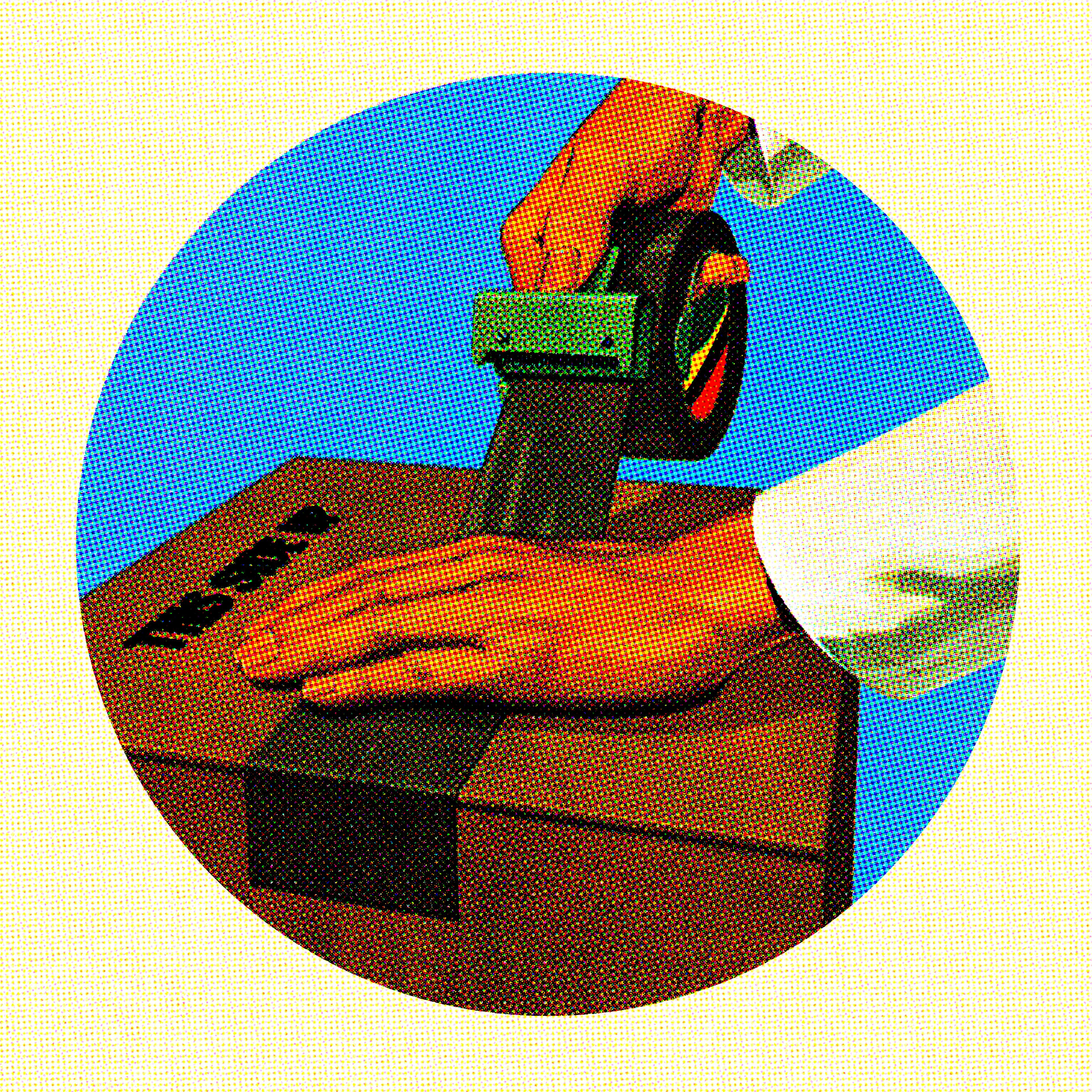
As goes the humble cardboard box, so goes the economy

Box factories are folding, a worrying sign for the outlook.

As the astute economic observers of the Gray Lady recently noted, the recessionary impact of President Trump’s tariff blitz is everywhere — except the actual economic data. Recent numbers on consumption, unemployment, and corporate spending have all held up pretty well.

But many seem to think it’s coming. Data out today on industrial production as well as retail sales were a bit weak. And for one industry traditionally considered a leading indicator worth watching, the trade-related downturn seems to be clearly here.

Privately held Georgia-Pacific, a subsidiary of Koch Industries, announced yesterday that it would be closing a cardboard box factory near Atlanta, costing 535 people their jobs. That announcement followed late April news from publicly traded box maker Smurfit Westrock that it was closing box factories in St. Paul, Minnesota, and Forney, Texas, along with some mills in Germany, resulting in 650 jobs lost. International Paper and Grief, two other big box makers, have recently announced mill closures in Red River, Louisiana, and Fitchburg, Maine, respectively.

“With the closure of Cedar Springs, the industry is set to shutter 5.4% of total US capacity in an effort to match supply with weak, but stable demand in the face of the volatile global trade environment,” Jefferies analyst Philip Ng wrote.

It’s no secret where that global weakness is coming from, either.

Speaking to analysts after reporting earnings in late April, International Paper CEO Andrew Silvernail spotlighted “a tick down in demand when the tariff conversation first started.”

“After the trade discussions escalated a week later, we saw another negative shift in demand,” he added.

Boxes may seem boring. But they’ve long been considered something of a leading indicator for the economy, considering their ubiquity both in shipments of materials needed for industrial activity and their centrality to online retail sales.

And right now, box companies are scrambling to quickly to cut production to offset soft demand.

“We did see a lot of weakness in March and the first two weeks of April,” Smurfit Westrock CEO Anthony Smurfit told analysts after reporting earnings on April 23.

He added that while order bookings seemed to steady in the end of April, things remain uncertain.

“Well be very happy if demand comes back in the corrugated and container sector,” he said. “But were not... banking on a very strong recovery.”

More Markets

See all Markets
markets

Spectrum owner Charter Communications is on pace for its worst day ever as broadband numbers and Q1 results disappoint

Cable and broadband company Charter Communications is on pace for its worst-ever trading day on Friday, as investors dump the stock following its Q1 results and forward guidance.

Charter, which owns Spectrum, reported adjusted earnings of $9.17 per share, below Wall Street estimates of $9.96 per share from analysts polled by FactSet. On the company’s earnings call, CFO Jessica Fischer appeared to lower its guidance for full-year revenue per user.

“It’ll be close either way in terms of whether we end up with net growth,” Fischer said.

The company lost 120,000 internet subscribers in the quarter, deeper than the expected 94,800 and double its loss from the same period last year. That news comes one day after Comcast’s earnings provided a bit of optimism for broadband as a category: the company reported Q1 losses of 65,000, significantly improving from 183,000 losses in the same quarter last year. Comcast is down more than 10%, on pace for its worst day since January 2025.

markets

Nvidia poised to snap longest run without a record close since the AI boom began

The stock price of the company responsible for the brains of the AI boom is finally showing some brawn again.

Nvidia, the world’s most valuable company, is poised to close at a record high for the first time since October 29, 2025, on Friday (if it ends above $207.04).

The AI chip trade is on fire, with the Philadelphia Semiconductor Index slated to deliver its 18th consecutive gain as Intel’s robust results and outlook juice the entire ecosystem. Hyperscalers report earnings next week, and their capex guidance can be thought of as the earnings guidance for Nvidia and other AI suppliers for the quarters to come.

This would end Nvidia’s longest stretch without a record close since the unofficial start of the AI boom (when the chip designer delivered blowout quarterly results in May 2023).

(Sorry if I jinx this!)

markets

Lilly slips after prescriptions for its weight-loss pill come in below expectations in second week

Eli Lilly fell on Friday after prescription data for its new weight-loss pill, Foundayo, showed that it’s having a significantly slower rollout than its top competitor.

The pill was prescribed about 3,700 times in its second week, according to IQVIA data cited by Deutsche Bank analysts, compared to the roughly 8,000 they were expecting. Novo Nordisk’s Wegovy pill, which came out in January, hit over 18,000 prescriptions in its second week.

The FDA approved Foundayo on April 1 and shipments began on April 9. Deutsche analysts noted that Lilly’s GLP-1 injections, which currently outsell Novo’s, also had a slower start.

Lilly fell more than 4% after the numbers were released. Novo Nordisk rose more than 5%.

Latest Stories

Sherwood Media, LLC produces fresh and unique perspectives on topical financial news and is a fully owned subsidiary of Robinhood Markets, Inc., and any views expressed here do not necessarily reflect the views of any other Robinhood affiliate, including Robinhood Markets, Inc., Robinhood Financial LLC, Robinhood Securities, LLC, Robinhood Crypto, LLC, Robinhood Derivatives, LLC, or Robinhood Money, LLC. Futures and event contracts are offered through Robinhood Derivatives, LLC.

