Markets
China markets
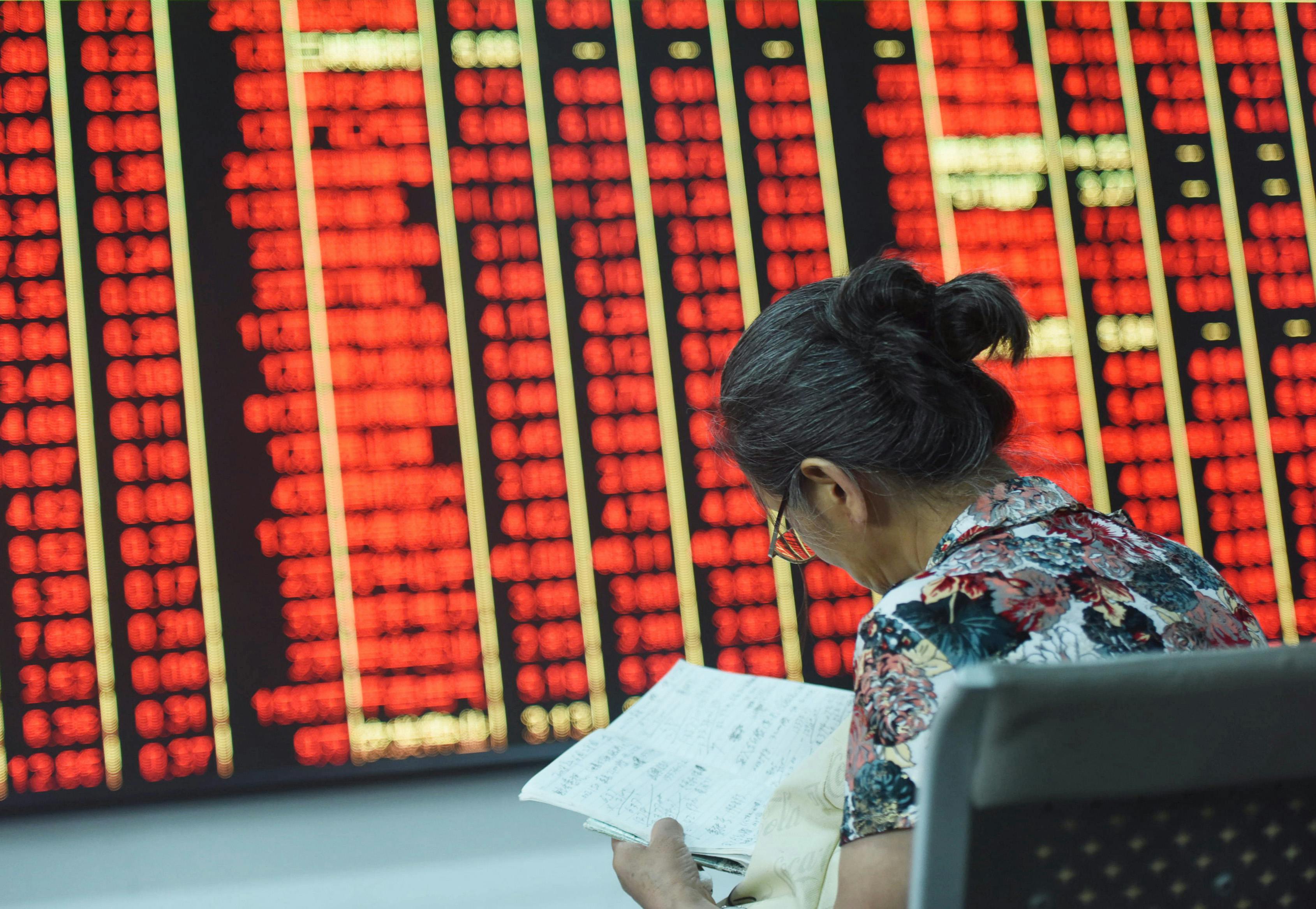
In China, red indicates a stock is positive on the day. (CFOTO/Future Publishing via Getty Images)

Chinese stocks were dogs this year, now they’re in the hunt

Matt Phillips

What a difference a week makes. The Chinese government’s latest efforts to jolt the economy out of its doldrums with a big new round of stimulus programs has gotten through to the Chinese stock markets over the last few days as pretty much everything romped. Chinese markets were closed Tuesday and for the rest of the Golden Week holiday.

But mainland indexes like the CSI 300 are up roughly 25% over the last week. It’s a remarkable turnaround for Chinese stocks which were laggards of other major markets for most of the year, as investors looked at what seemed to be a downright unappetizing economic backdrop in the world’s second largest economy.

Now, year-to-date gains of roughly 18% — in dollar terms — put the CSI right behind the S&P 500 in terms of select big markets.

More Markets

See all Markets
markets

The Supreme Court’s tariff ruling isn’t sweeping relief for automakers, but it isn’t nothing either

The Supreme Court on Friday struck down a significant chunk of President Trump’s tariffs, but the decision isn’t a cause for automakers to fully exhale.

Friday’s ruling relates to tariffs imposed under the International Emergency Economic Powers Act and not Section 232. The 25% tariffs on automobiles and auto parts were imposed under Section 232, so those tariffs remain in place.

Still, it’s worth noting that automakers including Ford, GM, and Stellantis aren’t completely on the outside looking in. IEEPA tariffs did cover certain machinery, lower-cost raw materials, and components, which account for a small chunk of automaker production costs.

According to the Center for Automotive Research, IEEPA tariffs account for about $250 per vehicle for the big three Detroit automakers, or $902 million in costs. That’s a far cry from the Section 232 tariff impact of $4,240 per vehicle, per the think tank, but it’s not nothing.

The modest bump in auto stocks compared to retailers on Friday reflects the light relief.

Still, it’s worth noting that automakers including Ford, GM, and Stellantis aren’t completely on the outside looking in. IEEPA tariffs did cover certain machinery, lower-cost raw materials, and components, which account for a small chunk of automaker production costs.

According to the Center for Automotive Research, IEEPA tariffs account for about $250 per vehicle for the big three Detroit automakers, or $902 million in costs. That’s a far cry from the Section 232 tariff impact of $4,240 per vehicle, per the think tank, but it’s not nothing.

The modest bump in auto stocks compared to retailers on Friday reflects the light relief.

markets

Nvidia nears $30 billion investment in OpenAI’s funding round, the FT reports

Nvidia is close to investing $30 billion in OpenAI as part of its long-discussed funding round, per the Financial Times.

Bloomberg had previously reported that Nvidia would be investing $20 billion in this round.

The FT says that this investment will effectively be replacing a bigger planned pact between the two companies. The Wall Street Journal had originally reported in late January that Nvidia’s investment of up to $100 billion in OpenAI, which was announced in September, had “stalled” amid private criticisms of the ChatGPT maker by CEO Jensen Huang.

As Microsoft, SoftBank, or Oracle could tell you, being viewed as overly exposed to OpenAI has not been a boon for stocks in recent months.

Latest Stories

Sherwood Media, LLC produces fresh and unique perspectives on topical financial news and is a fully owned subsidiary of Robinhood Markets, Inc., and any views expressed here do not necessarily reflect the views of any other Robinhood affiliate, including Robinhood Markets, Inc., Robinhood Financial LLC, Robinhood Securities, LLC, Robinhood Crypto, LLC, or Robinhood Money, LLC.