

Pricehikeshittingawall
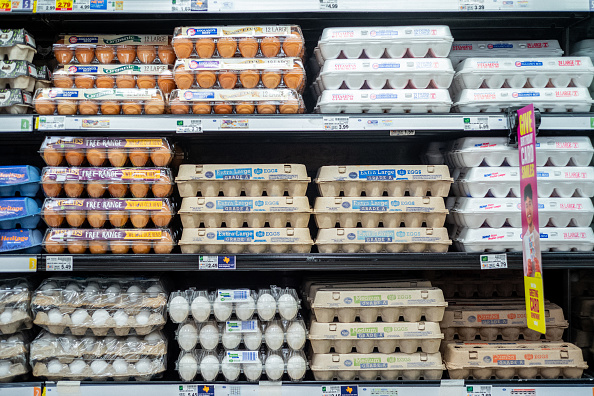
Just say no to $7 butter
I fancy myself a man of the people.
But, I have to admit, I buy food at either a high-priced regional grocery store — home of the $85 milk and bananas, I call it — or an especially fancy-pants Whole Foods in a swank New York suburb near where I live. (How fancy-pantsy? Let’s just say I once saw JPMorgan CEO Jamie Dimon ogling the onions.)
I shop there because they’re both closer to my house than the nearest mass-market grocery stores. They’re expensive, but I pay the premium — I figured — to avoid a 20 minute ride.
So when I was dispatched to ShopRite, a protypical mass-market grocery chain, recently for few bulk crowd-pleasers for my daughter’s birthday party, I figured the mass-market prices real Americans pay would be noticeably lower. I was wrong. Case in point: The butter case.
In our house, the butter benchmark is Land-o-Lakes, which was going for $7.29 a pound. That’s higher than my high-priced local grocery store. I couldn’t help but notice that the generic store brand — $4.49 per pound — seemed to be flying off the shelf in response. I even took a picture, because I am a huge nerd.
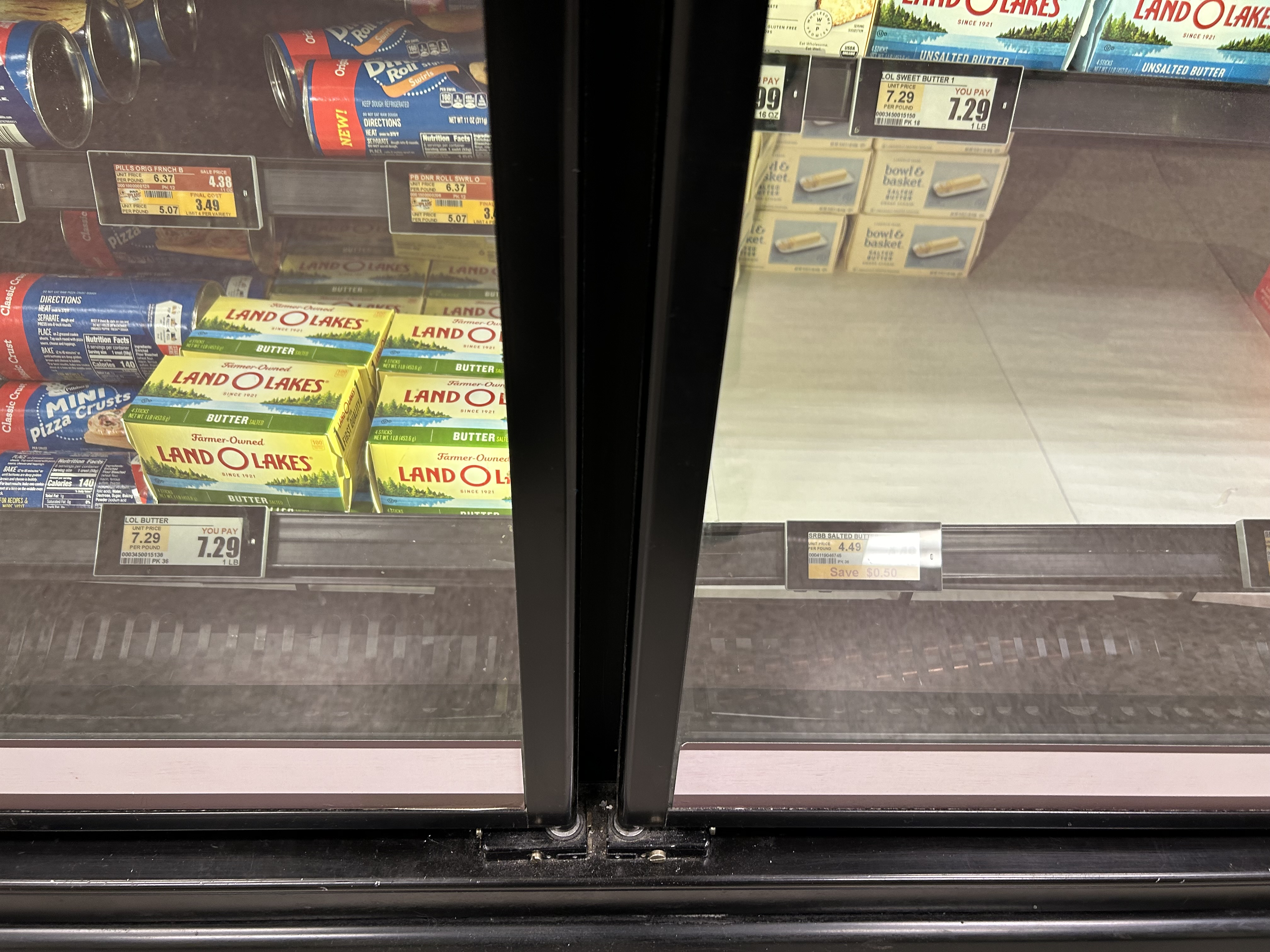
Full disclosure, this is the definition of unscientific anecdata. But it fired up my economic Spidey-senses all the same. Were average consumers finally drawing a line about against price hikes some brands have been able to push in the post-Covid world?
Recent numbers out of McDonald’s are consistent with my ShopRite thesis. Fellow Sherwood scribe Luke Kawa wrote last week McDonald’s seems to have hit a price wall with consumers, fueling reports that it is considering a value-based $5 meal promotion.
Other mass-market brands have recounted similar pushbacks on pricing over the last month of earnings announcements:
Kraft Heinz, for example, suffered a slump in volumes and fell short of Wall Street earnings estimates, as consumers cut spending on its branded meat products, lunch combos, and mac and cheese.
Snack food giant Pepsi’s US sales have slumped as shoppers have avoided its beverages after repeated price increases.
Applebee’s owner Dine Brands noted that consumers have become especially price sensitive, and its sales were helped in Q1 by the introduction of a new value-centric menu offerings and promotions.
“We have seen ongoing softness in US biscuits driven primarily by brands that have higher penetration among lower-income households, such as Chips Ahoy!,” noted executives at global snack giant Mondelez.
What’s going on? It’s not a mystery. Americans have been able to pay the higher prices corporations have been charging in recent years, because, for most of the post-pandemic era, they’ve had the money.
That income has come from a combination of rising wages and increased government transfers — such as a enhanced food stamp benefits or Covid-related stimulus payments — which are now long gone. Meanwhile, inflation has still been higher than usual. The result? Growth in real, inflation-adjusted, disposable incomes has slowed sharply.
But here’s the bigger question: What does this mean for the economy and the markets? In theory, newfound price sensitivity among US consumers should put some downward pressure on inflation over time. And again, in theory, that could make it easier for the Fed to cut rates, which the stock market continues to hope for.
But it could take a while. For instance, you won’t see too much of an impact when the latest Consumer Price Index report comes out Wednesday, as analysts think that number will be by driven the uncomfortably high prices people are paying for housing, rather than discretionary spending on chocolate chip cookies.
On the other hand, if corporations start to feel pressure on profit margins because consumers won’t swallow price increases, they could start to cut jobs in order to preserve the bottom line, raising the unemployment rate and the risk of a recession.
I have no idea what comes next. But I can’t help but wonder whether the noticeable, seemingly broad move away from some discretionary spending suggests we’re at some sort of turning point in the post-Covid economy.




