
Markets
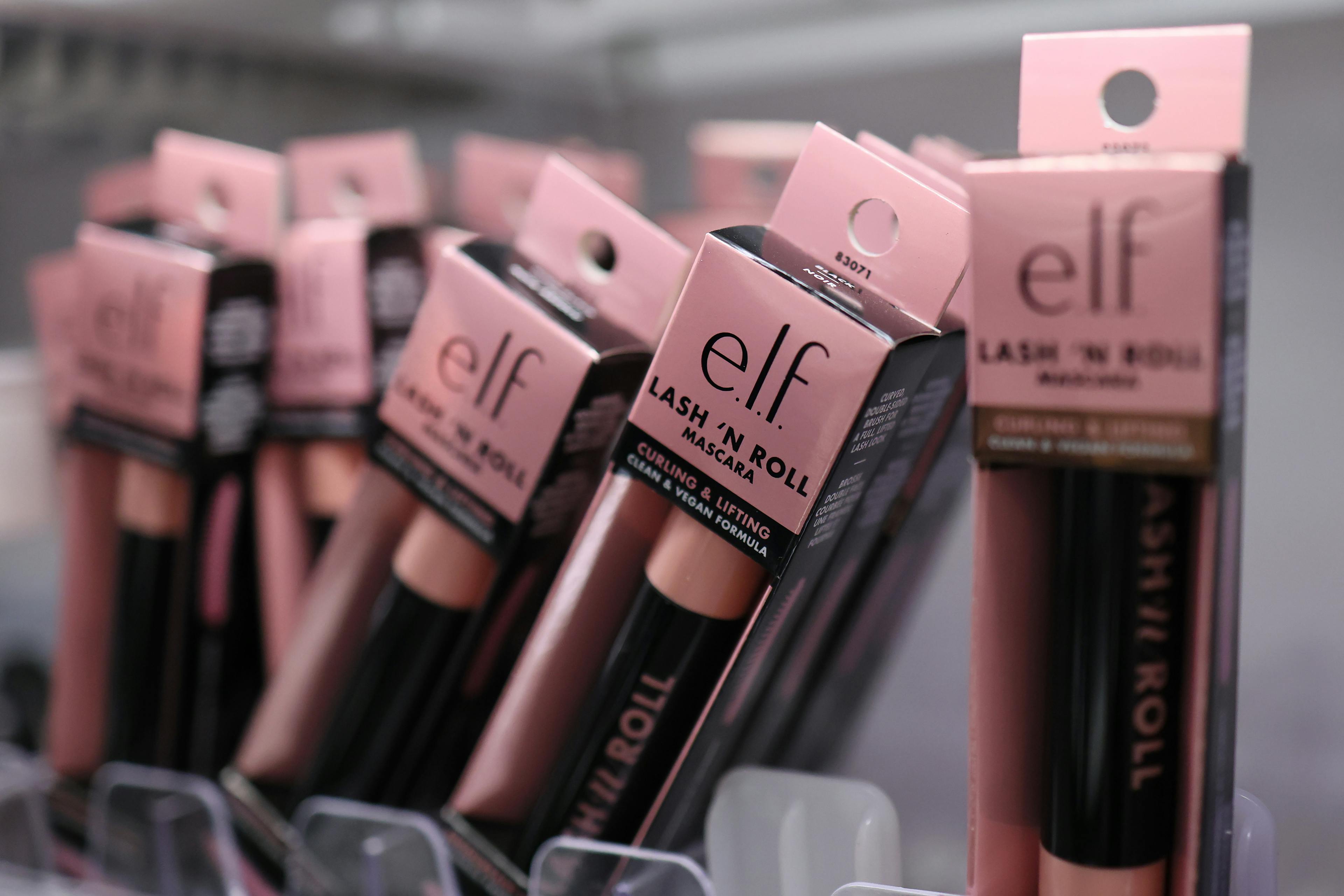
E.l.f. beauty shares rip after it receives market upgrade
(Michael M. Santiago/Getty Images)

e.l.f Beauty rips after Morgan Stanley upgrade

The market is too worried about the cosmetic company’s price hikes, the analysts say.

Matt Phillips

Cosmetics company e.l.f. Beauty jumped Monday after Morgan Stanley upgraded its rating on the stock to “over-weight” from “equal-weight” and raised its price target to $134 from $114.

Despite reporting results that more or less beat Wall Street expectations last week, e.l.f. saw its share price plunge as executives sounded less than certain that consumers would swallow the large price hikes the company is putting in place this month to offset tariff-related costs.

“With these increases just going in on August 1, we’re still reading how the consumer will respond to that,” e.l.f. CEO Mandy Fields told analysts. “It will take a couple of weeks for that to fully roll out within retail. And so that is something that we’re watching for.”

e.l.f. shares fell 9.5% the next day. But with a few days of perspective, Morgan Stanley analysts led by Dara Mohsenian have decided the market, basically, got it wrong. In a note published Monday, they wrote:

“We Believe Bear Concerns on Pricing Demand Elasticity Risk Are Overblown: ELF implemented a 14% weighted price increase on August 1... Bear worries on pricing stem from a few areas: a) low income consumers are under severe pressure in the US to begin with, so any ELF price increases could drive a large demand reaction, b) ELF has never taken such a large magnitude of price increases across its portfolio, and c) ELF has never taken pricing across its entire portfolio at once. Thus, we believe the market/consensus is currently assuming a sizeable demand elasticity response to ELF’s price increase.”

Morgan Stanley argues that’s wrong for a few reasons. One, they said, is that consumers tend to be not especially sensitive to the pricing of beauty products they use, “given the relative importance of beauty products to consumers.”

They added that e.l.f. cosmetics are already pretty cheap compared to other options, meaning there’s less opportunity for consumers to find more affordable substitutes.

The analysts also looked to the experience of consumer packaged goods companies during the 2022 inflationary period, when many companies pushed substantial price increases. The takeaway from that experience, the analysts wrote, is that sales volumes tended to react more or less similarly to small or large price increases.

In other words, while companies did lose some sales because of big price increases, sales didn’t decline anywhere near as much as prices increased. Thus companies were able to recoup any lost sales by charging more. And that’s a big part of the reason why US corporate profit surged at the time.

More Markets

See all Markets
markets

Nike sinks to lowest level since 2014 after warning of “challenged” sales environment in Q4 report

Did Nike do it?

Investors had a mixed reaction after the global sports apparel company reported its fourth quarter earnings on Tuesday after the bell. Shares initially rose 5% as Nike beat out Wall Street expectations amid a hefty tariff refund bonus. However, the stock then sank to its lowest level since August 2014 in postmarket trading.

Here are the Q4 numbers:

  • Revenue of $11.0 billion (estimate: $10.8 billion).

  • Adjusted earnings per share of $0.20 (estimate: $0.12).

Ahead of this report, Nike warned that results would be flattered by a one-time tariff refund (now estimated at roughly $0.52 per share for the bottom line). That gave the company an extra cushion in snapping its streak of seven quarters of year-over-year profit declines.

Over the past year, the company had been punished by tariffs on imported goods, stagnant consumer spending, and increasing competition from other footwear brands like New Balance, Adidas, and Hoka.

Outgoing CFO Matthew Friend deemed it an “increasingly challenging operating environment, where sell-through remains challenged.”

markets

Rocket Lab deal lifts space stocks

Shares of Rocket Lab are surging after announcing an $8 billion acquisition of satellite communications operator Iridium Communications, helping lift a broader basket of space-related stocks as investors piled back into the sector.

Planet Labs, AST SpaceMobile and Redwire all traded higher alongside Rocket Lab, extending gains in an industry that has drawn enhanced investor attention in recent months in light of the strategic importance that governments place on space and satellite communications infrastructure.

In a presentation, Rocket Lab’s management called the purchase “a shortcut” for its satellite communications business.

Under the terms of the agreement, Iridium shareholders will receive $27 in cash and Rocket Lab stock, valuing Iridium at $54 per share. Backed by a $3.6 billion bridge loan committed by Deutsche Bank and Wells Fargo, Rocket Lab absorbs Iridium’s globally licensed spectrum and an active base of 2.5 million subscribers.

Rocket Lab has also remained one of the most active launch providers in the sector. The company completed its 12th launch of the year last week, maintaining one of the highest launch cadences among commercial space companies.

Today's rally helps offset a brutal stretch for the group. Rocket Lab shares had fallen over 35% over the prior month, while Planet Labs stock was down more than 40% and AST SpaceMobile stock was down around 30% over the same window.

markets
Jake Lahut

Comcast shares rise on news of NBCUniversal spinoff deal

Comcast rose on the news that the telecom behemoth is spinning off NBCUniversal and Sky from its cable portfolio. 

Comcast initially jumped up to 17% in early trading, with the deal leaving management to focus on its core verticals of cable, wireless, and business services. 

NBCUniversal and Sky will form a new publicly traded company, similar to Versant Media, the holding company of CNBC and MS NOW that Comcast officially spun off in January. Bravo, one of the most lucrative properties that remained at Comcast, will remain part of NBCUniversal in the deal. The Universal theme parks and studios will also come with the new spinoff entity, along with Telemundo and Peacock.

Mike Cavanagh, the co-CEO of Comcast, will become the CEO for NBCUniversal, according to CNBC. 

The spinoff will be completed in about a year, according to a Comcast company statement. Its shareholders will also own shares in NBCUniversal, according to the same statement.

Latest Stories

Sherwood Media, LLC and Chartr Limited produce fresh and unique perspectives on topical financial news and are fully owned subsidiaries of Robinhood Markets, Inc., and any views expressed here do not necessarily reflect the views of any other Robinhood affiliate, including Robinhood Markets, Inc., Robinhood Financial LLC, Robinhood Securities, LLC, Robinhood Crypto, LLC, Robinhood Money, LLC, Robinhood U.K. Ltd, Robinhood Derivatives, LLC, Robinhood Gold, LLC, Robinhood Asset Management, LLC, Robinhood Credit, Inc., Robinhood Ventures DE, LLC and, where applicable, its managed investment vehicles.

