

Markets
markets

Huntington Ingalls Industries is surging after Trump pledges to “resurrect” US shipbuilding

To paraphrase The Wire’s Frank Sobotka, we used to make ships in this country.

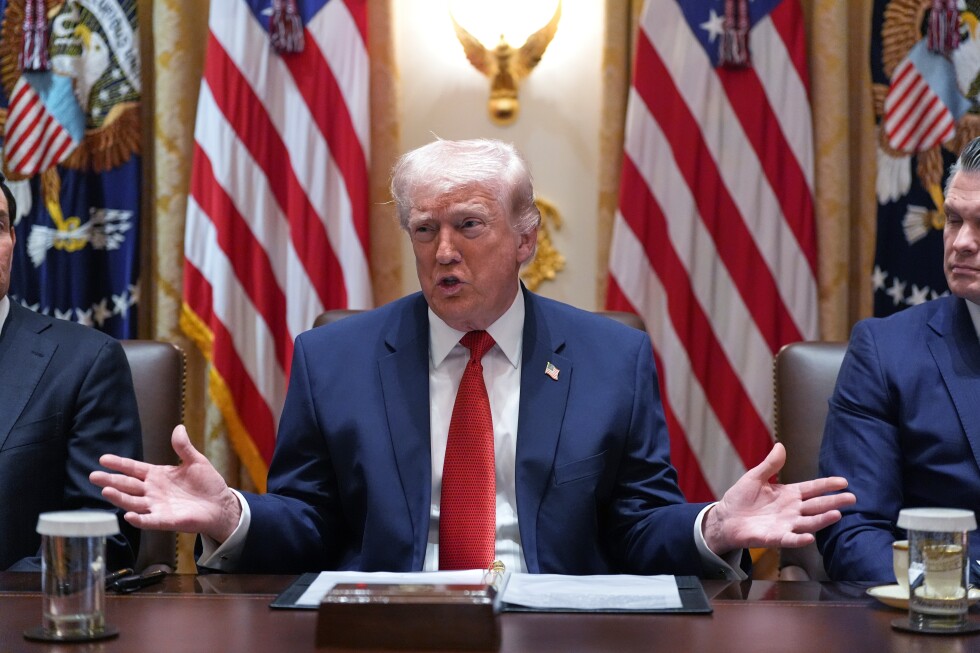
And during Tuesday night’s address to Congress, President Donald Trump said his administration is going to “resurrect” this domestic industry, adding that he’ll launch a new Office of Shipbuilding in the White House.

“We used to make so many ships. We don’t make them anymore very much, but we’re going to make them very fast, very soon,” he told Congress, and said he hopes to offer special tax incentives for the industry.

Upon the imposition of tariffs on products from Canada and Mexico, shares of much everything that you used to get around (planes, trains, and cruise boats) all slumped. But that remark from Trump’s speech opened up an exception, and now investors are all aboard Huntington Ingalls Industries on Wednesday. The shipbuilder’s stock has struggled in recent months — down over 40% in the past year through Tuesday’s close — but is staging a rebound today, up around 12%.

Huntington Ingalls Industries is the country’s biggest military shipbuilder, working to design, build, and maintain nuclear and nonnuclear ships for the US Navy and Coast Guard. The company’s contracts with the US military carry a heavy price tag, often costing upward of $1 billion for just one ship. A four-ship contract secured back in September totaled a whopping $9.6 billion.

Shortly before Trump’s speech, The Wall Street Journal reported that the administration has drafted an executive order aimed at such goals, including measures to minimize China’s dominance in the industry with fees on ships and cranes built in the country that enter the US.

Similar proposals pursued in the past to boost US shipbuilding have hit snags or delays in the approval process, but an executive order from Trump could speed up the process.

More Markets

See all Markets
markets

Electric aircraft maker Beta surges as Amazon discloses 5.3% stake, Jefferies upgrades stock to “buy”

Beta Technologies, the electric aircraft maker that went public in November, is soaring in early Wednesday trading. The stock climbed before markets opened following an upgrade from Jefferies from “hold” to “buy” with a $30 price target, reflecting a nearly 80% climb from its price as of Tuesday’s close.

Jefferies believes Beta shares are attractive after recent risk-off trading — the stock is down 40% since the beginning of the year.

Also appearing to boost optimism in Beta is an SEC filing on Tuesday that indicated Amazon owns a 5.3% stake in the company. The stake isn’t new: Amazon was listed as a 5% or greater shareholder in Beta’s November IPO.

markets

Analysts give mixed reviews on Robinhood’s Q4 results

Robinhood Markets remained down in premarket trading after delivering Q4 results Tuesday that fell short of some of Wall Street’s expectations, partly due to a slide in crypto trading.

Here’s what analysts had to say about the print:

Barclays: “Q4 came in softer than expected as lower take rates in options and crypto impacted transaction revenues, and lower [securities] lending in particular impacted [net interest income].”

Mizuho: “Prediction Markets were strong, but overall mixed quarter.”

Piper Sandler: “Bottom line, despite these ST headwinds which we laid out in our note last week, our LT thesis remains intact. If you can stomach the volatility, HOOD is the best way to play secular growth in retail trading and the closest FinTech platform we’ve ever seen to achieving ‘super app’ status.”

Zack’s Investment Research: “Crypto trading revenue fell 38% year over year in Q4, and January data showed another 57% decline in app-based crypto volumes. Unfortunately, that’s not a seasonal blip, that’s a structural slowdown in one of Robinhood’s historically highest-margin engagement drivers.”

Citizens JMP: “Slight revenue shortfall for Robinhood Markets but better expense performance, broadening business contribution, and a full roadmap should support strong growth again in 2026; reiterate our Market Outperform rating.”

markets

Job growth crushes estimates in January, unemployment rate unexpectedly dips to 4.3%

The American labor market, ladies and gentlemen.

The January jobs report was a blockbuster, with nonfarm payrolls growth of 130,000.

Economists polled by Bloomberg expected nonfarm payroll growth of 65,000 for the month. Heading into this release, the event contracts trading closest to a coin flip were “above 50,000” and “above 60,000,” suggesting the masses were less optimistic than Wall Street.

(Event contracts are offered through Robinhood Derivatives, LLC — probabilities referenced or sourced from KalshiEx LLC or ForecastEx LLC.)

The unemployment rate dipped to 4.3%, while economists had anticipated it would hold steady at 4.4%.

The SPDR S&P 500 ETF extended gains in premarket trading following this release.

The employment gains were very narrowly focused on an industry basis: healthcare accounted for a whopping 123,500, or 95%, of the net job growth.

markets

Unity Software craters after Q1 sales and earnings guidance fall short of estimates

Both pillars of Unity Software’s business are under pressure from AI tools and new entrants, and its internal AI capabilities don’t seem to be keeping up.

Shares of the gaming engine and ad tech company are off more than 20% in premarket trading. Its solid Q4 results were overshadowed by weak Q1 guidance, with management calling for revenues to range from $480 million to $490 million with adjusted EBITDA from $105 million to $110 million. Wall Street’s estimates were $494 million and $112 million, respectively.

The company’s outlook suggests “a slower than expected ramp-up in its AI-powered ad-technology tool, Vector,” Bloomberg Intelligence analysts Mandeep Singh and Nathan Naidu wrote. “Slow uptake of Unity 6 subscriptions, with guidance seeing flat growth in 1Q, could drag on top-line gains.”

Unity was among the stocks that cratered in late January after the release of Google’s Project Genie, which was able to recreate knockoffs of popular games.

Separately, Unity and peer AppLovin have suffered amid fears that their ad divisions will be disrupted by startups utilizing AI agents.

Latest Stories

Sherwood Media, LLC produces fresh and unique perspectives on topical financial news and is a fully owned subsidiary of Robinhood Markets, Inc., and any views expressed here do not necessarily reflect the views of any other Robinhood affiliate, including Robinhood Markets, Inc., Robinhood Financial LLC, Robinhood Securities, LLC, Robinhood Crypto, LLC, or Robinhood Money, LLC.