Markets

Tesla had a good ride, but the stock’s price destruction is historic

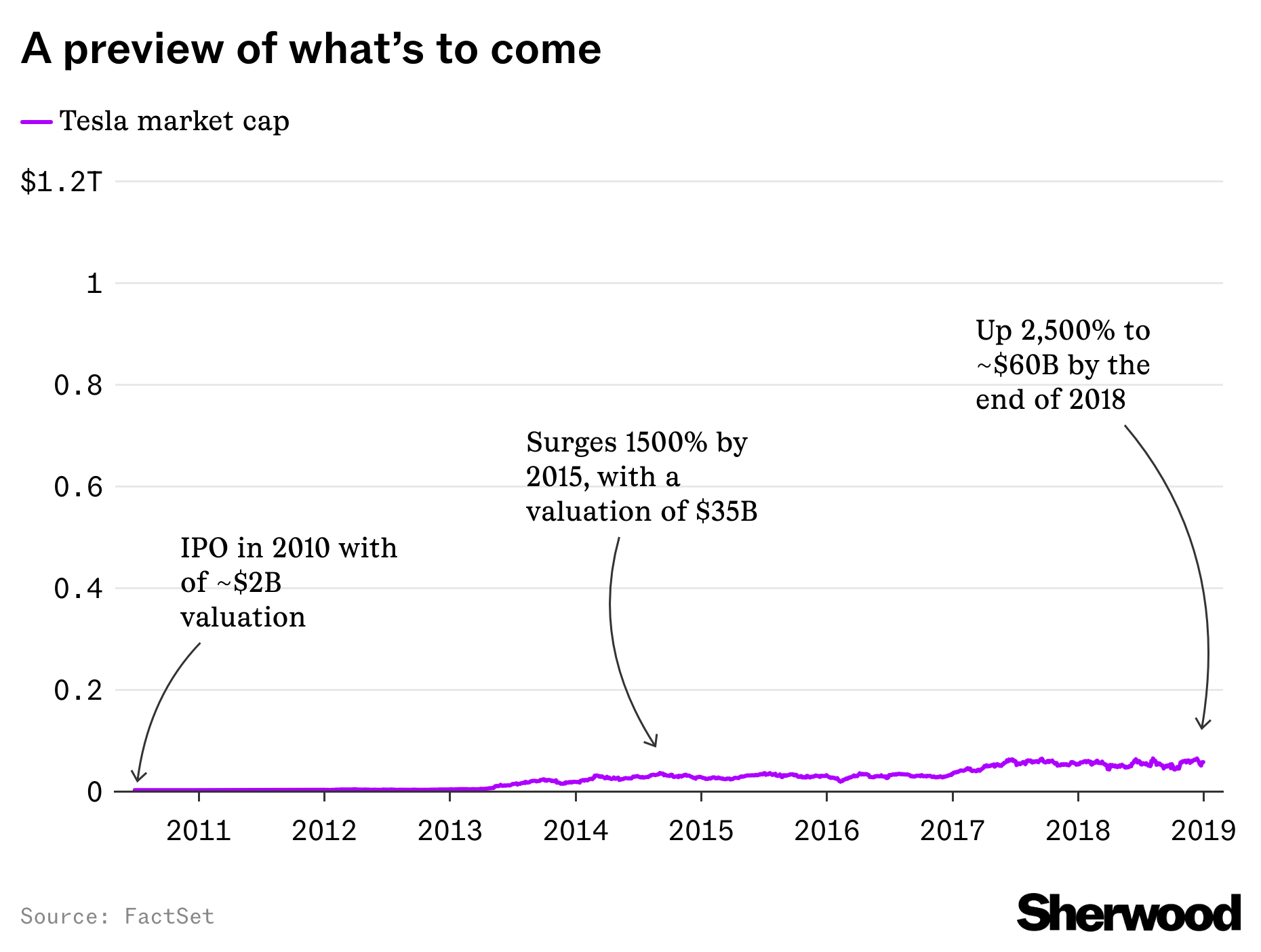
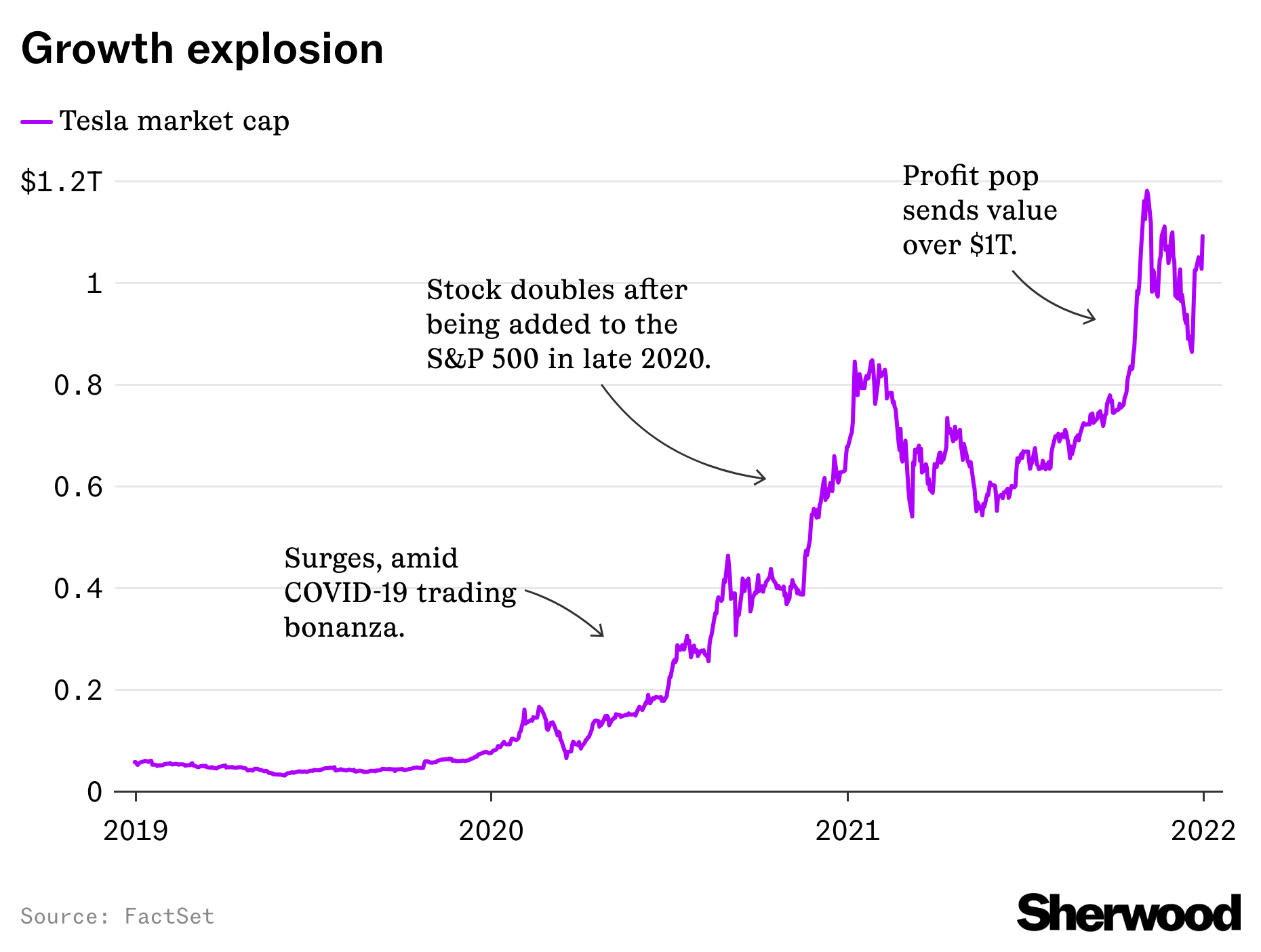
Few people have created as much value as Elon Musk. The iconoclastic entrepreneur took Tesla from a market capitalization of roughly $2 billion at the time of its IPO in 2010 to $1.2 trillion in early 2023. That’s a return of about 55,000%. Musk made a lot of people a lot of money.

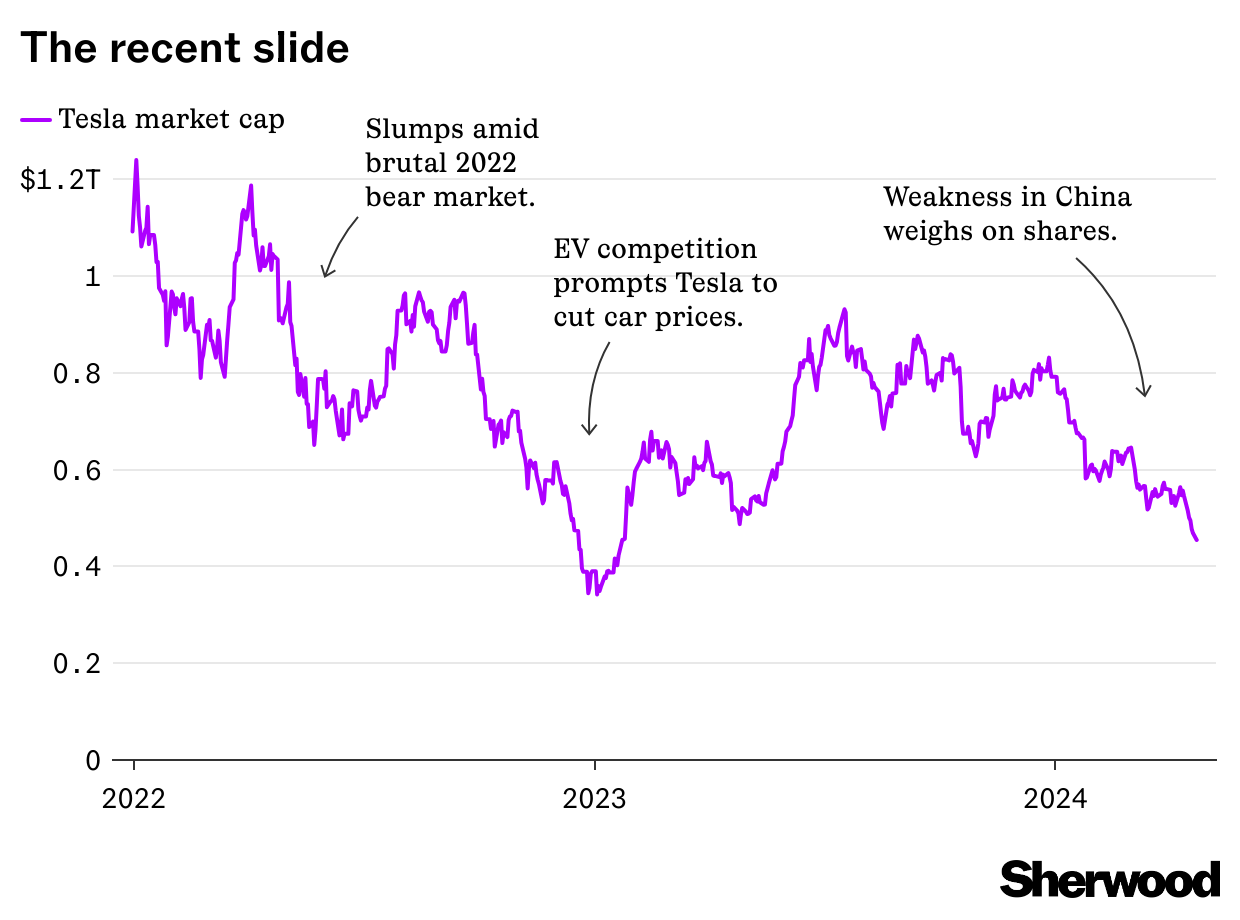
On the other hand, Tesla shares are down nearly 60% since their all-time peak. The company has ceded ground in EVs, prompting a series of profit crushing price cuts to preserve market share. The cumulative loss in market value over that period is pushing $800 billion. Few corporate executives have presided over such a degree of value destruction.

And it could get worse, as people are bracing for an ugly update when Tesla reports after the close Tuesday.

More Markets

See all Markets
markets

Nvidia dips after report of Chinese “ban” on H200 imports

As the Commerce Department delivers the equivalent of a ribbon-cutting ceremony for H200 sales to China, officials in the world’s second-largest economy are throwing up more red tape.

Reuters reports that China is not allowing Nvidia’s H200 AI chips to enter the country, citing three people briefed on the subject, one of whom said “it is basically a ban for now,” though this could change. The outlet adds that it “was not immediately able to ascertain whether the directives applied to existing orders for H200 chips or only to new orders.”

Shares of the chip designer are down less than 1% as of 5:50 a.m. ET.

China has been wary of allowing foreign chips to dominate its AI market, preferring measures to bolster its domestic semiconductor production capabilities. And for a while, the US was much more reticent to provide any access. Export restrictions put in place in mid-April during the height of US-China trade tensions prevented Nvidia from sending the H20, a chip that had been tailor-made to comply with export controls, to China. Though that export ban was lifted months later, demand from China “never materialized,” Nvidia CFO Colette Kress said in the wake of the company’s Q3 earnings report. Reports suggested that China banned its leading technology giants from purchasing these semiconductors, instead pushing them toward domestic alternatives. However, the H200 is considerably more powerful than the H20, which suggests the calculus for Chinese policymakers could have changed significantly in light of these different circumstances.

Nvidia is hoping to start to get these chips in the hands of Chinese buyers by the start of Lunar New Year Holiday (February 17) amid a very robust order book that could represent a $54 billion sales opportunity for the chip designer. On Tuesday, the Commerce Department tweaked its export license review policy, paving the way for chips like the H200 — the most powerful processor from Nvidia’s Hopper generation, which preceded Blackwell — to be sent to China.

Reuters’ piece also offers some corroboration on reporting from The Information on Tuesday, which said Chinese regulators told their tech companies they’d only be able to buy these chips “under special circumstances.”

Bloomberg had previously reported that China was planning to approve imports for commercial use “as soon as this quarter.”

markets

Commerce Department tweaks export rules, paving the way for Nvidia to ship H200s to China

US President Donald Trump’s call for Nvidia and its peers to be able to sell advanced AI chips to Chinese customers has evolved from the realm of social media posts to official policy paperwork.

The Department of Commerce’s Bureau of Industry and Security revised its export license review policy for certain semiconductors, laying out what kinds of chips Nvidia and other semi companies will be allowed to ship to China and the terms of this arrangement.

For chips with a total processing power of less than 21,000 and a DRAM bandwidth of less than 6,500 gigabytes per second, a group which includes Nvidia’s H200 as well as AMD’s MI325X, “this final rule specifies certain conditions that, if satisfied, allow for license applicants to move from a presumption of denial to a case-by-case license review policy for exports from the United States destined to China or Macau.”

Two of the key stipulations include:

  • These products must be readily available in the US for those who want to buy them; and

  • Aggregate shipments of these chips to China and Macau can’t exceed 50% of their total end use by US customers.

H200s are the most advanced chips from the Hopper line, which was Nvidia’s leading offering prior to Blackwell.

While Trump’s Truth Social post on December 8 indicated that 25% of the proceeds from sales of these chips to China would go to the US government, there is no reference to such a provision in this particular document.

Chinese buyers have reportedly put in orders for more than 2 million H200s, making this a potential $54 billion sales channel for the world’s most valuable company.

However, the willingness of Chinese officials to allow that many processors to be imported at a time when they’re also focused on developing their domestic chip capabilities remains an open question.

Latest Stories

Sherwood Media, LLC produces fresh and unique perspectives on topical financial news and is a fully owned subsidiary of Robinhood Markets, Inc., and any views expressed here do not necessarily reflect the views of any other Robinhood affiliate, including Robinhood Markets, Inc., Robinhood Financial LLC, Robinhood Securities, LLC, Robinhood Crypto, LLC, or Robinhood Money, LLC.