Markets
markets

RIP: Jim Simons, pioneering quant investor

In the late 1970s, Simons abandoned a promising career as an academic mathematician to trade currencies, and built Renaissance Technologies into one of the most profitable investment shops of all time. Renaissance’s flagship Medallion fund — open only to Renaissance employees — averaged annual returns, after fees, of nearly 40% from 1988 to 2020, according to the Wall Street Journal’s Gregory Zuckerman, who wrote a book about Simons entitled “The Man Who Solved the Market.”

In 1994, he and his wife founded the Simons Foundation, which is one of the largest charitable organizations in the US, and funds research in mathematics and science.
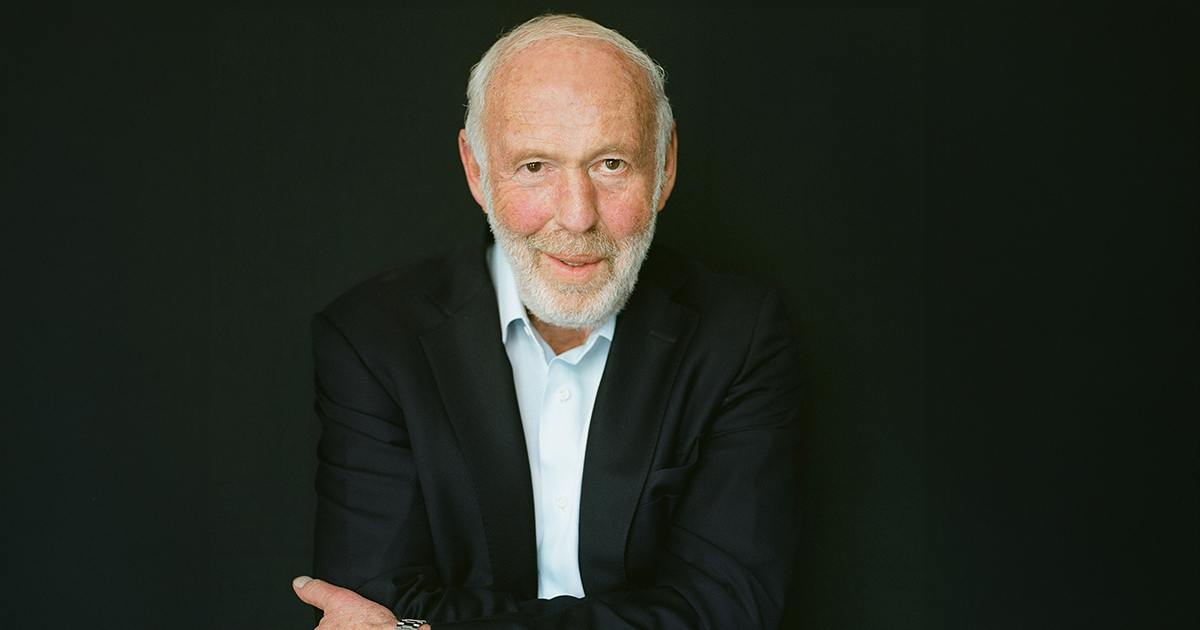
In 1994, he and his wife founded the Simons Foundation, which is one of the largest charitable organizations in the US, and funds research in mathematics and science.


More Markets

See all Markets
markets

Lucid cuts 12% of its US workforce in a profitability push

EV maker Lucid announced on Friday it is laying off 12% of its US workforce as part of its efforts to improve profitability.

This is Lucid’s third round of layoffs since March 2023. At the end of 2024, the company said it had 6,800 employees globally.

“This difficult but necessary decision was made to improve operational effectiveness and optimize our resources as we continue on our path toward profitability,” interim CEO Marc Winterhoff told employees in an email published by Business Insider. The company has been without a permanent CEO since February 2025.

Lucid has worked to boost its cash reserves in recent months. Late last year it announced plans to raise $875 million through a private offering of convertible senior notes due in 2031.

“This difficult but necessary decision was made to improve operational effectiveness and optimize our resources as we continue on our path toward profitability,” interim CEO Marc Winterhoff told employees in an email published by Business Insider. The company has been without a permanent CEO since February 2025.

Lucid has worked to boost its cash reserves in recent months. Late last year it announced plans to raise $875 million through a private offering of convertible senior notes due in 2031.

markets

The Supreme Court’s tariff ruling isn’t sweeping relief for automakers, but it isn’t nothing either

The Supreme Court on Friday struck down a significant chunk of President Trump’s tariffs, but the decision isn’t a cause for automakers to fully exhale.

Friday’s ruling relates to tariffs imposed under the International Emergency Economic Powers Act and not Section 232. The 25% tariffs on automobiles and auto parts were imposed under Section 232, so those tariffs remain in place.

Still, it’s worth noting that automakers including Ford, GM, and Stellantis aren’t completely on the outside looking in. IEEPA tariffs did cover certain machinery, lower-cost raw materials, and components, which account for a small chunk of automaker production costs.

According to the Center for Automotive Research, IEEPA tariffs account for about $250 per vehicle for the big three Detroit automakers, or $902 million in costs. That’s a far cry from the Section 232 tariff impact of $4,240 per vehicle, per the think tank, but it’s not nothing.

The modest bump in auto stocks compared to retailers on Friday reflects the light relief.

Still, it’s worth noting that automakers including Ford, GM, and Stellantis aren’t completely on the outside looking in. IEEPA tariffs did cover certain machinery, lower-cost raw materials, and components, which account for a small chunk of automaker production costs.

According to the Center for Automotive Research, IEEPA tariffs account for about $250 per vehicle for the big three Detroit automakers, or $902 million in costs. That’s a far cry from the Section 232 tariff impact of $4,240 per vehicle, per the think tank, but it’s not nothing.

The modest bump in auto stocks compared to retailers on Friday reflects the light relief.

markets

Nvidia nears $30 billion investment in OpenAI’s funding round, the FT reports

Nvidia is close to investing $30 billion in OpenAI as part of its long-discussed funding round, per the Financial Times.

Bloomberg had previously reported that Nvidia would be investing $20 billion in this round.

The FT says that this investment will effectively be replacing a bigger planned pact between the two companies. The Wall Street Journal had originally reported in late January that Nvidia’s investment of up to $100 billion in OpenAI, which was announced in September, had “stalled” amid private criticisms of the ChatGPT maker by CEO Jensen Huang.

As Microsoft, SoftBank, or Oracle could tell you, being viewed as overly exposed to OpenAI has not been a boon for stocks in recent months.

Latest Stories

Sherwood Media, LLC produces fresh and unique perspectives on topical financial news and is a fully owned subsidiary of Robinhood Markets, Inc., and any views expressed here do not necessarily reflect the views of any other Robinhood affiliate, including Robinhood Markets, Inc., Robinhood Financial LLC, Robinhood Securities, LLC, Robinhood Crypto, LLC, or Robinhood Money, LLC.