

Markets
markets
Hyunsoo Rim

Michael Burry, of “Big Short” fame, discloses options bets against Nvidia and Palantir

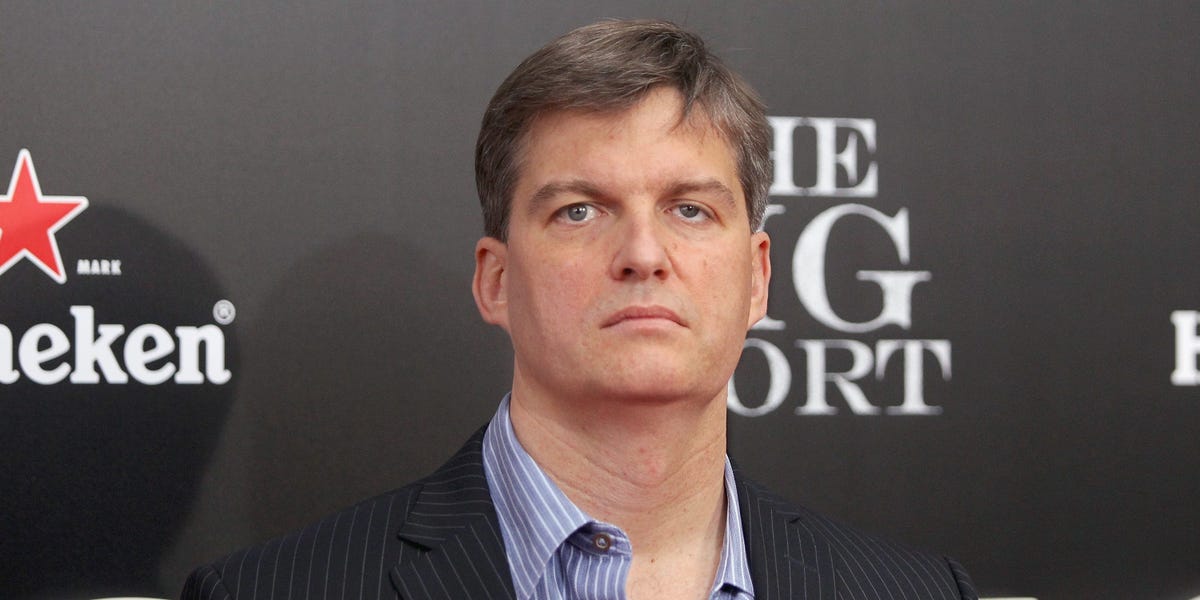
“The Big Short” investor Michael Burry, famous for predicting the 2008 housing crash — and a number of crashes since that haven’t materialized quite as spectacularly — has placed massive bets against Nvidia and Palantir, according to a regulatory filing for the quarter ended September 30.

The 13-F filing released Monday discloses that Burry’s fund, Scion Asset Management, bought put options on roughly 5 million Palantir shares and 1 million Nvidia shares. The notional value of the underlying shares was $912 million and $187 million, respectively. The 13F filings do not reveal the salient details of the options contracts (each of which gives the holder the right to sell 100 shares) such as their strike price, expiry, or what was paid for them.

Burry’s move follows a surge in both stocks amid record AI enthusiasm and rising tech valuations: Nvidia jumped 50% this year and crossed the $5 trillion mark in market cap for the first time, while Palantir is up a whopping 176% on the year, with the company just posting its ninth straight earnings beat and raising full-year revenue guidance to nearly $4.4 billion.

Burry’s bets, as well as wider concerns about the company’s stretched valuation, appear to be weighing on Palantir, which has gone into reverse since posting its numbers and is now trading 6.86% lower as of 10:03 a.m. ET on Tuesday.

Nvidia was 1.8% lower as of 10:03 a.m. ET.

Last week, Burry warned of market “bubbles” on X, writing that “sometimes the only winning move is not to play.” Scion also disclosed call options on Pfizer and Halliburton, alongside holdings in Lululemon, Bruker, Molina Healthcare, and Sallie Mae.

Note: An earlier version of this article incorrectly characterized the value of the underlying shares as the total “bet size” — this has been corrected on November 13, 2025.

The 13-F filing released Monday discloses that Burry’s fund, Scion Asset Management, bought put options on roughly 5 million Palantir shares and 1 million Nvidia shares. The notional value of the underlying shares was $912 million and $187 million, respectively. The 13F filings do not reveal the salient details of the options contracts (each of which gives the holder the right to sell 100 shares) such as their strike price, expiry, or what was paid for them.

Burry’s move follows a surge in both stocks amid record AI enthusiasm and rising tech valuations: Nvidia jumped 50% this year and crossed the $5 trillion mark in market cap for the first time, while Palantir is up a whopping 176% on the year, with the company just posting its ninth straight earnings beat and raising full-year revenue guidance to nearly $4.4 billion.

Burry’s bets, as well as wider concerns about the company’s stretched valuation, appear to be weighing on Palantir, which has gone into reverse since posting its numbers and is now trading 6.86% lower as of 10:03 a.m. ET on Tuesday.

Nvidia was 1.8% lower as of 10:03 a.m. ET.

Last week, Burry warned of market “bubbles” on X, writing that “sometimes the only winning move is not to play.” Scion also disclosed call options on Pfizer and Halliburton, alongside holdings in Lululemon, Bruker, Molina Healthcare, and Sallie Mae.

Note: An earlier version of this article incorrectly characterized the value of the underlying shares as the total “bet size” — this has been corrected on November 13, 2025.

More Markets

See all Markets
markets

Akamai climbs to highest level since 2000 after reportedly securing Anthropic as a customer

Akamai’s billion-dollar AI infrastructure customer is Anthropic, Bloomberg reported on Friday. The cloud services company extended gains to trade up over 25% following the news.

On Thursday, the company announced a seven-year, $1.8 billion commitment from a “leading frontier model provider.”

Anthropic has been on a mad scramble to boost compute capacity after facing widespread complaints about Claude usage limits and seeing OpenAI position its accumulation of computing power as a competitive advantage.

In a little over a month, Anthropic has struck or expanded deals with CoreWeave, Amazon, Google, Broadcom, as well as xAI (through SpaceX).

As part of that xAI pact, Anthropic announced that it would be increasing usage limits for paying customers.

Anthropic has been on a mad scramble to boost compute capacity after facing widespread complaints about Claude usage limits and seeing OpenAI position its accumulation of computing power as a competitive advantage.

In a little over a month, Anthropic has struck or expanded deals with CoreWeave, Amazon, Google, Broadcom, as well as xAI (through SpaceX).

As part of that xAI pact, Anthropic announced that it would be increasing usage limits for paying customers.

markets

NuScale Power falls on disappointing drop in Q1 sales

NuScale shares are dropping in the early trading session after it released Q1 earnings yesterday after the bell that are failing to rejuvenate any excitement in the once high-flying, early-stage nuclear energy company.

The company announced Q1 revenue of just $560,000, well below the $10.5 million estimate, with sales down materially year over year thanks to old licensing and design deals that have since been completed.

The lack of financial progress has made NuScale Power more of a momentum-driven way to play the intersection of clean energy and AI infrastructure, particularly as hyperscalers and data center operators search for long-term power sources.

“The demand for reliable, carbon-free power has never been greater, and NuScale is the only SMR technology provider with a U.S. Nuclear Regulatory Commission approved design, an established supply chain and NPM components currently in production for commercial use to meet this essential need,” said John Hopkins, NuScale president and CEO. “We are building the infrastructure that this pivotal moment requires.”

Analysts at Goldman Sachs trimmed their price target to $9 from $10 in the wake of this report.

The company ended this quarter with cash, cash equivalents, and short- and long-term investments of $1.0 billion. The stock has dropped more than 25% year to date.

markets

Nintendo falls, will hike Switch 2 price amid memory crunch

Gaming giant Nintendo reported the results for its fourth quarter, which ended in March, on Friday morning. Its US-traded ADR fell nearly 4% in premarket trading.

Most notably, Nintendo announced it will raise the price of its Switch 2 console in the US by $50 to $499.99 in September. Investors have been waiting for Nintendo to join its rivals Sony and Microsoft in boosting the price of its flagship console, but the company had thus far been unwilling to do so this early in the Switch 2’s life cycle.

Nintendo shares have fallen about 45% over the past 12 months, as the company has been hit by tariffs and costs have increased due to AI’s memory demand and higher global shipping rates amid the war in Iran.

For its fiscal 2026, Nintendo reported:

  • 2.313 trillion yen ($14.8 billion) in total revenue, compared to estimates of 2.31 trillion yen ($14.78 billion) from Wall Street analysts polled by FactSet.

  • 19.86 million Switch 2 sales, compared to its 19 million forecast.

For the fiscal year ahead (which will end in March 2027), Nintendo forecast 16.5 million Switch 2 sales. The company is guiding for 2.050 trillion yen ($13.1 billion) in sales for the full year, compared to Wall Street estimates of 2.5 trillion yen ($16.1 billion).

Latest Stories

Sherwood Media, LLC produces fresh and unique perspectives on topical financial news and is a fully owned subsidiary of Robinhood Markets, Inc., and any views expressed here do not necessarily reflect the views of any other Robinhood affiliate, including Robinhood Markets, Inc., Robinhood Financial LLC, Robinhood Securities, LLC, Robinhood Crypto, LLC, Robinhood Derivatives, LLC, or Robinhood Money, LLC. Futures and event contracts are offered through Robinhood Derivatives, LLC.
