
Markets
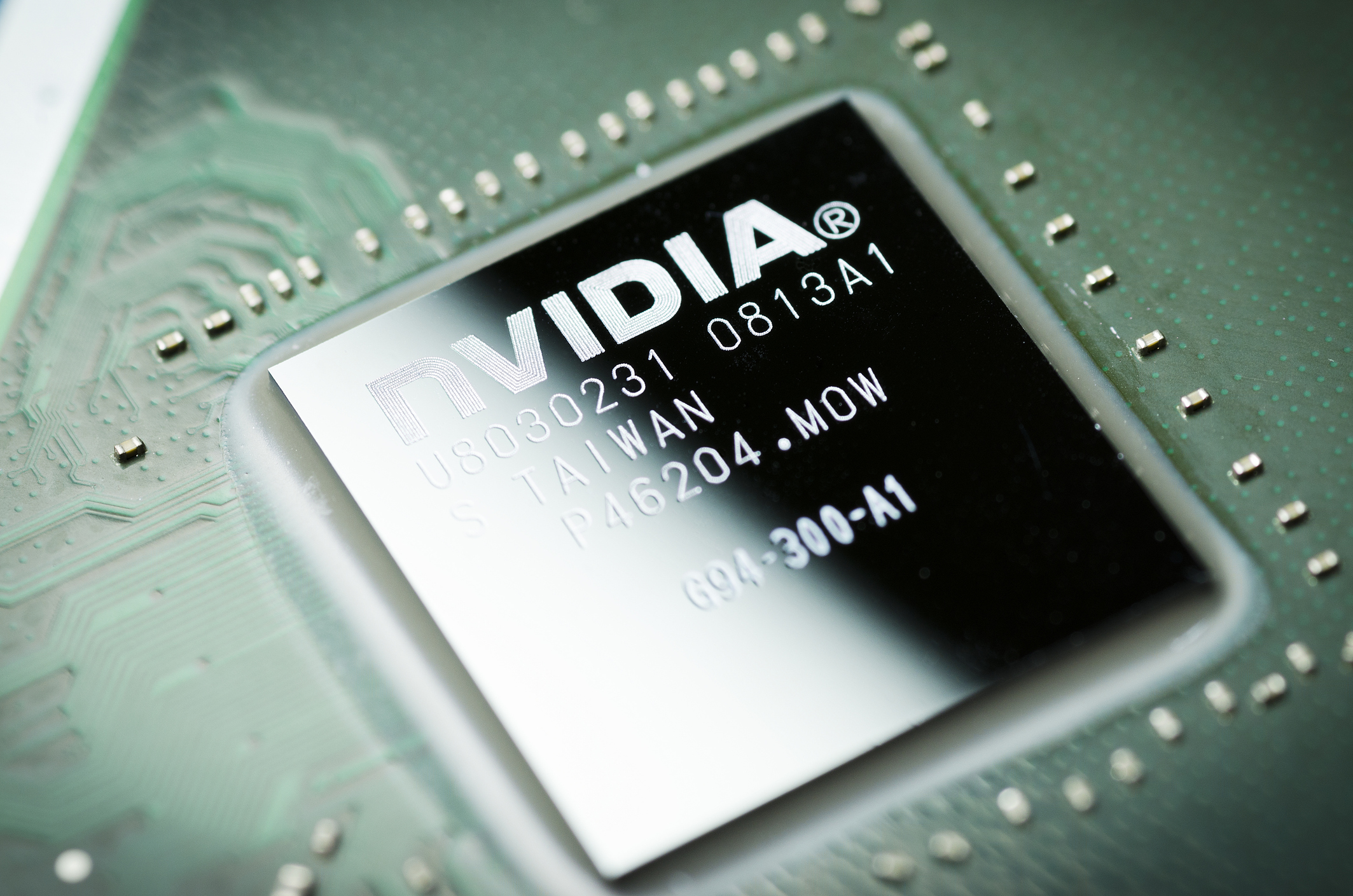
Moscow, Russia - April 7, 2019: NVIDIA microchip on the motherboard
NVIDIA microchip (Getty Images)

Nvidia’s $4T trading activity shows unparalleled stock market dominance

Its peers aren’t even close.

Luke Kawa

It’s been about a year since Nvidia’s blowout quarterly results and robust outlook signaled that the AI boom was on.

The run-up to that fateful May 2023 earnings report also marks the time when Nvidia began to dominate trading activity across the US stock market: there’s a chasm between the amount of money that is changing hands trading the semiconductor company compared to other top US stocks.

The dollar value in shares of Nvidia — that is, the number of shares traded times the price each transaction took place at — has been higher than that of Apple, Microsoft, Meta, Alphabet, and Amazon on more than 96% of the past 262 trading sessions. 

This trend kicked into overdrive in 2024. Nvidia has traded more dollar volume versus any of those names in all but two days this year, both of which were following the release of earnings reports by Meta. For reference, in 2022, Apple topped this leaderboard on about 80% of occasions.

Year to date, through May 29, $4.1 trillion has changed hands in Nvidia stock. Its peers aren’t even close.

But Nvidia isn’t just trading more than other tech titans individually — increasingly, it’s trading more than all of them as a group.

40 times so far this year, Nvidia’s stock traded more dollar volume than Microsoft, Apple, Alphabet, Amazon, and Facebook combined. For context, Amazon has done that once since the end of 2019, and Apple has accomplished the same feat twice over that span. That’s it.

Marc Andreessen proclaimed that software is eating the world back in 2011. Well, right now, Nvidia’s H100 semiconductors are swallowing the US stock market.


More Markets

See all Markets
markets

iRobot files for Chapter 11 bankruptcy just 11 days after its record one-day gain

Last one to leave the Roomba, please turn off the lights.

iRobot, maker of robotic vacuums and other cleaning products, announced that it was filing for Chapter 11 bankruptcy on Sunday as part of a restructuring agreement that would see 100% of the company’s equity interests be acquired by its secured lender and its primary contract manufacturer, Shenzhen PICEA Robotics Co., Ltd. and Santrum Hong Kong Co., Limited.

In a press release, the company said that this move “will delever the Company's balance sheet and enable iRobot to continue operating in the ordinary course, pursue its product development roadmap, and maintain its global footprint.”

Shares of iRobot recently booked their biggest one-day gain on record, rising 74% on December 3 on the heels of a Politico report that the Trump administration was planning on going “all in” to boost the robotics industry.

That report spurred a wave of buying from traders who were presumably looking to get exposure to the theme, enticed by the name of a company that has “robot” in it, and less than fully versed on its financial position. Back in March, management had warned investors that “there is substantial doubt about the Company's ability to continue as a going concern for a period of at least 12 months.”

Volumes exceeded 228 million on Dec 3, also far and away a daily record for the stock.

markets

Data center trade deep in the red

The data center trade is seeing its steepest sell-off since the market rout that was ignited by President Donald Trump’s Rose Garden tariff announcement back in April.

Goldman Sachs’ themed basket of AI data center shares was down more than 6% at around 12 p.m. ET, putting it on track for its worst day since the tariff announcement.

Losses hammered seemingly every form of input needed for the sprawling concrete server warehouses at the heart of the investment boom.

Hardware makers including data storage companies like Sandisk, Western Digital, and Seagate Technology Holdings, as well as DRAM maker Micron — some of the best-performing stocks in the S&P 500 this year — were taking a licking, as were networking stocks Cisco and Arista Networks and data center builders such as Vertiv Holdings and electrical and mechanical contractor Emcor.

Optimism for all things AI has seemed to evaporate throughout the week, as the stock market greeted lackluster quarterly numbers from Oracle and Broadcom with jittery sell-offs and concern about growing debts that could crater cash flows.

Those worries seem to be spreading to ancillary beneficiaries of the AI boom on Friday, gouging a chunk out of charts that retail dip buyers have not — at least so far — stepped in to buy as we head into the weekend.

markets
Luke Kawa

Oracle denies Bloomberg report that it’s delaying some data centers for OpenAI to 2028 from 2027

Getting a multi-hundred-billion-dollar backlog for cloud computing revenues from data center projects is easy. Building them is hard.

Oracle extended declines to as much as -6.5% on the day on the heels of a Bloomberg report that the cloud giant has pushed back the completion dates for some of the data centers it’s building for OpenAI to 2028 from 2027, citing people familiar with the work. Oracle denied this report, telling Reuters that there have been no delays to any sites required to meet its contractual commitments and that all milestones remain on track.

Shares had fully pared their report-induced drop ahead of Oracle’s reply, but remain in the red for the day.

Bloomberg said the reported postponement was attributed to labor and material shortages.

Oracle has been spending more on capex than Wall Street had anticipated, leading to higher-than-expected cash burn. Management boosted its full-year capital spending plans by $15 billion after reporting Q2 results earlier this week.

Oracle’s cloud infrastructure sales came in short of estimates in its fiscal 2026 Q2, a signal that markets already had reason to doubt its ability to quickly turn its humungous RPO (that is, remaining purchase obligations) into revenues.

Traders also seem to be of the mind that potential delays to data center completions are going to limit sales for what goes into them.

Some of the bigger losers since the Bloomberg headline hit the wires include:

markets
Luke Kawa

Broadcom’s post-earnings tumble is weighing on Google’s entire AI ecosystem

Broadcom’s post-earnings plunge is prompting a sharp pullback in Google-linked AI stocks, which had been on fire thanks to the warm reception to Gemini 3.

The stocks getting hit hard:

A basket of these Google-linked AI stocks compiled by Morgan Stanley is suffering one of its worst losses of the year. This brisk retreat also follows the release of GPT-5.2 by OpenAI.

Latest Stories

Sherwood Media, LLC produces fresh and unique perspectives on topical financial news and is a fully owned subsidiary of Robinhood Markets, Inc., and any views expressed here do not necessarily reflect the views of any other Robinhood affiliate, including Robinhood Markets, Inc., Robinhood Financial LLC, Robinhood Securities, LLC, Robinhood Crypto, LLC, or Robinhood Money, LLC.