

Markets
markets

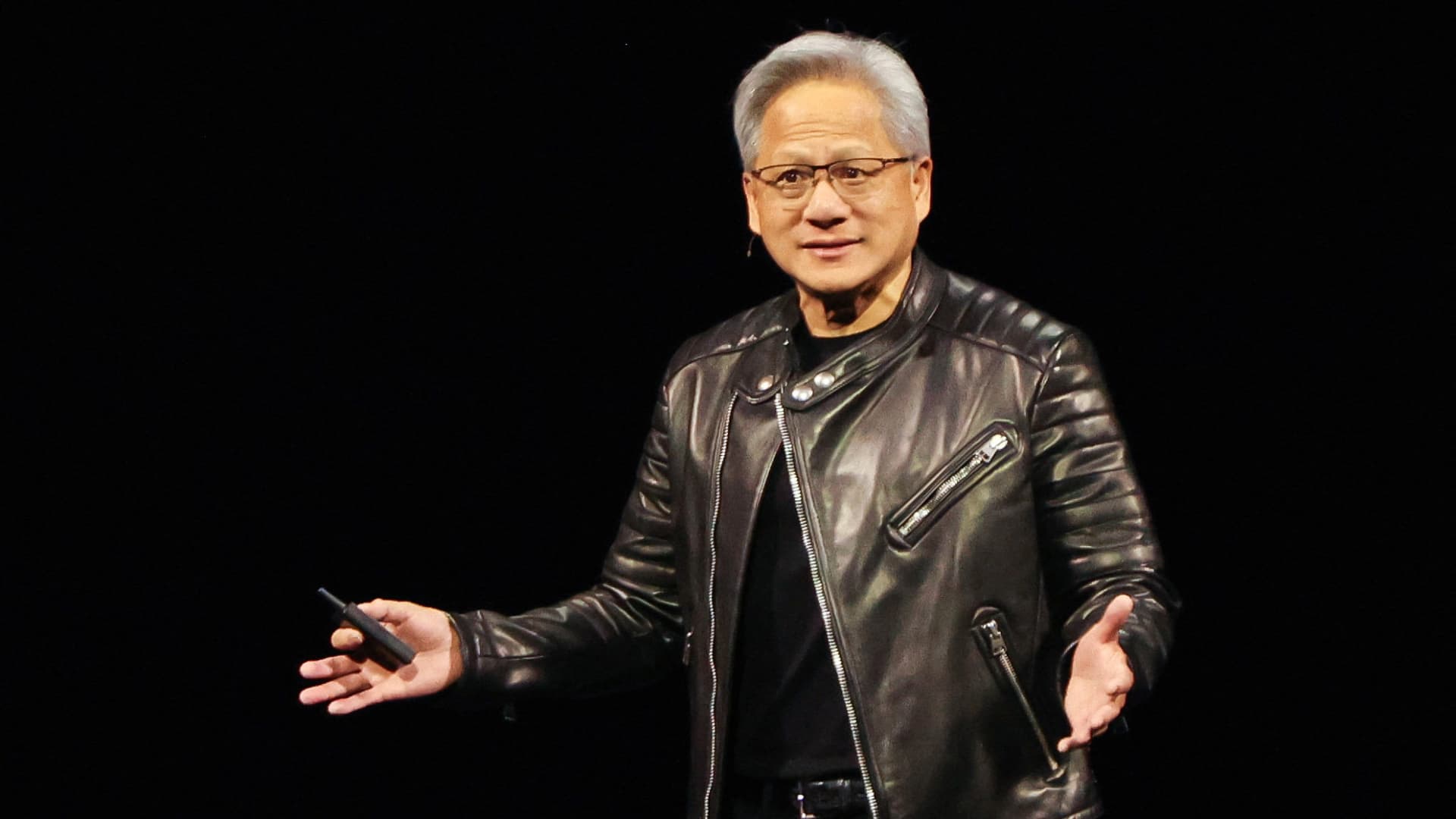
Nvidia CEO Jensen Huang raked it in last year

Given Nvidia’s performance over the last year, CEO Jensen Huang would seem to deserve a raise. The company was the best performer of the Magnificent 7 in 2024, rising 171.2% and creating more than $2 trillion in market wealth for shareholders.

And a raise he got: Huang’s compensation rose likewise, according to Nvidia’s most recent proxy statement, filed on May 1.

Huang’s “summary compensation” in fiscal 2025 — Nvidia’s fiscal year ended in January — rose to $49.9 million, up 46% from the prior year. Summary compensation is the longstanding official line companies publish on what their CEOs make.

But critics have said the “summary compensation” number vastly understates the economic value of the restricted stock units, stock options, and equity grants that often account for the bulk of CEO compensation.

So a few years back, the SEC began requiring a separate disclosure, known as “compensation actually paid” or CAP, that attempts to capture the impact of annual stock price moves on equity-based compensation. By that measure, Huang made a cool $344.2 million in last fiscal year. For context, thats more money than 738 companies in the Russell 2000 generated in revenue over the past 12 months, per Bloomberg data.

It’s not exactly on the level of what Palantir pays its CEO, but I’d take it.

Huang’s “summary compensation” in fiscal 2025 — Nvidia’s fiscal year ended in January — rose to $49.9 million, up 46% from the prior year. Summary compensation is the longstanding official line companies publish on what their CEOs make.

But critics have said the “summary compensation” number vastly understates the economic value of the restricted stock units, stock options, and equity grants that often account for the bulk of CEO compensation.

So a few years back, the SEC began requiring a separate disclosure, known as “compensation actually paid” or CAP, that attempts to capture the impact of annual stock price moves on equity-based compensation. By that measure, Huang made a cool $344.2 million in last fiscal year. For context, thats more money than 738 companies in the Russell 2000 generated in revenue over the past 12 months, per Bloomberg data.

It’s not exactly on the level of what Palantir pays its CEO, but I’d take it.
More Markets

See all Markets
markets

Nvidia poised to snap longest run without a record close since the AI boom began

The stock price of the company responsible for the brains of the AI boom is finally showing some brawn again.

Nvidia, the world’s most valuable company, is poised to close at a record high for the first time since October 29, 2025, on Friday (if it ends above $207.04).

The AI chip trade is on fire, with the Philadelphia Semiconductor Index slated to deliver its 18th consecutive gain as Intel’s robust results and outlook juice the entire ecosystem. Hyperscalers report earnings next week, and their capex guidance can be thought of as the earnings guidance for Nvidia and other AI suppliers for the quarters to come.

This would end Nvidia’s longest stretch without a record close since the unofficial start of the AI boom (when the chip designer delivered blowout quarterly results in May 2023).

(Sorry if I jinx this!)

markets

Lilly slips after prescriptions for its weight-loss pill come in below expectations in second week

Eli Lilly fell on Friday after prescription data for its new weight-loss pill, Foundayo, showed that it’s having a significantly slower rollout than its top competitor.

The pill was prescribed about 3,700 times in its second week, according to IQVIA data cited by Deutsche Bank analysts, compared to the roughly 8,000 they were expecting. Novo Nordisk’s Wegovy pill, which came out in January, hit over 18,000 prescriptions in its second week.

The FDA approved Foundayo on April 1 and shipments began on April 9. Deutsche analysts noted that Lilly’s GLP-1 injections, which currently outsell Novo’s, also had a slower start.

Lilly fell more than 4% after the numbers were released. Novo Nordisk rose more than 5%.

markets

The chip rally is getting so intense, even Qualcomm gets to surge

If you’re a good host, even the last person who shows up to the party gets to have a good time.

On that note, beleaguered Qualcomm — the worst-performing member of the Philadelphia Semiconductor Index this year — is staging a furious rally on Friday, with the industry poised to deliver its 18th consecutive session of gains.

Intel’s earnings are buoying the semi space broadly on Friday, and Qualcomm isn’t being left out. Options activity is also elevated and tilted toward the bull side. As of 9:56 a.m. ET, more than 48,000 calls have changed hands, roughly double its full-day average for the past 20 sessions. Its put/call ratio of 0.17 is well below the 20-day average of 0.44.

The San Diego-based firm has been negative in 2026 since the seventh session of the year, and even with today’s advance, remains mired in the red year to date. The stock cratered after reporting Q1 earnings in early February because its poor Q2 guidance seemingly confirmed fears that smartphone sales would come under pressure from rising memory chip prices and limited availability. Smartphone chips are still Qualcomm’s primary business, accounting for nearly two-thirds of revenues in its most recent quarter, and memory chip sellers appear to be incentivized to meet demand from major AI customers first.

Qualcomm reports Q2 earnings next Wednesday, but that release will likely be overshadowed by the four Magnificent 7 hyperscalers releasing results after the close.

Latest Stories

Sherwood Media, LLC produces fresh and unique perspectives on topical financial news and is a fully owned subsidiary of Robinhood Markets, Inc., and any views expressed here do not necessarily reflect the views of any other Robinhood affiliate, including Robinhood Markets, Inc., Robinhood Financial LLC, Robinhood Securities, LLC, Robinhood Crypto, LLC, Robinhood Derivatives, LLC, or Robinhood Money, LLC. Futures and event contracts are offered through Robinhood Derivatives, LLC.
