
Markets
Palantir tumbles after delivering spectacular results
(Roy Rochlin/Getty Images)

Palantir’s exceptional earnings receive ugly reaction

The valuation agita hitting high-flying stocks overshadowed the AI and intelligence software company’s blowout quarterly update.

Palantir dove Tuesday as an outbreak of investor anxiety over sky-high valuations overshadowed an objectively stellar quarter for the software giant.

Palantir trounced Q3 expectations and sharply raised its full-year guidance when it reported on Monday, as sales growth accelerated, gross profit margins expanded, and cash coursed into its coffers.

Even so, the stock stumbled badly, dropping nearly 10% soon after the start of trading in New York, though the bleeding has slowed a little since then.

“Palantir’s results were impressive by any measure and exceeded any expectation. If shares go lower today, that would be a reflection on AI trade fatigue, not the company’s performance,” said Gil Luria, head of technology research at brokerage DA Davidson & Co.

It’s true that high-flying AI stocks are having a particularly bad day on Tuesday.

Goldman Sachs’ TMT AI basket of themed stocks — of which Palantir is a member — was down 1.9% recently, with its heaviest weighting, bellwether Nvidia, down more than 2%.

IT hardware stocks like Seagate Technology Holdings, Western Digital, and Micron, which have risen on the prospect of seemingly endless demand from AI data centers and have become some of the best performers in the S&P 500 so far this year, were also down, as were AI-linked energy plays like Oklo, Bloom Energy, and Vistra.

A cascade of warnings from high-profile figures seems partly to blame for the outbreak of jitters. Michael Burry, of “The Big Short” fame, unveiled a massive options-based bet against Nvidia and Palantir. Separately, the CEOs of Goldman Sachs and Morgan Stanley have both warned of the potential for a drawdown in the market given high-altitude valuations.

Exhibits include: an S&P 500 forward price-to-earnings multiple that’s regularly topping 23x. A market-to-GDP ratio, the so-called Buffett Indicator, at an all-time high. And a CAPE ratio (a longer-term version of price-to-earnings ratios) that is at levels unseen except for the daffiest days of the late 1990s dot-com mania.

To be clear, it might not be the case that valuations are the problem here. It may just be that the market — and particularly Palantir, which closed at a record high yesterday and is still up more than 150% for the year — needs a bit of a breather.

On the other hand, if valuations are suddenly becoming a fixation for investors — and there’s no guarantee that they are — it could be a problem for Palantir, which remains the most richly valued stock in the S&P 500, looking quite unhinged.

For example, the company had a forward price-to-sales ratio of more than 90x at the close of New York trading yesterday. After the early plunge Tuesday, it was around 78x. (The index is at 3.3x).

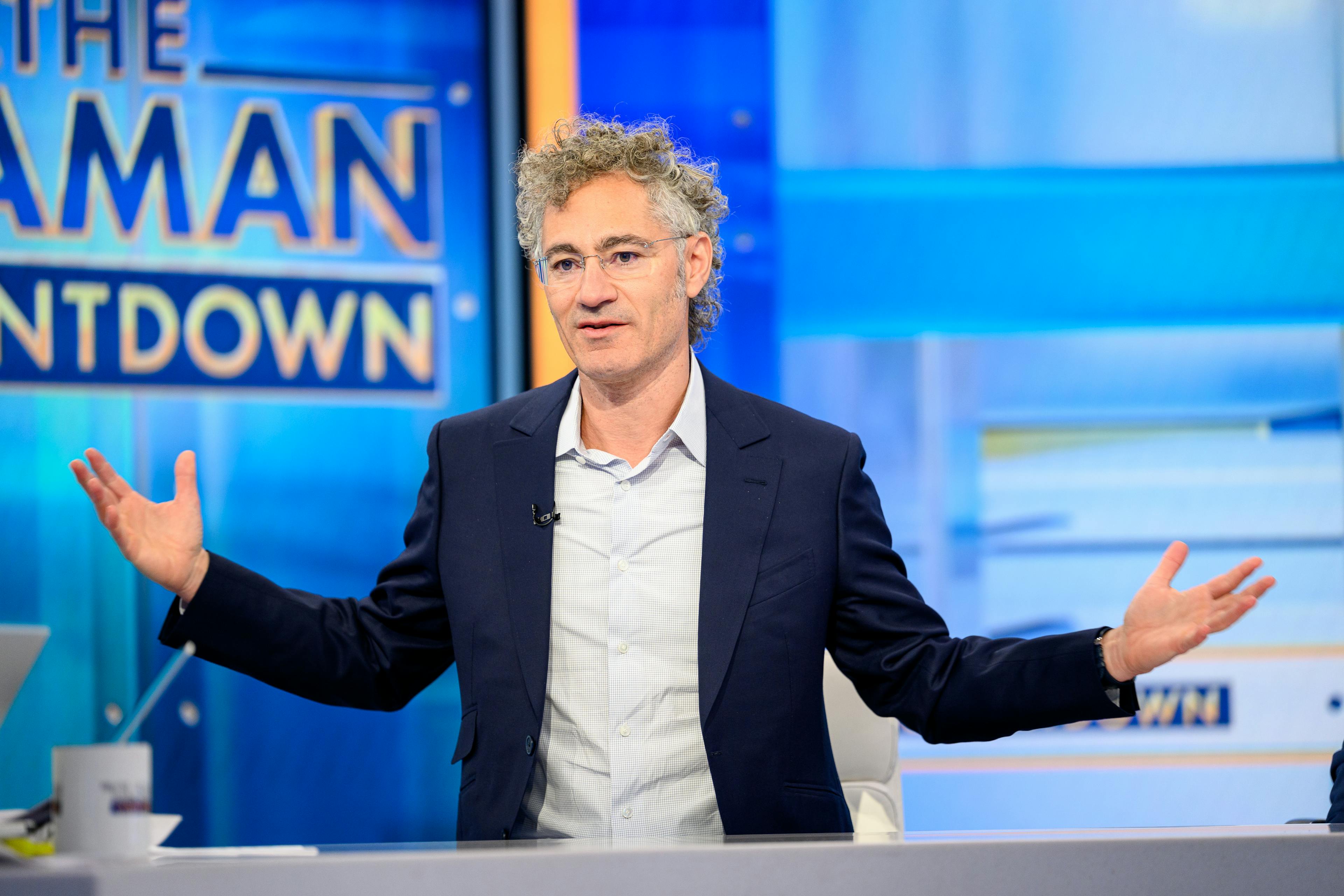
Such valuations are testament to the showmanship of CEO Alex Karp, whose brash approach created an army of retail shareholders willing to shrug off traditional rules of thumb as the share price climbed and created hundreds of billions of equity wealth.

But such high valuations also represent a big disconnect between the company’s performance and its stock price, analysts say, which could make for interesting days to come.

“At these very high valuations, shares of PLTR are likely to continue to be volatile,” said Luria of DA Davidson, adding, “regardless of the strong fundamental performance.” Luria has a “neutral” rating on the stock with a price target of $215.

More Markets

See all Markets
markets

Nike sinks to lowest level since 2014 after warning of “challenged” sales environment in Q4 report

Did Nike do it?

Investors had a mixed reaction after the global sports apparel company reported its fourth quarter earnings on Tuesday after the bell. Shares initially rose 5% as Nike beat out Wall Street expectations amid a hefty tariff refund bonus. However, the stock then sank to its lowest level since August 2014 in postmarket trading.

Here are the Q4 numbers:

  • Revenue of $11.0 billion (estimate: $10.8 billion).

  • Adjusted earnings per share of $0.20 (estimate: $0.12).

Ahead of this report, Nike warned that results would be flattered by a one-time tariff refund (now estimated at roughly $0.52 per share for the bottom line). That gave the company an extra cushion in snapping its streak of seven quarters of year-over-year profit declines.

Over the past year, the company had been punished by tariffs on imported goods, stagnant consumer spending, and increasing competition from other footwear brands like New Balance, Adidas, and Hoka.

Outgoing CFO Matthew Friend deemed it an “increasingly challenging operating environment, where sell-through remains challenged.”

markets

Rocket Lab deal lifts space stocks

Shares of Rocket Lab are surging after announcing an $8 billion acquisition of satellite communications operator Iridium Communications, helping lift a broader basket of space-related stocks as investors piled back into the sector.

Planet Labs, AST SpaceMobile and Redwire all traded higher alongside Rocket Lab, extending gains in an industry that has drawn enhanced investor attention in recent months in light of the strategic importance that governments place on space and satellite communications infrastructure.

In a presentation, Rocket Lab’s management called the purchase “a shortcut” for its satellite communications business.

Under the terms of the agreement, Iridium shareholders will receive $27 in cash and Rocket Lab stock, valuing Iridium at $54 per share. Backed by a $3.6 billion bridge loan committed by Deutsche Bank and Wells Fargo, Rocket Lab absorbs Iridium’s globally licensed spectrum and an active base of 2.5 million subscribers.

Rocket Lab has also remained one of the most active launch providers in the sector. The company completed its 12th launch of the year last week, maintaining one of the highest launch cadences among commercial space companies.

Today's rally helps offset a brutal stretch for the group. Rocket Lab shares had fallen over 35% over the prior month, while Planet Labs stock was down more than 40% and AST SpaceMobile stock was down around 30% over the same window.

markets
Jake Lahut

Comcast shares rise on news of NBCUniversal spinoff deal

Comcast rose on the news that the telecom behemoth is spinning off NBCUniversal and Sky from its cable portfolio. 

Comcast initially jumped up to 17% in early trading, with the deal leaving management to focus on its core verticals of cable, wireless, and business services. 

NBCUniversal and Sky will form a new publicly traded company, similar to Versant Media, the holding company of CNBC and MS NOW that Comcast officially spun off in January. Bravo, one of the most lucrative properties that remained at Comcast, will remain part of NBCUniversal in the deal. The Universal theme parks and studios will also come with the new spinoff entity, along with Telemundo and Peacock.

Mike Cavanagh, the co-CEO of Comcast, will become the CEO for NBCUniversal, according to CNBC. 

The spinoff will be completed in about a year, according to a Comcast company statement. Its shareholders will also own shares in NBCUniversal, according to the same statement.

markets

Blackberry managed to build a real business out of its memestock boom

The former memestock BlackBerry surged on blowout earnings this week — and the bull case has nothing to do with phones. 

  • Q1 Revenue: $152.9 million, up 26% from a year ago 

  • EPS: 4 cents, the fourth time in five quarters that BlackBerry posted a net profit

  • Shares of the stock are up nearly 180 percent over the past year. 

  • Cars on QNX: 275 million, nearly every maker except Tesla

When you think of Blackberry, you probably picture the clunky QWERTY keyboard and yearn for the pre-AI slop era. But for many traders, that nostalgic memory could have been getting in the way of evaluating a rising star

In its first quarter earnings on Thursday, the cell-phone-turned-B2B-enterprise-software-company blew past estimates with revenue up 26% and a 44% EPS beat after back-to-back 30%+ beats before that. The company hiked its full-year profit forecast to 16 cents to 20 cents per share with revenue between $594 million and $621 million. 

“The market still misdefines BlackBerry,” analyst Suthan Sukumar of Stifel said Tuesday in a note to clients. “This is…a mission-critical software layer in the physical AI stack and a dominant partner to silicon leaders like NVIDIA, Qualcomm, and AMD powering the build-out from cloud to edge, across cars, robots, factories, and medical devices.” 

QNX, BlackBerry’s real-time operating system — runs inside of 275 million cars worldwide. “There's more software going into a car these days than ever before, CEO John Giamatteo told Bloomberg on Friday. “That's really where we shine as a company.” 

Modern autos generate terabytes of daily data, from tire pressure to monitoring driving behavior, and QNX is the foundation beneath all of it. The system is safety-certified, that’s engineer talk for does what it's told, every time, whereas AI systems make predictions based on probabilities. 

“As intelligent machines become increasingly autonomous and operate around people, the requirements for safety, security, reliability, and real-time determinism become even more important,” said Giamatteo on Thursday’s earnings call. “Unlike probabilistic AI systems, QNX technology is deterministic and safety-certified, which is exactly why it is so hard to replicate and why customers trust it for systems where failure is not an option.”

About 20% of QNX revenue now comes from non-car segments. Use in robotics, medical devices, drones, and industrial automation are growing. In June, NVIDIA announced Halos for Robotics and QNX is in the stack. Per QNX’s own research, 85% of robotics engineers expect software’s role in their field to increase over the next three to five years. 

Similarly, analysts say the global military drone sector is expected to surpass $25 billion in 2026 and more than double by 2032. QNX is already deployed in unmanned aerial systems as well as used in military-grade encrypted communications.

What does the Street think now? 

  • Raised from $4.75 to $9.50 at Raymond James

  • Raised from $10 to $13 at CIBC 

  • Coverage initiated with Buy at $12 at Stifel 

On Friday, when Bloomberg asked if consumers could swap out iPhones for the nostalgic keyboard again, Giamatteo said “I don't think you'll see us get back into the phone game anytime soon.”

BlackBerry shed its consumer identity years ago. What’s left is a profitable B2B software company that’s already embedded in tech infrastructure from cars to robots to drones. As physical AI scales, the demand for trusted safety-certified software is likely to grow.

Latest Stories

Sherwood Media, LLC and Chartr Limited produce fresh and unique perspectives on topical financial news and are fully owned subsidiaries of Robinhood Markets, Inc., and any views expressed here do not necessarily reflect the views of any other Robinhood affiliate, including Robinhood Markets, Inc., Robinhood Financial LLC, Robinhood Securities, LLC, Robinhood Crypto, LLC, Robinhood Money, LLC, Robinhood U.K. Ltd, Robinhood Derivatives, LLC, Robinhood Gold, LLC, Robinhood Asset Management, LLC, Robinhood Credit, Inc., Robinhood Ventures DE, LLC and, where applicable, its managed investment vehicles.

