

Markets
markets
Luke Kawa

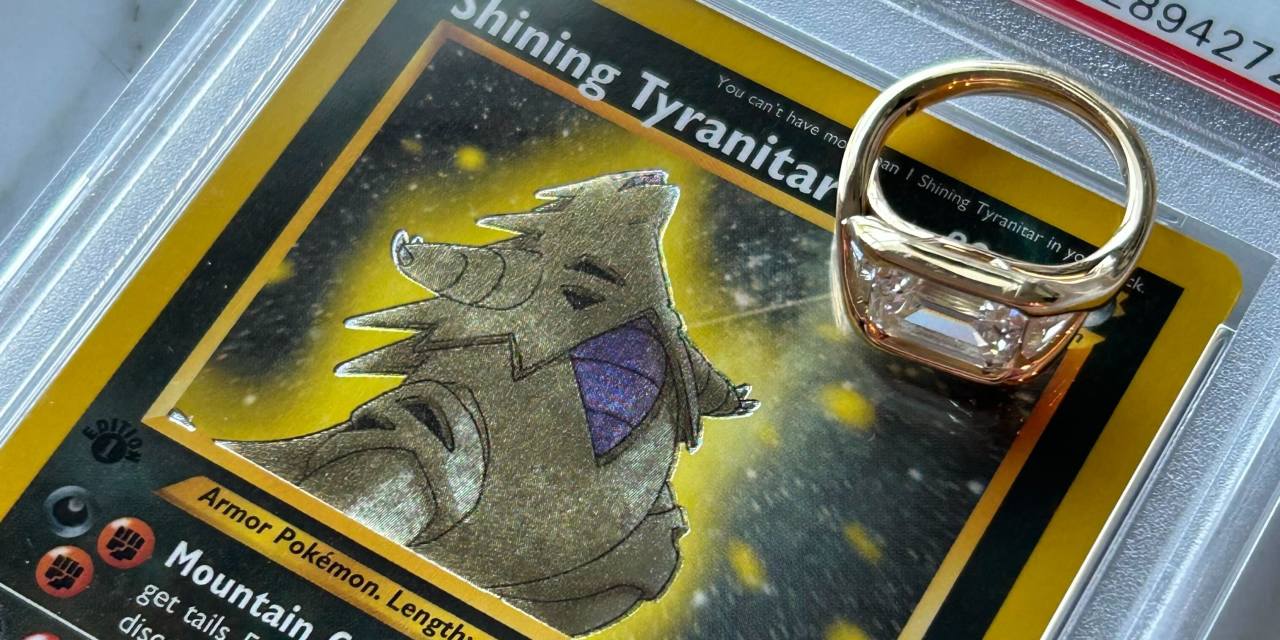
“Pokémon” trading cards skyrocketing in value and GameStop’s collectibles business taking off are two sides of the same coin


The Wall Street Journal’s fantastic piece “The Hot Investment With a 3,000% Return? Pokémon Cards” includes this vignette:

“...the cards caught fire among amateur investors during the pandemic. As some investors banded together to spark the GameStop meme stock mania, a more fringe group of traders, also stuck at home and armed with cash from government stimulus, began scooping up Pokémon cards.”

And the connection between “Pokémon” cards and the video game retailer is in fact even closer than that:

GameStop collectibles business played a big role in why it smashed Q2 revenue expectations! Sales in this segment exceeded $227 million, while the two analysts that provided forecasts had an average estimate of $170.4 million. Fiscal year to date, sales of collectibles make up 25.8% of its revenues, up from 16.4% at this time last year.

The company significantly expanded its footprint in the “Pokémon” trading card world in 2024 by launching in-store buying and selling of individual cards, and introduced “Power Packs,” which include one card graded at 8 or above by the Professional Sports Authenticator, in its most recent quarter.

As a 35-year-old man who still plays “Pokémon” (Nuzlockes are peak math + strategy entertainment!), thinks the release of “Pokémon Go” marked the peak for Western civilization, and considers Christmas 1998 to be the second-best day of his life because it’s when he got “Pokémon Red,” I personally view the outperformance of “Pokémon” cards as being indicative of the power of nostalgia coupled with a drop-off in child rearing by millennials, leaving more room for discretionary purchases and investments.

And the nostalgia business seems like a great place to be.

“...the cards caught fire among amateur investors during the pandemic. As some investors banded together to spark the GameStop meme stock mania, a more fringe group of traders, also stuck at home and armed with cash from government stimulus, began scooping up Pokémon cards.”

And the connection between “Pokémon” cards and the video game retailer is in fact even closer than that:

GameStop collectibles business played a big role in why it smashed Q2 revenue expectations! Sales in this segment exceeded $227 million, while the two analysts that provided forecasts had an average estimate of $170.4 million. Fiscal year to date, sales of collectibles make up 25.8% of its revenues, up from 16.4% at this time last year.

The company significantly expanded its footprint in the “Pokémon” trading card world in 2024 by launching in-store buying and selling of individual cards, and introduced “Power Packs,” which include one card graded at 8 or above by the Professional Sports Authenticator, in its most recent quarter.

As a 35-year-old man who still plays “Pokémon” (Nuzlockes are peak math + strategy entertainment!), thinks the release of “Pokémon Go” marked the peak for Western civilization, and considers Christmas 1998 to be the second-best day of his life because it’s when he got “Pokémon Red,” I personally view the outperformance of “Pokémon” cards as being indicative of the power of nostalgia coupled with a drop-off in child rearing by millennials, leaving more room for discretionary purchases and investments.

And the nostalgia business seems like a great place to be.
More Markets

See all Markets
markets

Figma rises on Citi’s Buy rating and $36 price target

Figma shares are rising moderately in pre-market trading after Citigroup initiated coverage with a Buy rating, saying demand tied to AI could help fuel the design software company’s next phase of growth, according to the note provided by Bloomberg.

Citi set a $36 price target on the stock and said Figma is well-positioned to offset AI disruption concerns through its own AI-driven consumption growth.

"Our proprietary customer and go-to-market (GTM) checks with hyperscalers and large financial services (FS) firms suggest strong seat upgrades & credit pack utilization, which offer positive reads on AI-monetization strategy," analyst Tyler Radke commented.

The company has been moving to roll out AI-native features in recent months, including developer-focused tools and in-house Figma agent aimed at making Figma a more central operating layer between product teams, engineers and AI systems.

Citi also pointed to upcoming product launches and potential monetization tied to Figma’s Model Context Protocol server which is an emerging framework that could allow AI systems to interact more directly with design environments.

Figma’s most recent earnings posted stronger-than-expected revenue growth while management raised its full-year guidance, saying that AI-related products were seeing encouraging adoption.

Still, the company that went public in 2025 has faced intense pressure with stock tumbling more than 50% this year-to-date over fears that automated AI code-generation tools and design alternatives from competitors like Anthropic might squeeze the need for seat-based design software.

markets

Lionsgate closes higher on Netflix acquisition rumor, streaming giant denies report

Shares for the film production company Lionsgate soared on Tuesday following rumors of a potential buyout.

According to a person familiar with the possible merger and acquisitions deal, streaming giant Netflix is one of the companies that may be interested in buying Lionsgate Studios, per reporting by Semafor. A Netflix spokesperson denied the rumor to Deadline.

Neither Lionsgate nor Netflix confirmed the news, but nevertheless the stock climbed, closing up 14%. The stock fell 4.6% in premarket trading after Netflix denied the rumor.

Netflix closed lower on news that Fox will acquire Roku in an approximately $22 billion deal after it was also rumored that the streaming company was interested in that acquisition. “Netflix did not make a bid for Roku,” a spokesperson told Semafor. This comes after Netflix withdrew its buyout bid for Warner Bros. Discovery earlier this year.

Lionsgate’s shares are up 77% since January. Lionsgate owns massive franchises like “John Wick” and “The Hunger Games.” The film company has a market cap of approximately $4.7 billion, making it roughly 5x smaller than Roku and 13x smaller than Warner Bros.

markets

Oil tumbles below $80 to 3-month low on US-Iran deal

Oil prices slid to their lowest levels in more than three months today after a preliminary ceasefire agreement between the US and Iran raised expectations that more crude could return to global markets and key shipping routes through the Strait of Hormuz could reopen.

Brent crude fell below $78 a barrel while West Texas Intermediate dropped to $73.31, extending losses as traders priced in lower geopolitical risk premiums tied to Middle East supply disruptions.

The preliminary pact announced by President Donald Trump and Iranian leaders establishes a 60-day ceasefire to end the active hostilities that have choked the Middle East since late February. A formal memorandum of understanding is scheduled to be officially signed in Switzerland this Friday, according to Bloomberg report.

Trump said on Sunday that the Strait of Hormuz would be opened when the agreement is signed in Switzerland on Friday, writing on Truth Social, “Ships of the World, start your engines. Let the oil flow!

US Energy Department data, meanwhile, showed that Americas strategic oil stockpiles sank last week to their lowest level since 1983, indicating sustained demand to rebuild them even if the Mideast conflict ends.

Stocks that moved lower:

markets

Eos Energy surges on commercial launch of second battery production line

Eos Energy Enterprises is surging in early trading after announcing the official start of commercial production at its second automated battery manufacturing line.

In a statement, the company said this milestone positions it to scale production of its proprietary zinc-based long-duration energy storage systems to meet rising commercial demand.

Management touted the enhanced efficiency of this facility, with design upgrades slashing raw material travel by 86% and shortening the physical production line length by 40% compared to Line 1.

“Battery Line 2 demonstrates our ability to continuously improve as we scale,” said John Mahaz, Chief Operating Officer of Eos. “It validates that our manufacturing system can be replicated and scaled with discipline.”

The battery energy storage company confirmed that while subassemblies will continue coming online through the early third quarter, full production capacity is targeted for the fourth quarter of 2026. The ultimate goal is to hit an aggregate 4 gigawatt-hours of annual manufacturing capacity by the end of 2026. Management also highlighted that Battery Line 1 already surpassed its full-year 2025 output within the first 164 days of 2026.

Today’s announcement builds on recent operational momentum for Eos, which posted better-than-expected Q1 sales and announced a joint venture with Cerberus Capital Management in May. However, shares are still down 37% year to date.

For the full year, Eos still expects to achieve revenues between $300 million and $400 million, in line with its previously provided guidance.

Latest Stories

Sherwood Media, LLC and Chartr Limited produce fresh and unique perspectives on topical financial news and are fully owned subsidiaries of Robinhood Markets, Inc., and any views expressed here do not necessarily reflect the views of any other Robinhood affiliate, including Robinhood Markets, Inc., Robinhood Financial LLC, Robinhood Securities, LLC, Robinhood Crypto, LLC, Robinhood Money, LLC, Robinhood U.K. Ltd, Robinhood Derivatives, LLC, Robinhood Gold, LLC, Robinhood Asset Management, LLC, Robinhood Credit, Inc., Robinhood Ventures DE, LLC and, where applicable, its managed investment vehicles.
