

Markets
markets

Repent callow trader, for a death cross is upon us

It might have seemed like a somewhat decent day yesterday, but it wasn’t enough to prevent the emergence of one of the more ominously named technical patterns from surfacing in the chart of the S&P 500 (SPDR S&P 500 Trust) .

Yes, we are talking about the so-called death cross.

For those unfamiliar with the argot of technical traders, a death cross is when a 50-day moving average falls below the 200-day moving average, with both trending lower. As the name implies, this switcheroo is thought to be a somewhat ominous development, suggesting a serious, and perhaps durable, breakdown of price momentum.

But like a lot of things in technical analysis — a stock market subculture which eschews consideration of fundamentals like profits and losses in favor of watching price charts for clues about where asset prices will go next — the death cross’s track record of signaling a continued slump in stocks is far from flawless.

In fact, technical analysts from Bank of America looked at the 50 death crosses (before Monday’s) that have occurred in the S&P 500 since 1927, and they found no clear signal that the market will fall in the days following the cross.

It’s basically a coin flip as to whether the market will be up or down in the days after the indicator is triggered, and essentially the death cross is “not as bearish as it sounds,” BofA analysts wrote in a note Monday — though they caution that the signal is a bit worse if you restrict the death crosses just to instances when the 200-day moving average is also falling, which it is now.

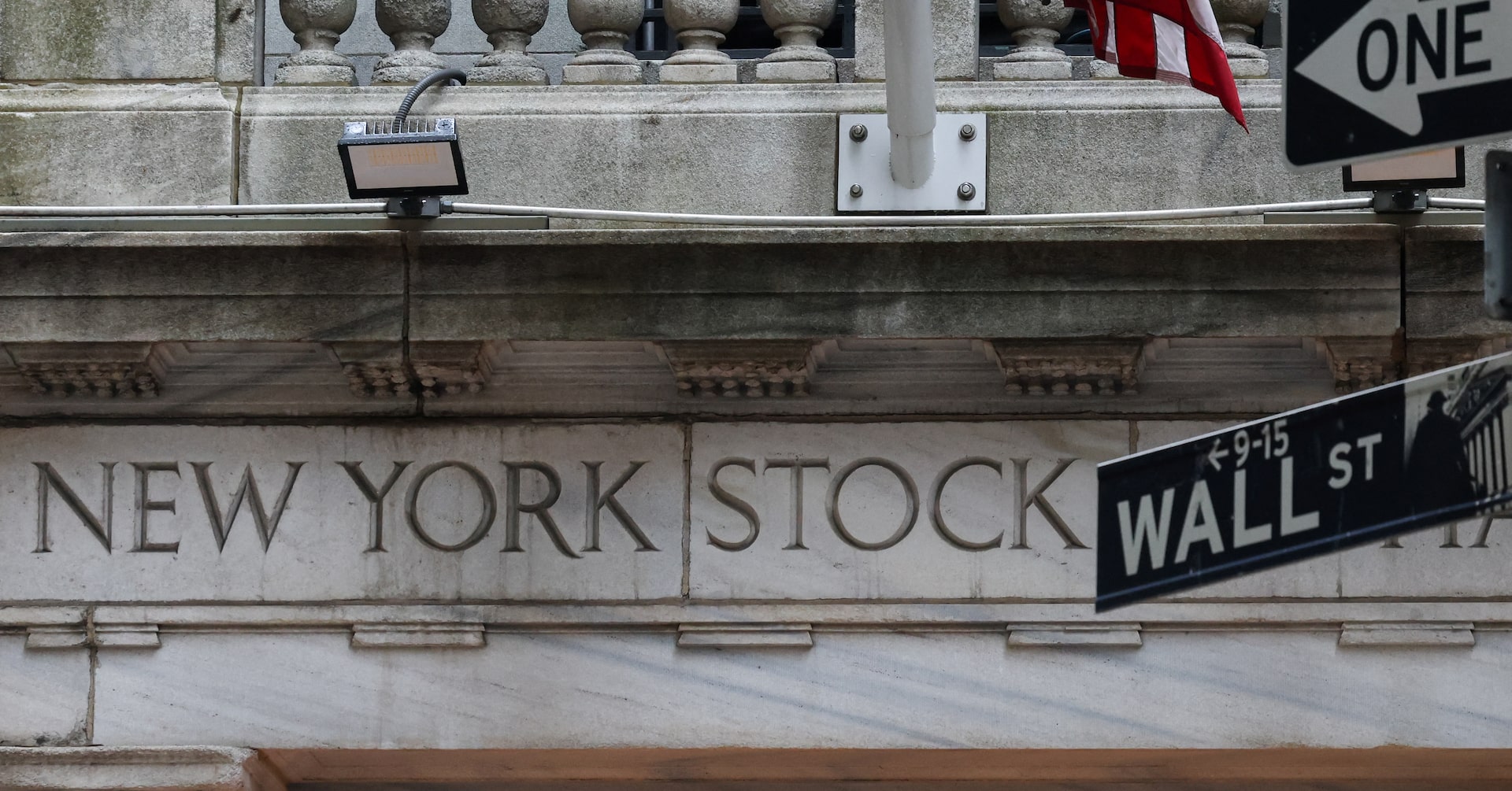
For those unfamiliar with the argot of technical traders, a death cross is when a 50-day moving average falls below the 200-day moving average, with both trending lower. As the name implies, this switcheroo is thought to be a somewhat ominous development, suggesting a serious, and perhaps durable, breakdown of price momentum.

But like a lot of things in technical analysis — a stock market subculture which eschews consideration of fundamentals like profits and losses in favor of watching price charts for clues about where asset prices will go next — the death cross’s track record of signaling a continued slump in stocks is far from flawless.

In fact, technical analysts from Bank of America looked at the 50 death crosses (before Monday’s) that have occurred in the S&P 500 since 1927, and they found no clear signal that the market will fall in the days following the cross.

It’s basically a coin flip as to whether the market will be up or down in the days after the indicator is triggered, and essentially the death cross is “not as bearish as it sounds,” BofA analysts wrote in a note Monday — though they caution that the signal is a bit worse if you restrict the death crosses just to instances when the 200-day moving average is also falling, which it is now.

More Markets

See all Markets
markets

The FDA is expected to lift restrictions on certain peptides, the NYT reports

The Food and Drug Administration is expected to lift restrictions on certain peptides, allowing the experimental, often injectable substances to be sold by compounding pharmacies, The New York Times reported Tuesday.

The potential move was previously reported by The Wall Street Journal, and teased by Health Secretary Robert F. Kennedy Jr. on the “Joe Rogan Experience” podcast in late February.

Peptides have boomed in popularity recently, with search interest for “peptides” surpassing “ozempic” this month. Many of them are currently understudied and not approved for human use, a rule consumers are able to bypass by purchasing them from suppliers that sell them for, ostensibly, research purposes only.

As reports of the FDA changing its stance of peptides mount, consumer health companies like Hims & Hers and Superpower have been getting ready to roll out their peptide offerings as soon as they get the FDA's blessing.

Peptides have boomed in popularity recently, with search interest for “peptides” surpassing “ozempic” this month. Many of them are currently understudied and not approved for human use, a rule consumers are able to bypass by purchasing them from suppliers that sell them for, ostensibly, research purposes only.

As reports of the FDA changing its stance of peptides mount, consumer health companies like Hims & Hers and Superpower have been getting ready to roll out their peptide offerings as soon as they get the FDA's blessing.

markets

Memory stocks bounce as Bernstein analyst calls TurboQuant fears “overdone”

Memory stocks rose Tuesday, after Bernstein analysts called the recent panic over Google’s TurboQuant AI algorithm “overdone.”

Bernstein analyst Mark Newman wrote:

“[Hard disk drive] and Memory stocks have sold off significantly due in part to fears from Google’s TurboQuant report. This however, should have zero impact on HDD demand and negligible impact on NAND demand. Given the stock sell-off we see this as an attractive entry point for Seagate Technology Holdings, Western Digital and Sandisk’s and upgrade WDC to Outperform.”

All three stocks were up early Tuesday, as was memory chip maker Micron.

Todays rally stands in stark contrast to the pummeling these shares have endured over the last week, after Google Research published a technical paper on March 24 detailing its TurboQuant AI algorithm, which compresses the amount of data associated with AI operations without affecting the accuracy of AI models.

That was seen as a threat to surging AI demand for memory storage, which has supercharged prices for memory chips and memory-related stocks over the last year.

markets

Constellation tumbles after posting underwhelming guidance, failing to announce new data center deals

AI power trade Constellation Energy tumbled early Tuesday after issuing an investor day update the market seemed to find unsatisfactory.

The company introduced full-year 2026 operating earnings guidance of between $11 and $12 a share, the midpoint of which is shy of consensus expectations for $11.73, according to FactSet.

Over at Barron’s, Avi Salzman suggested that the company’s failure to unveil any new data center deals as part of the festivities is also adding the the sell-off. He wrote:

“Constellation CEO Joe Dominguez said at the event that he anticipates signing major new deals to provide power to tech companies, but doesn’t want to announce anything too early given the increasing spotlight on data centers today and some changing regulations.

‘I recognize that the last time we spoke, I indicated that we expected to be done with an important transaction by this call, but we’re not ready to announce anything today,’ Dominguez said.

‘There is clearly more scrutiny on data center development,’ he added.”

It’s clear that growing public pushback on data centers is becoming a limiting factor in the AI investment binge.

Over at Barron’s, Avi Salzman suggested that the company’s failure to unveil any new data center deals as part of the festivities is also adding the the sell-off. He wrote:

“Constellation CEO Joe Dominguez said at the event that he anticipates signing major new deals to provide power to tech companies, but doesn’t want to announce anything too early given the increasing spotlight on data centers today and some changing regulations.

‘I recognize that the last time we spoke, I indicated that we expected to be done with an important transaction by this call, but we’re not ready to announce anything today,’ Dominguez said.

‘There is clearly more scrutiny on data center development,’ he added.”

It’s clear that growing public pushback on data centers is becoming a limiting factor in the AI investment binge.

markets

CoreWeave jumps after closing unique financing deal to borrow $8.5 billion backed by its chips and Meta’s AI compute purchases

Shares of CoreWeave are spiking on Tuesday after the company announced that it closed an $8.5 billion loan backed by its chips and what Meta is willing to pay to use them.

Last September, the neocloud reached an agreement to provide $14.2 billion worth of AI compute to the social media giant.

CoreWeave said the loan agreement is “the first investment-grade rated financing secured by HPC infrastructure and an associated customer contract.”

These terms helped to reduce CoreWeave’s cost of borrowing: this facility includes a floating rate (SOFR plus 2.25%, or about 5.9%) as well as a fixed rate tranche (at 5.9%). Last July, CoreWeave raised fixed-rate debt with a coupon of 9%.

In a world where Oracle’s five-year credit default swap spreads recently exceeded their 2008 peak, it’s nice to get some positive debt-related news in the AI realm.

markets

Traders pay a premium for defense ETF that US Secretary of War Pete Hegseth’s broker reportedly attempted to buy before the war

The iShares Defense Industrials Active ETF is spiking this morning after the Financial Times reported that US Secretary of War Pete Hegseth’s broker attempted to make a multimillion-dollar purchase of the ETF ahead of US-Israeli attacks on Iran.

Per the FT, this purchase attempt did not go through after being flagged internally by BlackRock. (The chief Pentagon spokesperson has called this report false and fabricated.)

The actively managed ETF has actually performed poorly since the start of the war, down more than 12% since the end of February versus a less than 8% decline for the SPDR S&P 500 ETF.

But as of about 8:30 a.m. ET, it was up almost 4% in premarket trading. Even more curiously, as of 8:39 a.m. ET, only one of this actively managed ETF’s constituents (Rocket Lab) was up more than the ETF itself.

In other words, in what appears to be an amazing twist, traders are now seemingly willing to pay a premium for IDEF because it got a pseudo seal of approval from Pete Hegseth...

...except it didn’t, because the FT reports that the broker’s purchase order never went through after being flagged internally by BlackRock.

Latest Stories

Sherwood Media, LLC produces fresh and unique perspectives on topical financial news and is a fully owned subsidiary of Robinhood Markets, Inc., and any views expressed here do not necessarily reflect the views of any other Robinhood affiliate, including Robinhood Markets, Inc., Robinhood Financial LLC, Robinhood Securities, LLC, Robinhood Crypto, LLC, Robinhood Derivatives, LLC, or Robinhood Money, LLC. Futures and event contracts are offered through Robinhood Derivatives, LLC.
