
Markets
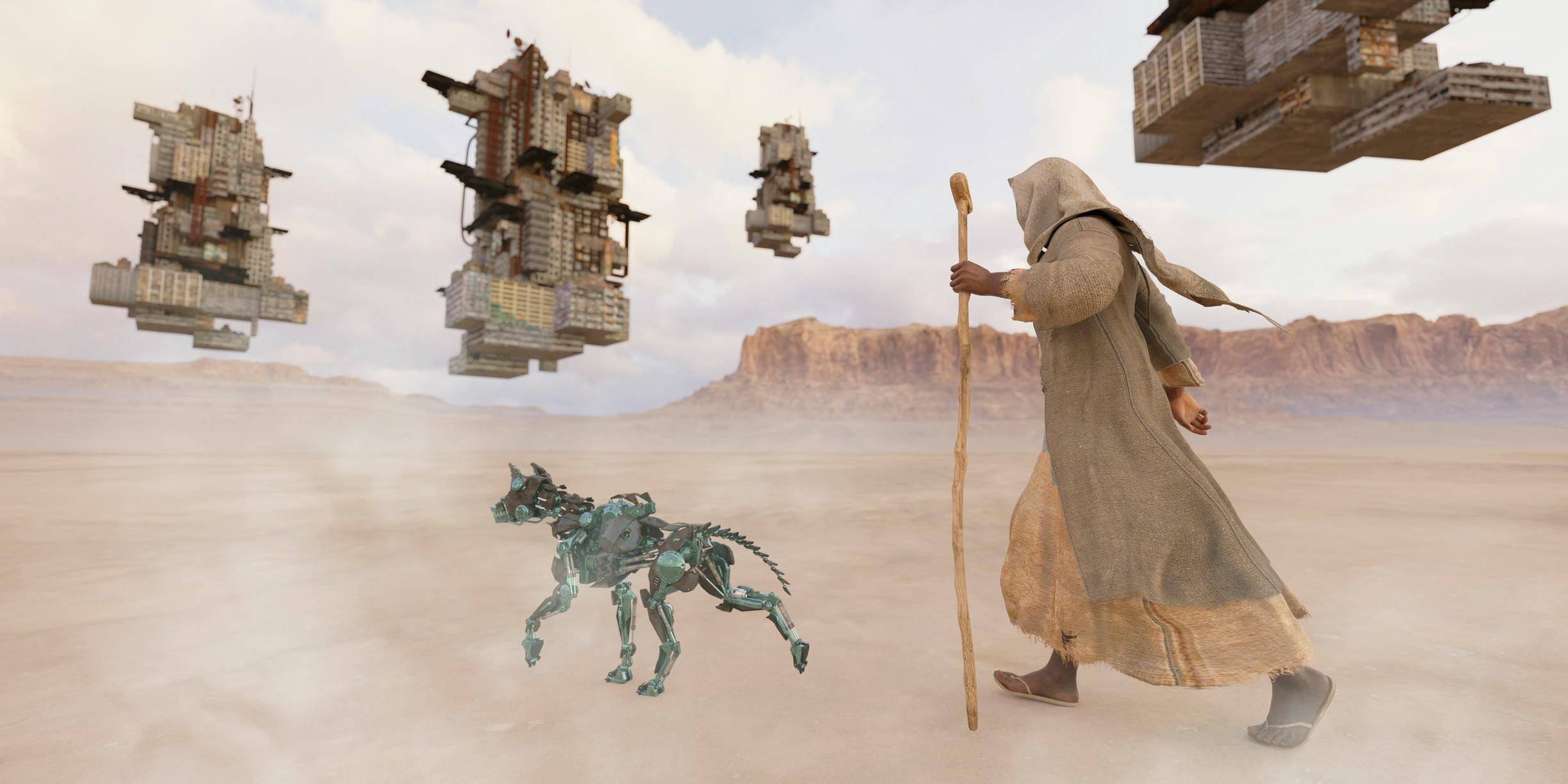
Man in desert with robodog and floating tower blocks
This is what you get when you search ‘dystopia’ in Getty Images. (Getty Images)

Software stocks crater as independent research piece details potential AI dystopian scenario

The lowlights in this dystopian not-too-distant future: unemployment high despite elevated nominal growth and productivity, and the stock market tumbling as credit stress from companies laid low by AI metastasizes.

Luke Kawa

Software stocks are getting shellacked as a post published by Citrini Research and Lotus Technology Management managing partner Alap Shah has sharpened attention on the magnitude and breadth of losers from the AI boom.

The piece, titled “The 2028 Global Intelligence Crisis,” is a hypothetical scenario analysis exploring the left-tail risks in two years’ time in a world where there’s an aggressive AI build-out and adoption of AI agents.

“What follows is a scenario, not a prediction,” the authors wrote. “Hopefully, reading this leaves you more prepared for potential left tail risks as AI makes the economy increasingly weird.”

The original tweet with a link to the piece from Citrini Research, which was founded by James van Geelen, has received 4.5 million views, been retweeted 2,100 times, and bookmarked 12,000 times, per X. Van Geelen’s profile is also among the top two most viewed on the Bloomberg Terminal over the past hour, as of 11 a.m. ET, recently surpassing baseball legend Yogi Berra (?!?).

“What if our AI bullishness continues to be right... and what if that’s actually bearish?” they wrote.

The lowlights in this dystopian not-too-distant future: unemployment high despite elevated nominal growth and productivity, and the stock market tumbling as credit stress from companies laid low by AI metastasizes.

The hypothetical pain points for the software industry include:

  • Software-as-a-service companies forced to offer steep discounts to customers for 2027 renewals to avoid being displaced by new AI tools;

  • And “systems of record” like ServiceNow issuing dire results and job cuts as the potential for in-house builds weigh on growth and pricing.

CrowdStrike, DocuSign, AppLovin, Atlassian, GitLab, Workday, Datadog, Asana, Salesforce, Oracle, Adobe, ServiceNow, and Palantir are among the names getting crushed on Monday.

A future in which AI agents thoroughly conquer e-commerce, handling transactions on behalf of humans, could also leave payments companies vulnerable, the authors added.

Mastercard, Visa, American Express, Synchrony Financial, and Capital One are stocks that are all suffering from severe selling pressure on Monday which were flagged in the scenario analysis as facing headwinds from agents looking to avoid fees and white-collar workers being displaced.

Do read the entire piece here. It’s often remarked that a lack of discipline is a surefire sign of a poor investor, but in my opinion — and personal experience! — a lack of imagination can be just as much of a shortcoming. Having the open-mindedness and creativity to envision what could happen while developing and stress-testing your assumptions can often be a very helpful way to identify opportunities in financial markets.

More Markets

See all Markets
markets

Hardware stocks jump thanks to server demand and record Lenovo revenue

Server stocks are rallying as Dell, Super Micro Computer, and Hewlett Packard Enterprise ride the momentum of Hong Kong-based Lenovo. The PC makers stock rose 19% on Friday, hitting an all-time high, on record Q4 earnings.

Powering the positive earnings report was the companys AI-related revenue, which grew 84% in the fourth quarter and now makes up over a third of total revenue. Investors seem to think the increased demand for servers could have trickle-down effects for other companies.

The companys results and commentary reinforced the outlook for strong AI-infrastructure demand while indicating resilient broader traditional server and storage spending, wrote Woo Jin Ho, a senior technology analyst at Bloomberg Intelligence. Lenovos $21 billion AI-server pipeline and remarks that demand is outpacing supply support Dells AI-demand momentum and point to robust orders.

AIs insatiable computing demand is reshaping the hardware industry and driving up server demand.

Dell will report first-quarter earnings on Thursday, May 28.

Policeman with Piercing Eyes

Take-Two’s “GTA 6” forecast feels absurdly conservative

Take-Two issued a 2027 net bookings forecast about $1 billion below Wall Street’s estimates. The stock is falling on Friday.

The D-Wave 2X quantum system, is operated at the NASA Advanced Supercomputing facility's Quantum Artificial Intelligence Laboratory at NASA's Ames Research Center in Mountain View, Calif., as seen on Tuesday December 8, 2015.

Quantum computing CEOs hope “validating” government backing proves their technology is no longer speculative

The government funding is a push to boost the foundational elements of quantum computing to get the industry ready for prime time. The CEOs of Infleqtion and D-Wave give us their thoughts.

Luke Kawa5/22/26
markets

Ross Stores surges as Q1 results beat expectations, full-year guidance raised

Ross shares are rising after the company delivered strong Q1 results, with sales topping Wall Street’s projections.

The stock soared 6.3% just after the open.

Key numbers:

  • Earnings per share of $2.02 vs. $1.47 year over year (estimate: $1.72).

  • Sales of $6.01 billion, up 21% year over year (estimate: $5.61 billion).

  • Comparable sales growth of 17% (estimate: 8.58%).

CEO Jim Conroy attributed the results to better traffic in stores. “Customer traffic was the primary driver of the strong sales trend as compelling merchandise assortments, higher customer acquisition and engagement from our ongoing marketing initiatives, and an improved in‑store experience are resonating with shoppers.”

The company also noted that transaction volume grew across all key demographics, including “income levels, ethnicities, and age groups, including younger customers.” Sales were also likely buoyed by standard seasonal tailwinds, including consumer spending from tax refunds.

Backed by the strong quarter, the company lifted its full-year targets. Ross now projects same-store sales growth of 6% to 7%, up from the prior forecast of 3% to 4%, topping Wall Street’s estimate of 4.64%. It boosted its annual EPS guidance to a range of $7.50 to $7.74, versus the prior outlook of $7.02 to $7.36.

Ross Stores has been one of the retail sector’s standout performers this year, rising around 20% year to date as of Thursday’s close.

Latest Stories

Sherwood Media, LLC and Chartr Limited produce fresh and unique perspectives on topical financial news and are fully owned subsidiaries of Robinhood Markets, Inc., and any views expressed here do not necessarily reflect the views of any other Robinhood affiliate, including Robinhood Markets, Inc., Robinhood Financial LLC, Robinhood Securities, LLC, Robinhood Crypto, LLC, Robinhood Money, LLC, Robinhood U.K. Ltd, Robinhood Derivatives, LLC, Robinhood Gold, LLC, Robinhood Asset Management, LLC, Robinhood Credit, Inc., Robinhood Ventures DE, LLC and, where applicable, its managed investment vehicles.

