

Markets
markets
Luke Kawa

Super Micro the worst performer in the Nasdaq 100 right before it’s booted from the index

Super Micro Computer is taking one on the chin this morning after the Nasdaq announced that its stock would be removed from its closely followed Nasdaq 100 Index.

CEO Charles Liang said he was “confident” the company would stay in the index last week, while investors voted with their feet and the stock suffered a 17% shellacking.

The move is emblematic of how dramatic the reversal in the server company’s fortunes have been this year: from a more than 300% year-to-date gain by its mid-March zenith that saw Super Micro Computer get added to the Nasdaq 100 in mid-July, to a drawdown that saw the stock down more than 80% amid alleged accounting irregularities, delays in filing key financial reports, and the resignation of its auditor.

The stock has doubled on three separate occasions this year, but is now up less than 10% year to date.

Its ouster is a big deal because hundreds of billions of assets are effectively tied to the Nasdaq 100, most notably the Invesco QQQ Trust, commonly known as the QQQ, which, loosely speaking, flows out of the exiled and into the new entrants. That’s the benefit of being added to major indexes — the quiet part said out loud by a Palantir board member ahead of its addition to the Nasdaq 100, also announced on Friday.

Super Micro’s Monday blues also stand in stark contrast to the pops in the other two stocks kicked out of the tech-heavy gauge (Moderna and Illumina) on market open.

In early trading, the stock is the worst-performing member of the index it’ll soon be booted from.

More Markets

See all Markets
markets

Amazon introduces one- and three-hour delivery options in hundreds of new towns and cities

Harder, better, stronger, faster... Amazon, not content with completely altering our expectations for how quickly our goods should arrive, is rolling out one- and three-hour deliveries in new cities in the US as it continues to double down on ultrafast delivery.

Per the company’s press release, one-hour delivery is now available in “hundreds of cities and towns” in the US, and three-hour options are offered in “over 2,000 cities and towns,” both available seven days a week though their regular same-day shopping experience. More than 90,000 products, which are typically available in local supercenters, are currently eligible for delivery under the two plans, and Amazon expects to bring the new scheme to more areas in the coming months.

Delivery fees for Prime members are set at $9.99 for one-hour delivery and $4.99 for three hours, though this price range more than doubles to $19.99 and $14.99, respectively, for customers without a Prime membership.

Regarding the new delivery options, Udit Madan, Amazon’s senior vice president of worldwide operations, said: “we’re excited to say that two decades after Prime launched, we’re still innovating to make delivery even faster, while maintaining the same everyday low prices and vast selection Amazon is known for.”

Indeed, since it launched same-day delivery in 2015, Amazon has been experimenting with a number of ultrafast delivery options, including recently piloting a 30-minute delivery service in selected US cities, built on its network of fulfillment centers and on-demand workers. The e-commerce giant’s latest push also comes as competitors like Walmart started to boost its delivery capacity, touting that it can deliver to 95% of American households in less than three hours.

markets

Oil’s retreat propels US stocks higher

Front-month West Texas Intermediate futures are down more than 4%, while Brent futures are off more than 2% as of 1:25 p.m. ET as traders glom on to some optimistic signs about the flow of oil through the all-important Strait of Hormuz:

  • A Pakistani-owned tanker passed through the strait this weekend while broadcasting its signal, per Reuters, “indicating ‌that some countries are able to negotiate safe passage for their vessels despite the U.S.-Israeli war on Iran.”

  • US President Donald Trump said that some “fairly local” countries would soon be helping ships traverse the strait (while having added that other countries are “not enthusiastic” about the prospect of participating).

The SPDR S&P 500 ETF and Invesco QQQ Trust are both up over 1% amid oil’s retreat.

That being said, the news flow is far from universally positive.

Reuters reports that the UAE’s crude output has been cut in half since the Mideast conflict started; Bloomberg says Kuwait’s production has suffered a similar decline.

  • A Pakistani-owned tanker passed through the strait this weekend while broadcasting its signal, per Reuters, “indicating ‌that some countries are able to negotiate safe passage for their vessels despite the U.S.-Israeli war on Iran.”

  • US President Donald Trump said that some “fairly local” countries would soon be helping ships traverse the strait (while having added that other countries are “not enthusiastic” about the prospect of participating).

The SPDR S&P 500 ETF and Invesco QQQ Trust are both up over 1% amid oil’s retreat.

That being said, the news flow is far from universally positive.

Reuters reports that the UAE’s crude output has been cut in half since the Mideast conflict started; Bloomberg says Kuwait’s production has suffered a similar decline.

markets

Sandisk and memory stocks rip ahead of Nvidia CEO’s speech

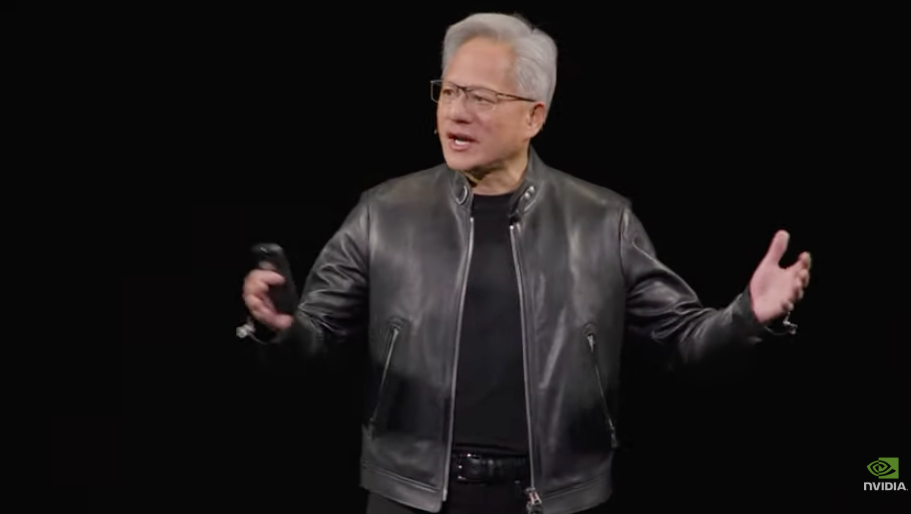
Memory stocks such as Sandisk, Micron, and disk drive makers Western Digital and Seagate sprinted ahead Monday, as this week’s big AI conference for tech bellwether Nvidia gets underway with a speech from the CEO slated for this afternoon.

As Luke Kawa pointed out earlier, CEO Jensen Huang’s speechifying at high-profile company announcements or industry events hasn’t always been a good thing for Nvidia shares. (The chip designer is holding its GPU Technology Conference, or GTC, this week.)

But Huang’s pronouncements have, at times, been pretty dang helpful for share prices of some companies in the orbit of the AI gods. Perhaps foremost among them are the memory stocks that have blasted toward the top of the S&P 500 in terms of price performance in recent years.

Case in point: the nearly 30% gain that Sandisk posted on January 6, the day after Huang’s keynote speech at the Consumer Electronics Show in Las Vegas, in which he spotlighted memory as a key bottleneck constraining the AI build-out. (Fellow memory plays Western Digital, Seagate Technology Holdings, and Micron also posted double-digit gains that day.)

Memory stocks have been the highest-profile outlet for bullish AI industry impulses this year, and notable comments from Huang could put the wind back in their sails after they had slowed in recent weeks.

Of course, there are also other things happening in the sector, such as Micron’s announcement Sunday that it completed an acquisition of a new manufacturing site in Taiwan.

Either way, memory stocks are pushing higher after having exhaled a bit lately.

But Huang’s pronouncements have, at times, been pretty dang helpful for share prices of some companies in the orbit of the AI gods. Perhaps foremost among them are the memory stocks that have blasted toward the top of the S&P 500 in terms of price performance in recent years.

Case in point: the nearly 30% gain that Sandisk posted on January 6, the day after Huang’s keynote speech at the Consumer Electronics Show in Las Vegas, in which he spotlighted memory as a key bottleneck constraining the AI build-out. (Fellow memory plays Western Digital, Seagate Technology Holdings, and Micron also posted double-digit gains that day.)

Memory stocks have been the highest-profile outlet for bullish AI industry impulses this year, and notable comments from Huang could put the wind back in their sails after they had slowed in recent weeks.

Of course, there are also other things happening in the sector, such as Micron’s announcement Sunday that it completed an acquisition of a new manufacturing site in Taiwan.

Either way, memory stocks are pushing higher after having exhaled a bit lately.

Latest Stories

Sherwood Media, LLC produces fresh and unique perspectives on topical financial news and is a fully owned subsidiary of Robinhood Markets, Inc., and any views expressed here do not necessarily reflect the views of any other Robinhood affiliate, including Robinhood Markets, Inc., Robinhood Financial LLC, Robinhood Securities, LLC, Robinhood Crypto, LLC, Robinhood Derivatives, LLC, or Robinhood Money, LLC. Futures and event contracts are offered through Robinhood Derivatives, LLC.