
Markets
Donald Trump Campaigns For President In Arizona's Prescott Valley
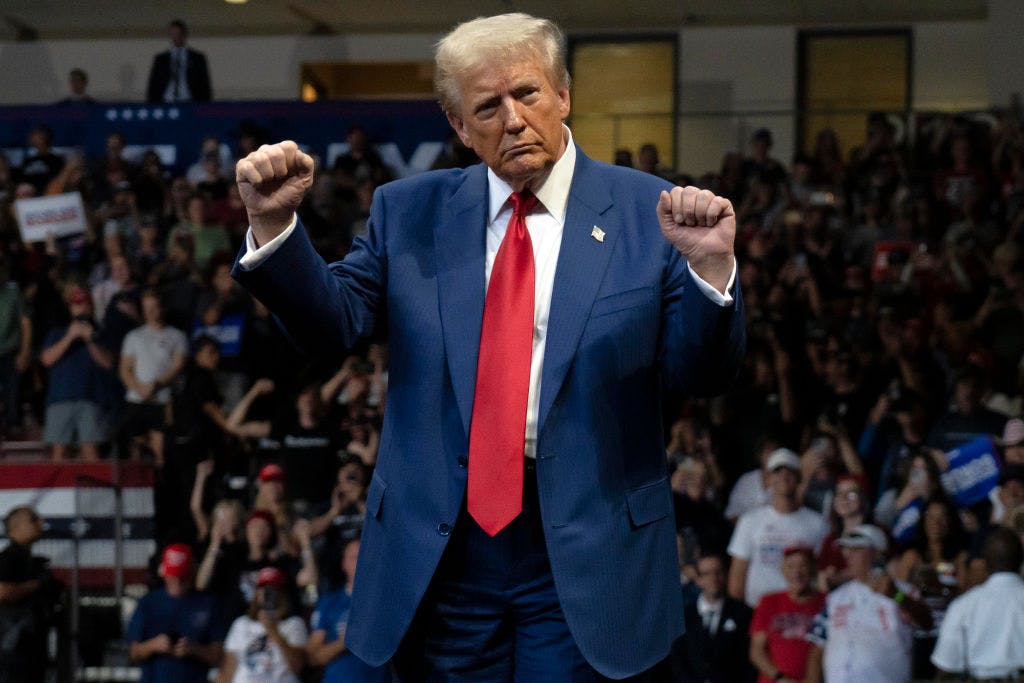
Donald Trump dances during a campaign rally (Rebecca Noble/Getty Images)
the potus who cried tariff?

Investors think tariffs aren’t a top priority for Trump, sending vulnerable stocks and sectors soaring

The market is betting (hoping?) that the president’s bark is worse than his bite.

Luke Kawa

On the first trading day of the Trump administration, investors flocked to the parts of the stock market that would be most imperiled if the president’s rhetoric on trade throughout his entire life as a public figure is matched by his actions.

The Industrial Select Sector SPDR Fund — which slumped nearly 15% in 2018, the year Trump ratcheted up trade levies, versus a 6.2% decline for the S&P 500 — was the best-performing sector on Tuesday.

And a basket of stocks compiled by Goldman Sachs as being particularly vulnerable to trade barriers, a group which includes Nike, Target, and Ralph Lauren, gained 3% on the day. This basket also had its best day relative to a cohort of “tariff immune” stocks since November 7, a session when tariff-sensitive stocks enjoyed a relief rally after a massive knee-jerk bout of postelection underperformance.

While the T-word (tariff!) did come up in Trump’s inaugural address, markets are believing that this is much more of a negotiating ploy than policy. Even his past explicit threat to slap 25% tariffs on Canada and Mexico on February 1 is being faded aggressively in betting markets (which, however, do see smaller taxes being enacted against the USMCA partners).

This may reek of complacency, but investors have good reasons for shrugging off some of Trump’s remarks on trade.
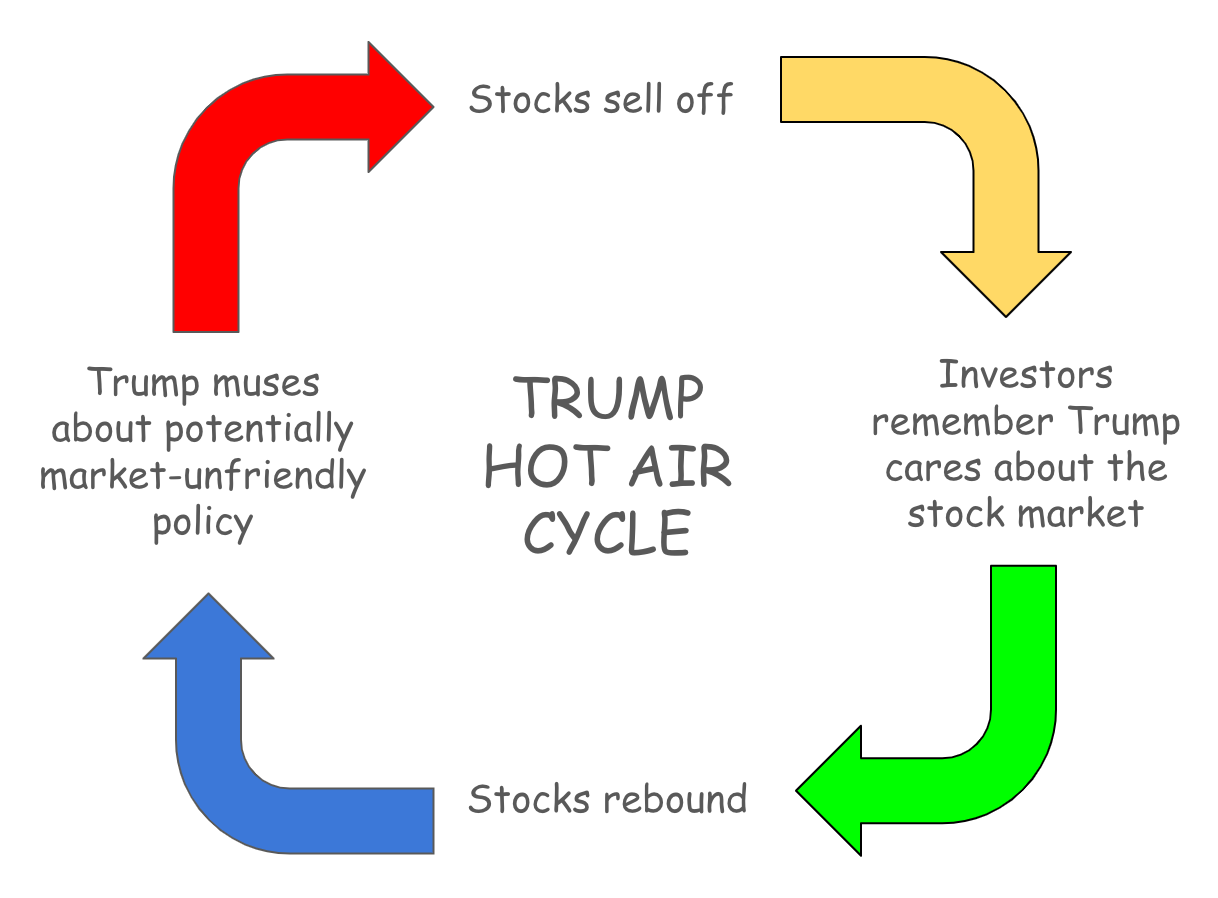
Trump Hot Air Cycle
Source: Sherwood News

More Markets

See all Markets
markets

Nike’s China business declines for seventh straight quarter

Sportswear kingpin Nike reported results for its third quarter, which ended in February, after the bell Tuesday. The stock fell about 3% in after-hours trading.

For fiscal Q3, Nike reported:

  • Earnings of $0.35 per share, comfortably above the Wall Street consensus of $0.29 per share compiled by FactSet.

  • $11.28 billion in total revenue, roughly in line with the $11.26 billion estimate.

Nike’s sales in China — where the company earns about 15% of its revenue — fell 7% to $1.62 billion. That’s its seventh straight quarter of sales declines in the market, though this quarter’s was less than feared. The company had issued weak guidance for this quarter considering continued softness in the region.

“This quarter we took meaningful actions to improve the health and quality of our business,” said Nike CEO Elliott Hill. “The pace of progress is different across the portfolio and the areas we prioritized first continue to drive momentum.”

Nike shares are trading near decade lows this month, as tariffs continue to weigh on profits and shipping costs rise amid the war with Iran. As of Tuesday’s close, the stock was down 17% year to date.

Oil-sensitive travel stocks pop following Iran state media reporting on potential war resolution

Travel stocks are surging on Tuesday as oil prices fall following reports from Iranian state media that President Masoud Pezeshkian said the country has the necessary will to end this war, but would only do so with guarantees that prevent the recurrence of aggression.

The war has sent oil prices and refining margins surging this month, causing airlines and cruise lines to cut profit forecasts despite reported high demand.

Following Tuesday’s update, shares of the big four US airlines (Delta Air Lines, United Airlines, American Airlines, and Southwest Airlines) all climbed, along with smaller rivals including JetBlue. US airlines have stopped fuel hedging in recent years, increasing their exposure to upward swings in oil prices.

Cruise stocks also rallied, with Carnival and Norwegian up more than 6% and Royal Caribbean up about 5%.

markets

The FDA is expected to lift restrictions on certain peptides, the NYT reports

The Food and Drug Administration is expected to lift restrictions on certain peptides, allowing the experimental, often injectable substances to be sold by compounding pharmacies, The New York Times reported Tuesday.

The potential move was previously reported by The Wall Street Journal, and teased by Health Secretary Robert F. Kennedy Jr. on the “Joe Rogan Experience” podcast in late February.

Peptides have boomed in popularity recently, with search interest for “peptides” surpassing “ozempic” this month. Many of them are currently understudied and not approved for human use, a rule consumers are able to bypass by purchasing them from suppliers that sell them for, ostensibly, research purposes only.

As reports of the FDA changing its stance of peptides mount, consumer health companies like Hims & Hers and Superpower have been getting ready to roll out their peptide offerings as soon as they get the FDA's blessing.

Peptides have boomed in popularity recently, with search interest for “peptides” surpassing “ozempic” this month. Many of them are currently understudied and not approved for human use, a rule consumers are able to bypass by purchasing them from suppliers that sell them for, ostensibly, research purposes only.

As reports of the FDA changing its stance of peptides mount, consumer health companies like Hims & Hers and Superpower have been getting ready to roll out their peptide offerings as soon as they get the FDA's blessing.

markets

Memory stocks bounce as Bernstein analyst calls TurboQuant fears “overdone”

Memory stocks rose Tuesday, after Bernstein analysts called the recent panic over Google’s TurboQuant AI algorithm “overdone.”

Bernstein analyst Mark Newman wrote:

“[Hard disk drive] and Memory stocks have sold off significantly due in part to fears from Google’s TurboQuant report. This however, should have zero impact on HDD demand and negligible impact on NAND demand. Given the stock sell-off we see this as an attractive entry point for Seagate Technology Holdings, Western Digital and Sandisk’s and upgrade WDC to Outperform.”

All three stocks were up early Tuesday, as was memory chip maker Micron.

Todays rally stands in stark contrast to the pummeling these shares have endured over the last week, after Google Research published a technical paper on March 24 detailing its TurboQuant AI algorithm, which compresses the amount of data associated with AI operations without affecting the accuracy of AI models.

That was seen as a threat to surging AI demand for memory storage, which has supercharged prices for memory chips and memory-related stocks over the last year.

Latest Stories

Sherwood Media, LLC produces fresh and unique perspectives on topical financial news and is a fully owned subsidiary of Robinhood Markets, Inc., and any views expressed here do not necessarily reflect the views of any other Robinhood affiliate, including Robinhood Markets, Inc., Robinhood Financial LLC, Robinhood Securities, LLC, Robinhood Crypto, LLC, Robinhood Derivatives, LLC, or Robinhood Money, LLC. Futures and event contracts are offered through Robinhood Derivatives, LLC.

