

The SEC’s state-of-the-art market monitoring system is fully operational after 14 years — just in time for legal challenges to kill it.
Regulators could potentially lose the CAT, their main tool for monitoring markets.
It’s a remarkably simple name for something so complicated: the CAT. But, Schrödinger's aside, this may be the most complex CAT ever imagined.
The Consolidated Audit Trail, or CAT, is a massive repository of trading data that US regulators use to follow the action and perform investigations in today’s algorithmically enhanced, high-speed financial markets.
Every day, it collects more than 400 billion data points from the country’s 24 stock and options exchanges, as well as dozens of dark pools and Wall Street trading desks, creating a constellation of information on tens of millions of transactions.
It has been online in bits and pieces for a few years, but since May 31 — the deadline for full reporting compliance from brokers — it has been fully operational, the culmination of a 14-year bureaucratic ultramarathon that entailed endless rounds of congressional hearings, industry meetings, panel discussions, SEC proposals, comment periods, rule-makings, negotiations with contractors, and, crucially, intra-industry wrangling over who would pay for it.
Importantly, since 2021, when the previous system — Finra’s Order Audit Trail System (OATS) — used for market investigations was retired, the CAT has been basically the only way market regulators can keep a close eye on the markets.
"When the CAT came online, regulators and brokers stopped using OATS, the decades old reporting and surveillance regime,” said Tyler Gellasch, CEO of the Healthy Markets Association, a non-profit focused on increasing transparency and reducing conflicts of interest in the capital markets. He added: “There is no substitute or backup for the CAT."
And that could be a big problem.
“Fatal” admission
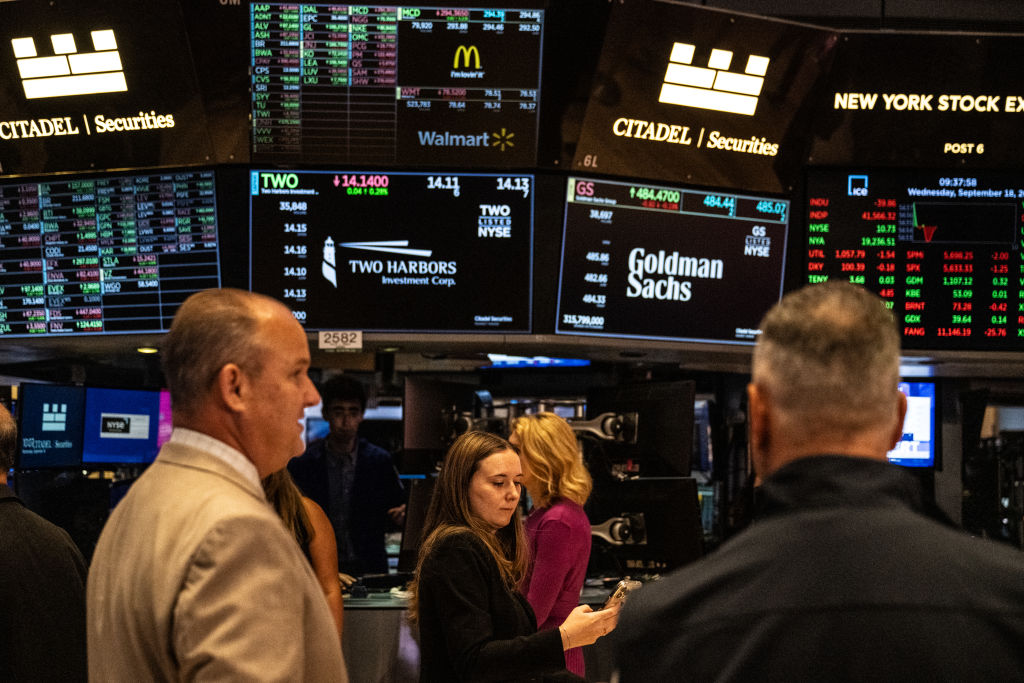
Last October, market-making giant Citadel Securities and the American Securities Association — a trade group — filed a lawsuit seeking to block rules the Securities & Exchange Commission established that determined who would pay for operating the CAT.
Their primary argument is that that brokerage firms — and by extension, they say, investors — were unfairly saddled with the entirety of the costs of operating the database, estimated at roughly $200 million a year.
But in their brief to the 11th US Circuit Court of Appeals, they also go much further.
Leaning heavily on a recent string of Supreme Court decisions curtailing the regulatory power of federal agencies, Citadel and the ASA argue that the very creation of the CAT system was an unlawful power grab by the SEC. Therefore, they say, this product of roughly a decade and a half of industry and government work — with start-up costs of more than $700 million — must be scrapped.
“The CAT itself — and thus the order providing for its funding — exceeds the Commission’s statutory authority. The SEC concedes there is no ‘express authorization for CAT by Congress,’ and that admission is fatal to the system’s validity,” their attorneys argue, concluding, “For that fundamental reason alone, it must be set aside.”
When asked, representatives from Citadel Securities and the American Securities Association decline to provide additional comment.
“Radical change”
When the CAT was first conceived of, such arguments were likely to have been laughed out of court.
For decades, those who argued that federal agencies had overstepped congressional authority faced exceedingly long odds of overturning decisions those agencies made. A widely cited 1984 Supreme Court decision — establishing what’s known as Chevron deference — required lower courts to defer to agencies on such questions as long as these agencies made “reasonable interpretations” based on the law.
But in June, the Supreme Court effectively ended the 40-year run for this judicial rule of thumb, directing all federal courts that the deference was no longer a guidepost for how such cases should be handled.
“Courts must exercise their independent judgment in deciding whether an agency has acted within its statutory authority,” Chief Supreme Court Justice John Roberts wrote in the decision upending the status quo, known as Loper Bright.
Now, experts say there’s a very real chance the 11th Circuit — a venue where the majority of judges have been appointed by Republicans — could side with those trying to do away with the CAT in its entirety.
“This is a period of fairly radical change in the law,” said Aaron Saiger, a Fordham Law professor who specializes in administrative law — the body of law that covers interactions with federal agencies.
Saiger says judges may they feel that if the new CAT system doesn’t pass the Supreme Court’s standard, it may leave them few options but to upend the system, regardless of the impact such a decision could have on how the markets are policed.
Such a decision, depending on how it was imposed, could leave the SEC flying blind when it comes to investigating suspicious trades and performing its fundamental role as the top cop patrolling the US securities markets.
“If the 11th Circuit were to strike down the commission’s rule developing the CAT, it would cause the agency significant consequences,” said Daniel Hawke, a partner at the law firm Arnold & Porter and former chief of the SEC's Market Abuse Unit.
The CAT first sprang to life as a proposal following the so-called Flash Crash of May 6, 2010.
Now ancient history, the Flash Crash was a harrowing 37-minute episode in which the market plunged nearly 10%, momentarily erasing $1 trillion in market capitalization, before suddenly snapping back almost as much.
The jolt — which had no obvious trigger — was seen as evidence that then-emergent electronic trading algorithms could run amok, posing risks to the investors, capital markets, and, perhaps, the economy, which was in the midst of a painfully slow recovery from the financial crisis of 2008-09.
Congress demanded to know what had happened.
But it took months for the SEC and the Commodities Futures Trading Commission to come up with an answer, a fact they blamed on outdated systems they then used to monitor markets. (For what it’s worth, the answer they ultimately came up with, which pointed to trades put on by a US mutual fund family, also turned out to be incorrect, but that’s a different story.)
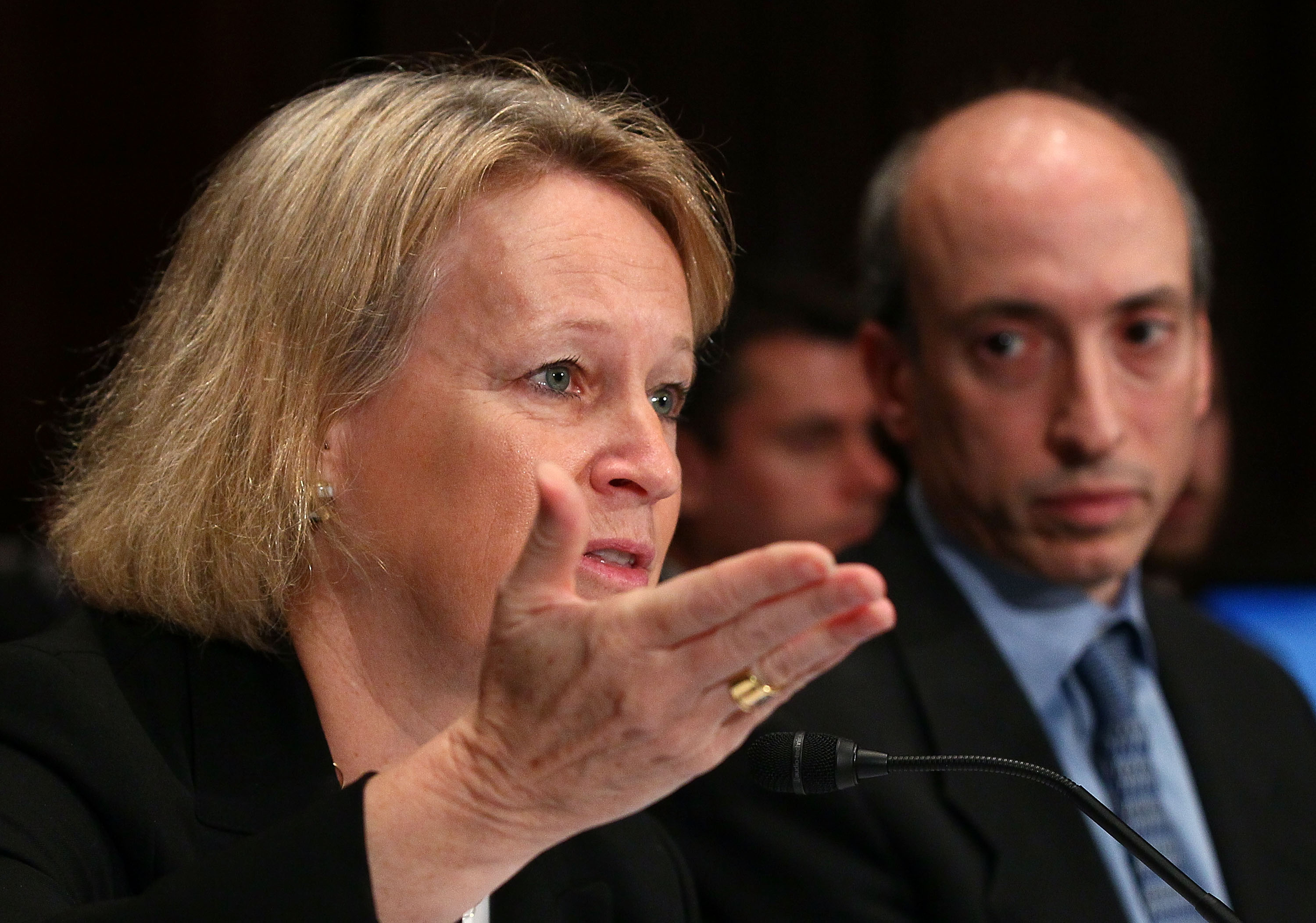
“I think our problem is we have so many markets and we have so many venues where trades are executed that [it’s] just getting it to a point where ... consolidated data about the equity markets would be an enormous step forward,” then-SEC Chair Mary Schapiro told senators during testimony on the Flash Crash in 2010.
Two years later, the SEC approved a rule directing exchanges and self-regulatory organizations such as Finra — which do much of the day-to-day regulation of US securities markets — to create a new system that consolidated the various repositories of market data regulators used into a single database. The then-current system of data management, the rule said, was “outdated and inadequate to effectively oversee a complex, dispersed, and highly automated national market system.”
Easier said than done
It was the start of a 12-year slog to create the CAT, a painfully long implementation period that critics say reflects a strategic mistake the SEC made at the outset.
Rather than establishing the rules and parameters for the CAT itself, it delegated that authority to stock exchanges and other self-regulatory organizations, relying on them to come up with the plans to establish and pay for the audit trail system, which the SEC would then approve or reject. This approach embedded quite a few conflicts of interest into the process.
For instance, Finra, which was one of the major players in creating the CAT, had for decades maintained OATS, the CAT’s predecessor system. As originally envisioned, the CAT, some observers thought, posed something of a threat to Finra’s stature among self-regulatory organizations.
Another potential conflict was the fact that exchanges and brokerage firms, also major players in the establishment of the system, would ultimately be on the hook to pay much of the estimated costs of building it, as well as its annual operating costs thereafter. That, some say, created an incentive for the industry to take its take time in getting the CAT up and running.
At the same time, creating the database was also a genuinely complex undertaking, with a nearly never-ending series of details and industry standards that needed ironing out.
Case in point: In order to effectively follow the flow of securities and money through the markets — as the CAT was supposed to let regulators do — all trades had to be accurately timestamped.
That sounds logical enough. But in practice that means developing policies and practices to ensure that the computerized clocks used by trading systems at thousands of brokers and exchanges were always correctly synchronized to a common standard. (They settled on the atomic clock maintained by National Institute of Standards.) But how granular should time stamps on trades be required to be? Milliseconds? Microseconds? Such precision would be crucial to keep track of superfast trading. Figuring out the answers to all these questions took time. (Orders are to be stamped by the millisecond, at least.)
Unsurprisingly, deadlines were repeatedly missed and extended. Costs ballooned. An outside vendor to operate the CAT was hired and then fired.
Still, by November 15, 2018, large brokerage firms were submitting data. In other words, the CAT was alive, even if it offered slightly reduced functionality than was first hoped.
Smaller brokerage firms followed the next year, with more participants phased to reporting trade data to the CAT during the subsequent years.
With the passage of a May 31, 2024, deadline for compliance with reporting of customer and account information — bare-bones identifying information like name, birthday, and address kept in a parallel database regulators can access — the CAT is fully operational.
Does it work?
Strangely, little is known about how the SEC and regulators are actually using this trove of daily data the CAT snares. The SEC did not to respond to multiple attempts to speak to officials about the importance of the CAT to their market surveillance and enforcement role.
In recent years, the commission — and the self-regulatory organizations that also enforce securities laws — have published hundreds of reports of disciplinary actions. Few have contained any references to the CAT. Most of those that do are related to disciplinary actions stemming from brokerage firm failures to report required data to the CAT itself.
But there have been some indications that the CAT is capable of drawing blood.
In May, former TIAA-CREF trader Lawrence Billimek was sentenced to 70 months in prison by a federal judge in the Southern District of New York, after pleading guilty to securities fraud involving one of the largest front-running schemes ever.
Billimek was indicted in December 2022, after “SEC staff analyzed trading using the Consolidated Audit Trail (CAT) database,” according to a press release at the time, to identify suspicious trading involving Billimek and retired financial professional Alan Williams, of Oregon.
The government alleged that Billimek — an equities trader at TIAA-CREF’s asset management division Nuveen — would tip Williams off to large trades that Nuveen was preparing to make which could, and did, affect market prices. That allowed Williams to place trades ahead of time, and profit when Nuveen trades moved the market.
In terms of securities fraud, this is one of the oldest tricks in the book, well-trodden ground for traders who are willing to break the law to pad their personal accounts.
And yet, Billimek and Williams were remarkably successful at it for six years until the CAT was apparently able to help regulators catch it. The SEC says the pair executed more than 1,697 trades, netting roughly $47 million in ill-gotten gains. Over that period, their “dollar-weighted win rate,” an SEC metric of trading success, hovered at more than 90%. (That means $900,000 of every $1 million of trades that were placed ended up making them money.)
“SEC staff will utilize data analytics tools at our disposal to find and charge those who engage in illegal trading of securities,” said Joseph G. Sansone, head of the SEC Enforcement Division’s Market Abuse Unit, at the time of the indictment.
How much longer regulators will be able to use the CAT, however, hinges on how federal judges interpret the latest directives from the Supreme Court, and how willing they are to risk blinding, even temporarily, the efforts to monitor US markets.
Gellasch said he’s concerned. If the CAT were to be abolished by the courts, there would be substantial barriers to simply returning to the former system of market data collection.
Trying to bring back OATS to replace the CAT would require years of technology upgrades and extensive industry testing, as well as several more legal filings, all of which could be themselves challenged in court, Gellasch said.
“Nobody can just turn the old tools back on,” he said.
That’s part of the reason why his organization recently petitioned the SEC, urging the agency to completely revise the structure it used to create the CAT 14 years ago. In effect, he wants the CAT to be brought under the direct control of the SEC, rather than outsourcing it to self-regulatory agencies like Finra. In light of the changes to the courts, having the surveillance system remain outsourced could make it “too susceptible to legal challenge,” he said.
“The elimination of the CAT would leave the capital markets exposed to significant abuse,” Gellasch wrote in a letter to the SEC this month, “and regulators without any effective tools to protect them.”




