
Markets
Low Quality Stocks Outperforming High qualit y
(CSA Archive/Getty Images)

The stock market’s “flight to crap” faces a big test this week

Analysts say continued outperformance of “low-quality” stocks may depend the July inflation report due tomorrow.

This week could be a crucial one for the “flight to crap,” the evocative moniker Interactive Brokers’ Steve Sosnick bestowed on the market-beating romp we’ve seen in what might be described as “low-quality” shares.

It’s always a bit tricky clearly identifying what we mean by “low-quality.” Sometimes you only know ’em when you see them.

But Goldman Sachs publishes data on several thematic baskets that pass a more quantified muster, from its US Barra Low Quality Indexified basket to other thematically organized slugs of stocks that package up unprofitable tech companies or stocks with high levels of short interest — usually a sign that there’s some fundamental performance issue that’s attracted attention.

As you can see, they’ve all been flying since the market hit its tariff-related closing low on April 8.

But more than one analyst is calling out tomorrow’s CPI inflation report for July as a potential turning point for this trade, suggesting that much of the low-quality run-up is due to the pricing in of Fed rate cuts in the coming months.

If the July inflation report arrives hotter than expected — potentially making the Fed leery of cutting when it meets next month — that could undermine the logic behind the trade, they say.

In a note published Monday, Morgan Stanley’s chief US equity strategist, Mike Wilson, wrote of what might happen should inflation be slightly weak:

“What if we don’t see material signs of inflation pressure in the July CPI report? Bond market pricing of a September cut (currently at a ~90% probability) could rise further. This has the potential to catalyze a more durable rotation to small caps and lower quality stocks should it play out. In other words, we think it makes sense for equity investors to stay nimble around this week’s CPI report as a leadership shift under the surface of the market could take hold depending on the result.”

In a note published Friday, Goldman Sachs equity strategist David Kostin had a similar take:

“We expect the near-term path of economic growth and inflation data will determine the path of the Quality factor during the next few months... low-quality stocks will outperform if the economic growth outlook improves, or if inflation data or Fedspeak indicate a more dovish path of monetary policy than the market is currently pricing while the economic growth outlook remains constant.”

On the other hand, if tomorrow’s CPI numbers, due at 8:30 a.m. ET, come in hotter than expected — economists expect core year-over-year prices to be up 3% — it could spark a sell-off in some of the low-quality winners of recent months. That might make an otherwise sleepy, late summer week a bit more interesting.

More Markets

See all Markets
markets

Meta rallies after being named a “top pick” by Morgan Stanley

Meta is off to a strong start to the week after being named a new “top pick” of Morgan Stanley’s internet analysts.

Their case: the social media giant is cheap and commands an ever-increasing amount of eyeballs, which it’ll leverage to make money from its massive AI capex through nascent opportunities like agentic shopping and assistants.

“META sentiment has troughed due to GenAI ROIC and long-term positioning fears, and more recently macro ad market and regulatory question marks,” wrote analyst Brian Nowak. “In all, META now trades at ~15X our ’27 $36 EPS, 1 standard deviation below the long-term average, which creates a strong buying opportunity, in our view.”

Reported job cuts would also be “a bullish development” that boosts earnings, he added.

Even so, Nowak trimmed his price target on the stock to $775 from $825, which still represents upside of about 50%.

The hyperscalers have come under persistent pressure as investors remain reticent to bet that this capex binge will have a happy ending. Per The New York Times, Meta recently delayed the launch of its new model because of performance issues.

(That being said, the company’s latest earnings report did show that its ability to use AI tools to grow its top line remains impressive, even if its models aren’t best in class.)

markets

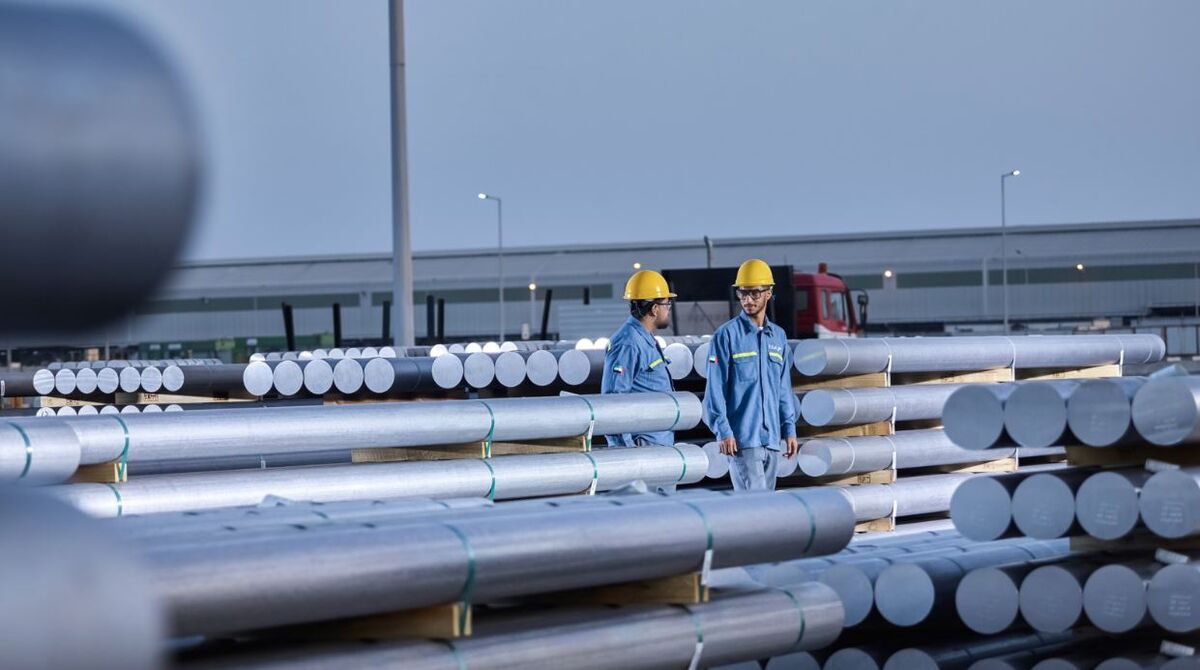
American aluminum stocks rip following strikes against Gulf’s giant smelters

Aluminum stocks soared Monday after Iran attacked major smelting operations in the Gulf region over the weekend.

Alcoa and Century Aluminum both surged Monday, after strikes Saturday hit aluminum plants in Bahrain and the United Arab Emirates. New York aluminum futures were up about 4% shortly after 11 a.m. ET.

Bloomberg reports that the Gulf is the source of roughly 9% of the world’s aluminum supply, which was already imperiled by the closure of the Strait of Hormuz.

Iran’s Revolutionary Guard Corps said the combined drone and missile attacks on the plants were justified by the aluminum producers’ links to the US military and aerospace industries in the region.

Producing aluminum is highly energy-intensive, and the Gulf has emerged as a center of the industry in recent years due to its energy assets. Emirates Global Aluminum, for example, is one of the world’s largest producers of the lightweight metal.

The attacks on the plants only add to the upward pressure on prices, as it can take months to restart closed smelters.

Bloomberg reports that the Gulf is the source of roughly 9% of the world’s aluminum supply, which was already imperiled by the closure of the Strait of Hormuz.

Iran’s Revolutionary Guard Corps said the combined drone and missile attacks on the plants were justified by the aluminum producers’ links to the US military and aerospace industries in the region.

Producing aluminum is highly energy-intensive, and the Gulf has emerged as a center of the industry in recent years due to its energy assets. Emirates Global Aluminum, for example, is one of the world’s largest producers of the lightweight metal.

The attacks on the plants only add to the upward pressure on prices, as it can take months to restart closed smelters.

markets

British government weighs removing Palantir from NHS data systems

Officials in the British government are exploring ways to eject defense, intelligence, and AI software company Palantir Technologies from data systems used by the National Health Service, the government-funded health system.

The Financial Times reports:

“The US company was awarded a seven-year £330mn contract in 2023 to create a data platform that collates health waiting lists, patient information and other sensitive data.

Its role has become an increasing source of controversy, given its ties to the US defence sector and its co-founder and CEO Alex Karp’s vocal support for Donald Trump’s immigration crackdown. MPs, NHS staff and medical trade unions have voiced concerns about Palantir’s suitability for managing data in national health systems.”

While Palantir’s AI software services business — aimed at corporate customers — is a fast-growing business line, the US government remains Palantir’s single largest source of revenue, accounting for $1.9 billion in sales in 2025. That’s almost as much as Palantir’s entire commercial division, which logged $2.1 billion in revenue in 2025.

But the company’s close ties to the US government — including providing services to US agencies such as Immigration and Customs Enforcement amid the Trump administration’s mass deportation program, as well as US intelligence and military services — have created resistance to growth in some other areas.

For instance, Switzerland repeatedly rejected Palantir systems, according to recent reporting from Swiss magazine Republik, after officials there raised concerns about data sovereignty and risks data could be accessed by the US government and intelligence services.

“The US company was awarded a seven-year £330mn contract in 2023 to create a data platform that collates health waiting lists, patient information and other sensitive data.

Its role has become an increasing source of controversy, given its ties to the US defence sector and its co-founder and CEO Alex Karp’s vocal support for Donald Trump’s immigration crackdown. MPs, NHS staff and medical trade unions have voiced concerns about Palantir’s suitability for managing data in national health systems.”

While Palantir’s AI software services business — aimed at corporate customers — is a fast-growing business line, the US government remains Palantir’s single largest source of revenue, accounting for $1.9 billion in sales in 2025. That’s almost as much as Palantir’s entire commercial division, which logged $2.1 billion in revenue in 2025.

But the company’s close ties to the US government — including providing services to US agencies such as Immigration and Customs Enforcement amid the Trump administration’s mass deportation program, as well as US intelligence and military services — have created resistance to growth in some other areas.

For instance, Switzerland repeatedly rejected Palantir systems, according to recent reporting from Swiss magazine Republik, after officials there raised concerns about data sovereignty and risks data could be accessed by the US government and intelligence services.

markets

Alaska Air lowers its Q1 profit forecast due to surging fuel costs

Alaska Air ticked down in premarket trading on Monday, following the carrier’s announcement that it has lowered its first-quarter profit guidance.

The airline now expects an adjusted loss per share of between $1.50 and $2 in Q1, deeper than its prior guidance range of a $0.50 to $1.50 loss per share.

Fueling the update is, what else, fuel costs. Alaska Air says that the refining margins for its cheapest jet fuel — sourced from Singapore and representing about 20% of overall supply — have spiked 400% since February, from an average of $0.45 per gallon to about $2.25 per gallon. Jet fuel refining margins have surged industrywide to 20-year highs amid the war in Iran, which in turn is sending fares higher.

Alaska said it’s seeing “encouraging revenue trends” heading into the peak summer travel season, despite severe flooding in Hawaii and reduced demand to Puerto Vallarta due to increased cartel violence.

Latest Stories

Sherwood Media, LLC produces fresh and unique perspectives on topical financial news and is a fully owned subsidiary of Robinhood Markets, Inc., and any views expressed here do not necessarily reflect the views of any other Robinhood affiliate, including Robinhood Markets, Inc., Robinhood Financial LLC, Robinhood Securities, LLC, Robinhood Crypto, LLC, Robinhood Derivatives, LLC, or Robinhood Money, LLC. Futures and event contracts are offered through Robinhood Derivatives, LLC.