


America’s homes, and the people who buy them, are getting older
A shortage of new construction is pushing buyers toward aging homes — and they’re not as affordable as they used to be.
Thanks to the combination of still elevated mortgage rates and house prices, which, at a national level, have been remarkably resilient in the face of higher borrowing costs, America’s post-Covid housing market is looking a little strange. In 2010, first-time home buyers were behind half of all purchases. Last year, they accounted for just 24%.
With millions of younger people frozen out, America’s older, wealthier cohorts have invested in real estate, sending the average age of buyers up significantly.
In 2024, the median age of first-time US homebuyers hit a record 38 years — the highest since data collection began in 1981 — per the National Association of Realtors. Overall, the average age of an American homebuyer also reached an all-time high of 56 years last year, a 44% increase from two decades ago, while for repeat buyers, the trend was even more stark.
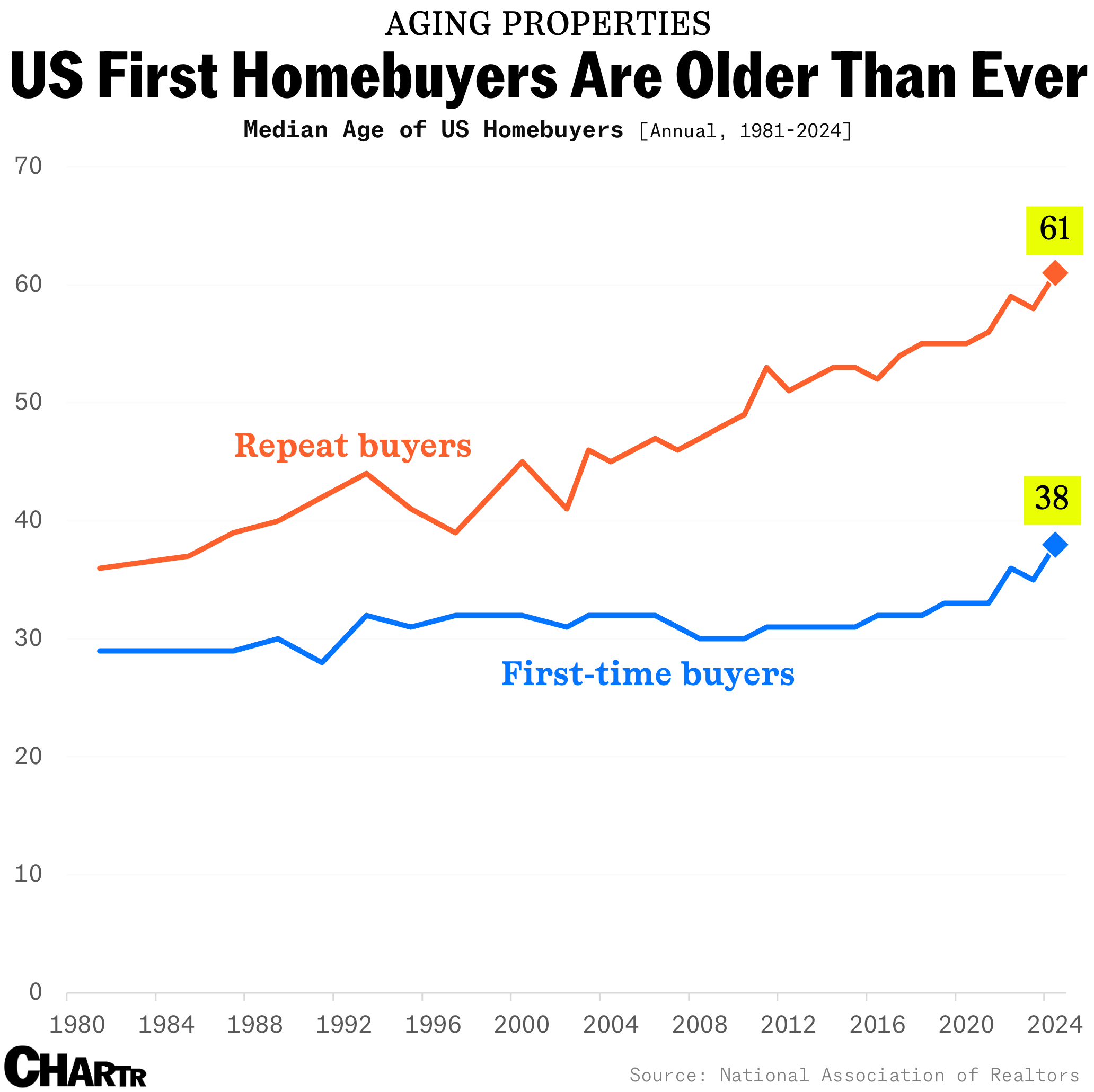
But it’s not just America’s homebuyers themselves that are getting older — the homes they’re buying have aged, too.
This old house
According to a new Redfin analysis, the median age of US homes sold in 2024 rose to a record 36 years, up from the 27 years in 2012. The trend might have a little less to do with vintage charm than you might think.
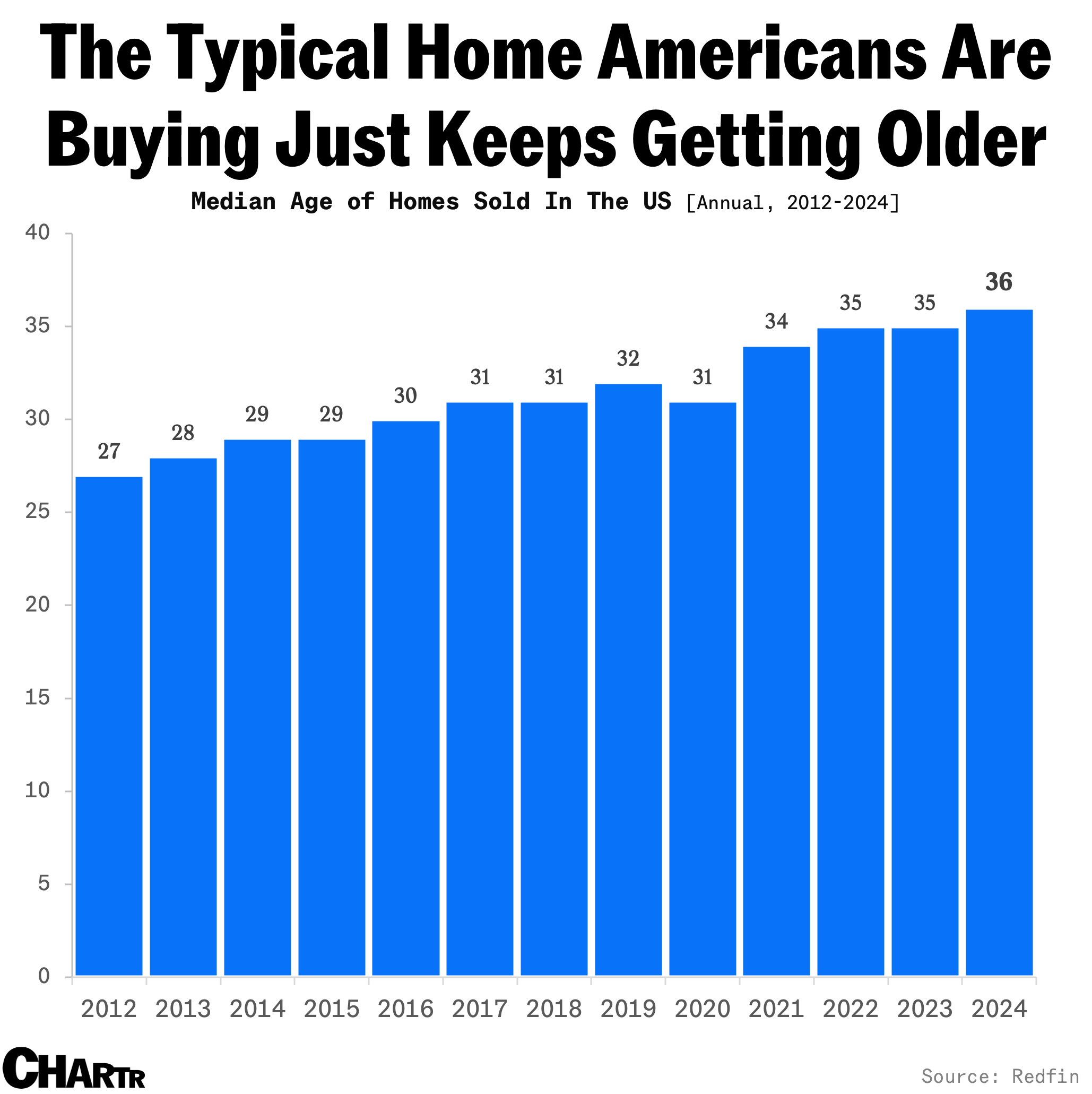
The biggest driver of America’s aging housing stock has been a sharp slowdown in new construction since the 2008 financial crisis, with the US drastically underbuilding for the decade or so that followed the housing bubble.
That’s the lowest share for any decade since the 1940s, when just 4.5% of current homes were built, as World War II stalled construction. While housing starts had gradually been picking up again, they have declined for three straight years since 2022, according to Census Bureau data.
Affordability has also played a role, as older homes typically come with lower price tags due to outdated infrastructures and the need for upgrades. Yet that price gap is narrowing. In 2012, homes over 30 years old sold for 19% less than the median price. By 2024, that discount had shrunk to 15%, as demand has risen in areas with aging housing stock, while new homes are increasingly being built in traditionally cheaper regions like the Sun Belt.
So, where are the country’s oldest and youngest homes being bought?
The Rust Belt and Northeast are home to some of the country’s oldest properties, with Buffalo, New York, topping the list at 69 years, followed by Pittsburgh, Pennsylvania (68 years), and Cleveland, Ohio (65 years). Meanwhile, out west in Provo, Utah, the typical home sold last year was just 6 years old, the youngest of any major metro area — followed by Austin, Texas (8 years old), and Raleigh, North Carolina (9 years old).
Like so many other industries, builders aren’t feeling too certain about the future. The potential effects of on-again, off-again tariffs can make planning especially hard for an industry that relies so much on importing crucial materials — with everything from nails and screws to lumber and steel potentially impacted by the global trade order being turned upside down. Federal data showed that the number of new residential housing projects started in March was down 11% relative to February.