

Personal Finance
People Working in Office
Getty Images
Workaholics

Bill Gates’ retirement goals aren’t for everyone…

Most Americans think, or maybe hope, that they’ll have stopped working full-time by their late 60s

Tom Jones

Pulling a Buffett

At 68, Bill Gates is co-chair of one of the largest charitable foundations in the world; an advisor at Microsoft, the tech giant he co-founded almost 50 years ago; and (soon, at least,) the host of a new five-part Netflix documentary series. To him, stepping away from full-time work “sounds awful”.

In a recent interview with CNBC, the billionaire said that he aims to follow in the footsteps of his 94-year-old friend Warren Buffett and delay retirement — “at least 10 years… hopefully it’ll be more like 20 or 30”. Unsurprisingly, the majority of workers in the US don’t feel the same way. In fact, many Americans are looking to stop working earlier.
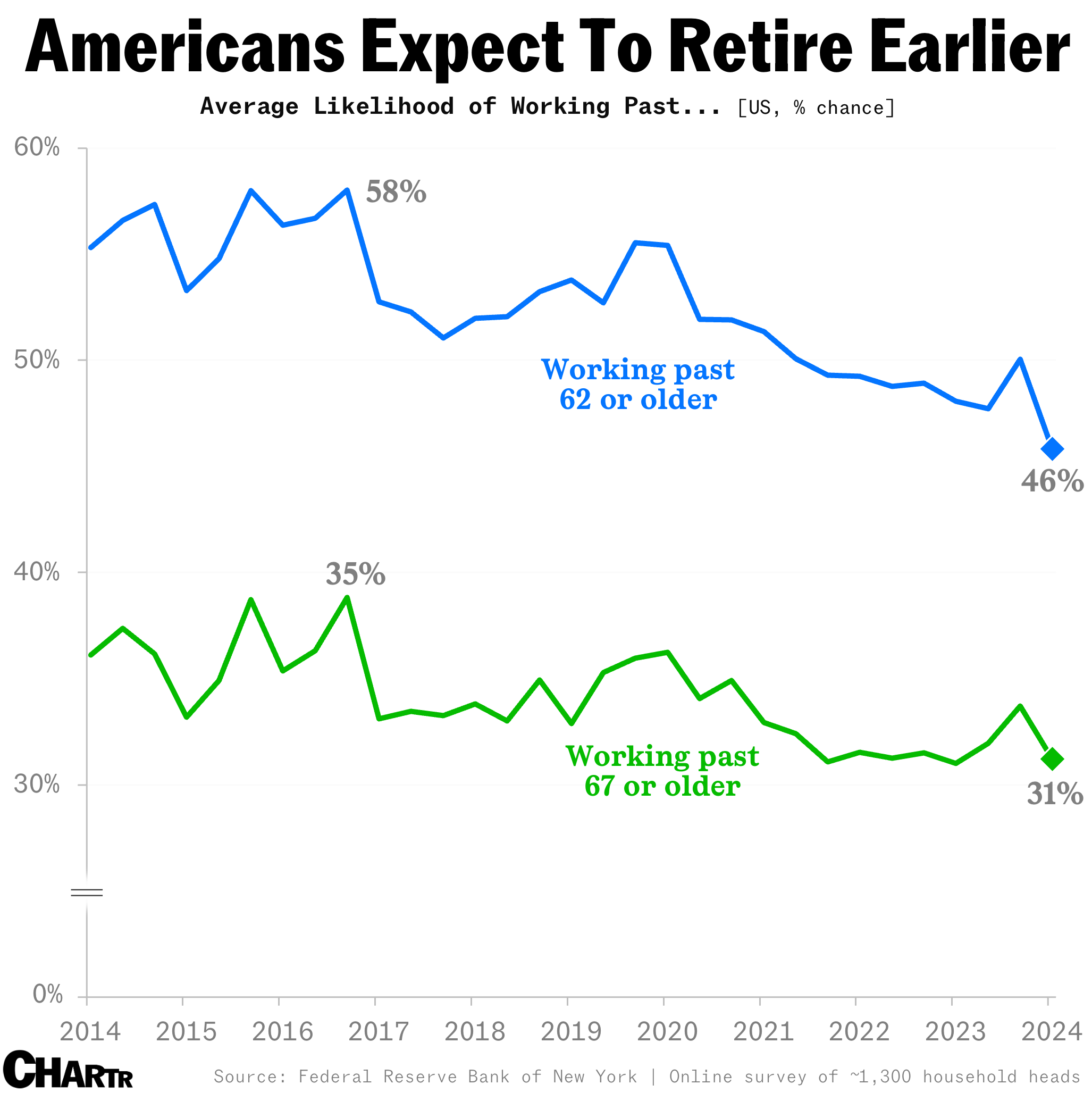
Americans’ retirement plans
Sherwood News

Feelin’ Sixty-Two

According to the Fed Reserve Bank of New York’s most recent analysis of the triannual Survey of Consumer Expectations, American workers thought there’d be a 46% chance that they’d still be working full-time when they were 62+, on average. That’s down significantly on the 58% likelihood that the survey reported back in 2016. Respondents also cut the likelihood to just 31% by the time they reach 67, 2 years younger than Gates will be in October.

While the thought of bowing out might not appeal to the former head of Microsoft, the reality of retirement actually comes as a pleasant surprise to millions of Americans, with 74% of retirees saying they’re financially comfortable in retirement, compared to just 45% who expected to be, per a recent Gallup poll.

More Personal Finance

See all Personal Finance
personal-finance

Ahead of Mother’s Day, Google searches for “same day flower delivery” have ticked up a little earlier this year

If you’ve already made plans for a Mother’s Day gift in advance of this Sunday, congratulations. But if alarm bells are suddenly ringing, consider this a gentle reminder that, like a sizable share of the US population this time of year often does, you can still scrape together some last-minute flowers for the woman who carried you for nine months.

Data from Google Trends reveals that searches for “same day flower delivery” spike in the US in May every year, when Mother’s Day takes place. As we noted last February, the same query also gains traction around Valentine’s Day.

Flower
Sherwood News

This year, however, it appears that searches for last-minute flowers have remained elevated in the last two months after the usual peak in February — with the search interest this April actually exceeding that seen around Cupid’s Day.

Honestly, we’re not sure why searches are spiking a little early. One explanation might be that Passover and Easter have overlapped at the start of April, and Americans wanted to celebrate with some flowers. Maybe it’s a host of Claude bots that are now running errands for AI-obsessed execs — or perhaps Americans are just impulse-buying some seasonal spring blooms after an unusually warm March, without a particular occasion.

Graduate holding scroll and wearing robe, standing with parents

Which US cities give new grads the best shot in 2026?

The ideal place to start a career might be less about prestige and more about where the paycheck stretches furthest.

Latest Stories

Sherwood Media, LLC and Chartr Limited produce fresh and unique perspectives on topical financial news and are fully owned subsidiaries of Robinhood Markets, Inc., and any views expressed here do not necessarily reflect the views of any other Robinhood affiliate, including Robinhood Markets, Inc., Robinhood Financial LLC, Robinhood Securities, LLC, Robinhood Crypto, LLC, Robinhood Money, LLC, Robinhood U.K. Ltd, Robinhood Derivatives, LLC, Robinhood Gold, LLC, Robinhood Asset Management, LLC, Robinhood Credit, Inc., Robinhood Ventures DE, LLC and, where applicable, its managed investment vehicles.